

Endosphere Therapy Side Effects: What to Expect

Could a treatment designed to feel like a deep massage leave you sore or bruised afterward? It’s understandable to want a clear picture before booking. Endosphere therapy side effects can include temporary redness, tenderness, or minor bruising, and reactions can vary from person to person.
Knowing which sensations may happen during a session, which changes to watch for afterward, and what health details to share can help you make an informed decision. The treatment shouldn’t be painful, so speak up if pressure becomes uncomfortable rather than pushing through it.
This guide covers common reactions, practical ways to prepare, and when to seek medical advice. If you’re considering Endosphere therapy at Contour Body Imaging in The Woodlands or Dallas, use this information to prepare questions about comfort and your treatment plan. A healthcare professional can advise you about personal medical concerns.
Key Takeaways
Understand how Endosphere treatment is applied externally before deciding whether it feels right for you.
Learn which Endosphere therapy side effects may happen during or after a session, and why reactions vary.
If a symptom concerns you, pause treatment, note what you observe, and seek appropriate medical advice instead of guessing at the cause.
Discuss health conditions, medications, skin concerns, pregnancy, implants, and sensitivity to pressure when considering individual suitability.
Prepare by sharing relevant health details, discussing comfort and the treatment plan, and following personalized aftercare guidance.
Table of Contents
Endosphere Therapy Side Effects: What the Treatment Involves
Asking about side effects before trying a treatment is sensible. Understanding what happens during a session can help you describe your comfort level, ask focused questions, and decide whether to proceed. Endosphere therapy is a non-invasive treatment in which a device is applied externally to the body. The handpiece works at the skin surface; it isn’t inserted into the body.
Non-invasive describes how a treatment is applied. It doesn’t guarantee that you’ll have no reaction or discomfort. People can experience the same treatment differently, so don’t assume that a sensation another person found comfortable will feel the same to you.
How Endosphere therapy works at the skin surface
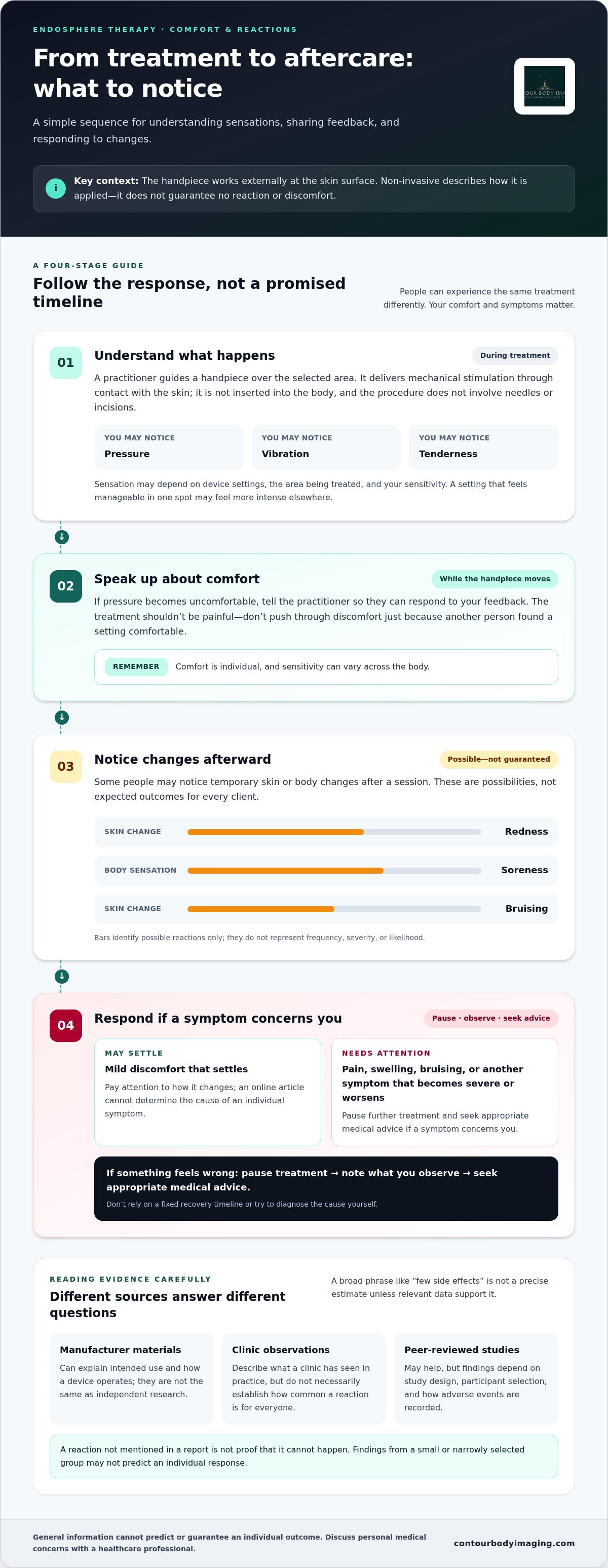
During treatment, a practitioner guides a handpiece over the selected area, delivering mechanical stimulation through contact with the skin. Pressure and vibration are part of the experience. The sensation may depend on the device settings, the area being treated, and your sensitivity. The handpiece remains outside the body, so this isn’t a procedure involving needles or incisions.
The term “endosphere” also appears in unrelated scientific contexts, including discussions of cyanobacteria and plant-associated microbes. That broader usage, described in this Endosphere scientific context, isn’t a description of the body treatment. When considering the therapy, focus on how it is applied and how your body responds rather than reading clinical meaning into the name alone.
Why treatment sensations vary from person to person
During a session, you may notice pressure, vibration, or tenderness as the handpiece moves over a sensitive area. One person may find a setting comfortable, while another prefers lighter pressure. Sensitivity can also vary across the body, so a setting that feels manageable in one spot may feel more intense elsewhere.
Immediate sensations are different from changes you might notice later. Redness, soreness, or bruising are possible after-treatment reactions, but they aren’t guaranteed. If the pressure feels uncomfortable, tell the practitioner so they can respond to your feedback. Don’t assume that a sensation is acceptable for everyone just because it is part of the treatment.
In short, Endosphere therapy involves external mechanical contact, but comfort and reactions are individual. Understanding what the handpiece does and what you may feel gives you a practical starting point for discussing expectations before a session.
What Endosphere Therapy Side Effects May Occur During or After a Session?
People can respond differently to the same hands-on treatment. During Endosphere therapy, the moving handpiece may create pressure or vibration, and a sensitive area may feel tender. Tell the practitioner if the pressure is uncomfortable. A sensation that feels manageable to one person may not feel that way to someone else.
Possible temporary sensations and skin changes
Separate what you feel during treatment from what you notice afterward. Pressure, vibration, or tenderness may be noticeable as the handpiece moves over an area. Afterward, some people may notice redness, soreness, or bruising. These are possibilities, not expected outcomes for every client, and general information cannot predict your individual response.
Pay attention to how a reaction changes rather than assuming every symptom is routine. Mild discomfort that settles is different from pain, swelling, bruising, or another symptom that becomes severe or worsens. If a symptom concerns you, pause further treatment and seek appropriate medical advice. Don’t rely on a fixed recovery timeline or try to diagnose the cause yourself.
What evidence can and cannot tell us about side effects
Evidence needs context. Device-manufacturer materials can explain intended use and how a device operates, but they aren’t the same as independent research. A clinic’s observations describe what it has seen in practice, but don’t necessarily establish how common a reaction is for everyone. Peer-reviewed, device-specific studies may offer useful information, though their findings depend on factors such as study design, participant selection, and how carefully researchers record adverse events.
Broad phrases such as “few side effects” shouldn’t be treated as a precise estimate unless supported by relevant data. If a report doesn’t mention an adverse event, that doesn’t prove the event cannot happen. It may not have been measured or described. Findings from a small or narrowly selected group may also not predict what a person with different health circumstances will experience.
Reactions can vary from person to person, and no individual outcome is guaranteed. That’s more useful to keep in mind than assuming a treatment will cause no reaction or that everyone will respond in the same way. Endosphere therapy side effects refers to possible sensations and changes, not a reliable forecast for any one client.
If you’re considering a session, an individualized conversation about the treatment approach and your comfort can help you make a measured decision. At Contour Body Imaging, you can discuss Endosphere therapy as part of a thoughtful treatment conversation. General information can’t guarantee your personal response.
How to Tell a Temporary Reaction from a Warning Sign
A change after treatment can be unsettling, especially if you’re unsure what it means. There isn’t a reliable recovery window that applies to everyone, and an online article can’t determine the cause of an individual symptom. Rather than guessing or waiting for a promised timeframe, pause treatment, note what’s happening, and seek appropriate medical advice if the symptom concerns you.
When to stop and seek professional advice
Stop the session if you experience severe pain or feel that something is wrong, and tell the practitioner. Afterward, seek prompt medical assessment for severe pain, marked or worsening swelling, skin injury, or another alarming change. If symptoms are severe or rapidly worsening, seek urgent medical attention. These signs don’t identify a cause on their own; a healthcare professional can assess them in context.
Don’t resume treatment simply because someone suggests a reaction should have settled by a certain time. Likewise, don’t assume a symptom came from Endosphere therapy without an assessment. A clinician can consider other possible causes and your personal health circumstances before advising you.
What details to record if a reaction concerns you
Clear observations can help a healthcare professional understand what changed and when. Note when the symptom began, where it occurred, what it feels or looks like, and whether it’s improving, staying the same, or worsening. If there’s a visible skin change, you may find it useful to record how it changes over time, but don’t delay care to gather more information.
Treatment details: Record the date, treated area, and any details you remember about the session or settings.
Symptom timeline: Write down when you first noticed the change and how it has developed.
Relevant context: Note medications, health conditions, or other recent changes that may help inform an assessment.
Steps taken: Include whether you paused treatment, contacted a practitioner, or followed advice already given.
Share these notes with an appropriate healthcare professional, particularly if symptoms are worsening or affecting your wellbeing. If you need urgent help, don’t postpone it to complete a symptom log.
The goal isn’t to label a reaction as harmless or dangerous by yourself. Endosphere therapy side effects can’t be interpreted reliably without considering the symptom, its progression, and your health history. General information can help you notice changes and explain them, but it doesn’t replace individualized medical care. When in doubt, choose assessment over self-diagnosis or an assumed recovery schedule.
Who Should Discuss Endosphere Therapy Suitability Before Treatment?
Suitability is personal, so reviewing your health history is more useful than relying on a general list of conditions. Before treatment, disclose relevant diagnoses, medications, skin concerns, sensitivities, and any previous reaction to massage or pressure-based treatments. This information helps guide a conversation about whether Endosphere therapy is appropriate for you and whether adjustments or medical advice may be needed.
Health history and medications to disclose
Bring up pregnancy, bleeding or clotting concerns, implanted devices, and unusual sensitivity to pressure or vibration. Also mention open or irritated skin in the area being considered, recent procedures, and any past reactions that caused concern. These are topics for individualized review, not a definitive list of Endosphere-specific contraindications. A qualified healthcare professional can assess medical risks in light of your circumstances.
Share prescription and nonprescription medications, including any that affect bleeding or bruising. Don’t stop or change a prescribed medication to prepare for treatment unless the clinician who prescribed it directs you to do so. If you’re unsure whether a condition or medication matters, mention it rather than trying to decide on your own.
Questions to resolve before deciding
A useful pre-treatment discussion should cover more than booking a session. Explain your goals, areas of concern, pressure sensitivity, and any previous treatment reactions. Ask what sensations may occur, how to communicate discomfort during the session, and what to do if you feel unwell or notice a concerning change afterward.
Discuss expectations separately from safety. If cellulite is one of your goals, reviewing Endosphere therapy results for cellulite can help put possible outcomes in context. Results information doesn’t establish that a treatment is suitable for you, so raise personal health questions as well.
Before deciding, make sure you understand the area to be treated, the planned approach, and how to share feedback about comfort. You don’t need to minimize concerns to proceed. If a health issue needs medical assessment, pause your decision until you have appropriate guidance. Taking more time is reasonable if you’re still uncertain.
At Contour Body Imaging in The Woodlands and Plano, you can discuss your goals and questions about Endosphere treatment. That conversation can clarify the treatment plan, while an appropriate healthcare professional should assess medical suitability.
Preparing for Endosphere Therapy and Choosing Your Next Step
A little preparation can make it easier to explain your needs and understand what a session involves. You don’t need to follow generic online rules about food, exercise, or daily routines unless they’re part of instructions tailored to you. Focus on sharing relevant information, clarifying the plan, and knowing how to raise a concern.
A practical pre-session checklist
Before your session begins, cover the details that can shape the conversation:
Share relevant health information. Mention current conditions, medications, skin concerns, pregnancy, bleeding or clotting issues, implants, pressure sensitivity, and previous treatment reactions that may matter.
Explain your comfort needs. Tell the practitioner if an area is sensitive or if you’re concerned about pressure. Discuss how to ask for an adjustment or pause during treatment.
Clarify the treatment plan. Make sure you understand which area is being treated and what sensations may occur during the session.
Ask about follow-up. Know whom to contact if you have concerns afterward, and follow any preparation or aftercare instructions provided for your situation.
These steps help you prepare without assuming that one set of restrictions applies to everyone. If instructions you’ve received differ from general advice online, follow individualized guidance from your treatment team or healthcare professional.
How to continue learning before you decide
If you’re weighing treatment options, a comparison of Endosphere vs LymphaPress can help you understand how the approaches differ. For a wider overview of non-surgical options, explore this guide to non-invasive body sculpting. These resources can support your research, but they can’t determine medical suitability or predict your personal response.
Use what you’ve learned about Endosphere therapy side effects to shape a conversation, not to diagnose a symptom or assume a particular outcome. If you still have questions, discuss your comfort, health history, and expectations before deciding. Contour Body Imaging offers Endosphere therapy in The Woodlands and Plano as part of its body sculpting and lymphatic drainage services.
Make Your Next Step an Informed One
You don’t have to decide before you feel ready. Take time to consider your goals, comfort, and any health questions that need an answer. An informed choice can include waiting, seeking medical guidance, or learning more about the treatment.
Considering Endosphere therapy side effects is one part of deciding whether the experience fits your needs. Contour Body Imaging offers Endosphere as part of its body sculpting and lymphatic drainage services in The Woodlands and Plano. A conversation can help you discuss your goals and questions, but no general article can promise how you’ll respond.
Move at a pace that feels right for you. To discuss Endosphere therapy in The Woodlands or Plano, contact Contour Body Imaging and bring your questions about comfort, treatment goals, and your health history.
Frequently Asked Questions
Is Endosphere therapy painful?
Endosphere therapy shouldn’t be painful, though pressure or vibration may feel intense in a sensitive area. Tell the practitioner right away if the sensation becomes painful instead of waiting for the session to end. Pressure may feel comfortable on one part of your body but sharp or uncomfortable elsewhere. Your feedback matters, and pain shouldn’t be treated as something you must tolerate to complete treatment.
Can Endosphere therapy cause bruising?
Bruising is possible, but it won’t happen to everyone, and an individual outcome can’t be predicted. If you notice a bruise, note its location and whether it changes. Mention a history of easy bruising before treatment, especially if you take medication that affects bleeding. If bruising is extensive, worsening, or accompanied by other concerning symptoms, seek medical advice rather than assuming it’s a routine response.
How long do side effects from Endosphere therapy last?
There isn’t a dependable timeline that applies to everyone. How long Endosphere therapy side effects last may depend on the symptom and individual circumstances, so be cautious about promises that a reaction will resolve within a set period. If a change is worsening, severe, or worrying you, contact an appropriate healthcare professional instead of waiting for a predicted recovery window. Noting when it began can help you describe it.
Can I have Endosphere therapy if I take blood thinners?
Ask the clinician who manages your medication and discuss it with the treatment practitioner before deciding. Blood thinners can make bruising or bleeding concerns more relevant, but an appropriate clinician should assess your personal situation and advise whether treatment is suitable. Don’t skip, reduce, or stop a prescribed medication to prepare for a session unless your prescriber tells you to. Share the medication name and any history of unusual bruising.
Is Endosphere therapy safe during pregnancy?
Don’t assume Endosphere therapy is suitable during pregnancy. Your health needs and treatment considerations can change during pregnancy, so discuss it with your prenatal healthcare professional before considering a session. Share any advice you receive with the treatment practitioner as well. If you’re planning treatment and discover you’re pregnant, pause scheduling until you’ve received individualized medical guidance. General information about a non-invasive procedure can’t establish that it’s appropriate for you or your pregnancy.
What should I do if I feel unwell after Endosphere therapy?
Pause any further treatment and seek medical advice if you feel unwell or notice a concerning change. If symptoms feel severe or worsen rapidly, seek urgent medical attention. When you speak with a healthcare professional, describe what you’re experiencing, when it started, and what area was treated. Don’t assume the treatment caused the symptom or try to diagnose it yourself. If you feel faint or unsafe, ask someone nearby for help.
Can I exercise after Endosphere therapy?
There’s no single exercise rule that fits every person or session. Follow the aftercare guidance provided for your treatment, and consider how you feel before returning to activity. If you’re sore or notice a new symptom, don’t push through discomfort. Seek medical advice if the symptom concerns you. Contour Body Imaging offers Endosphere therapy as part of its body sculpting and lymphatic drainage services in The Woodlands and Plano.


Comments