

How to Reduce Stubborn Belly Fat: A Realistic, Evidence-Informed Guide
If you’ve been adjusting your meals or adding workouts and still wonder how to reduce stubborn belly fat, it’s understandable to feel frustrated. A waistline that changes slowly isn’t proof that you’re failing. Abdominal fat can respond differently from person to person, and age, hormones, stress, sleep, and daily habits may all play a role.
Progress doesn’t require extreme rules. This guide explains what can influence belly fat and outlines realistic habits that support gradual fat loss. It also helps set expectations: non-invasive body contouring is a cosmetic option for localized areas, not a substitute for overall weight management or a way to address deeper visceral fat.
You’ll learn why the waistline can be slow to change, how to make sustainable lifestyle adjustments, and how Cryo T-Shock Body Contouring differs from weight-management strategies. The goal is a clearer plan that fits your life and helps you decide which next step makes sense for your goals.
Table of Contents
Why Stubborn Belly Fat Can Be Hard to Change
Visceral fat is stored deep inside the abdomen, around organs such as the liver and intestines. It differs from subcutaneous fat, which sits just beneath the skin and may be easier to pinch. Higher levels of abdominal fat are associated with health risks, including type 2 diabetes and cardiovascular disease. The overview of abdominal obesity explains the distinction and its potential health implications.
Visceral fat and subcutaneous fat: what is the difference?
Both types can contribute to abdominal size, but they’re in different places. Visceral fat is deeper in the body; subcutaneous fat is the softer layer under the skin. A waist’s appearance alone can’t tell you how much visceral fat you have or diagnose your health. Body shape varies, and waist measurements are only one piece of health information, not a direct measure of fat around the organs.
This distinction matters when setting expectations. Exercises or cosmetic treatments focused on the surface of the abdomen can’t be assumed to affect deeper visceral fat. Abdominal exercises can strengthen the muscles underneath, but they don’t reliably remove nearby fat on their own. If you’re wondering how to reduce stubborn belly fat, separate an appearance goal from questions about overall health.
Why does fat loss vary from person to person?
There isn’t one explanation for everyone’s waistline. Genes can influence where the body tends to store fat, while age and life-stage changes may affect body composition. Sleep, stress, eating patterns, and physical activity can shape daily routines and influence weight over time, but no single factor explains every person’s experience.
Some medications and health conditions can affect weight or body composition, too. If you notice a sudden, unexplained change, or one that concerns you, discuss it with a healthcare professional rather than assuming it’s a matter of willpower. Slow or uneven progress isn’t proof that you lack discipline.
These differences help explain why two people can follow similar routines and see different changes, or why a waist measurement may shift slowly even as other habits improve. Focus on sustainable approaches to gradual overall fat loss instead of expecting one exercise or quick fix to target the abdomen alone.
What Actually Supports Gradual Belly-Fat Reduction?
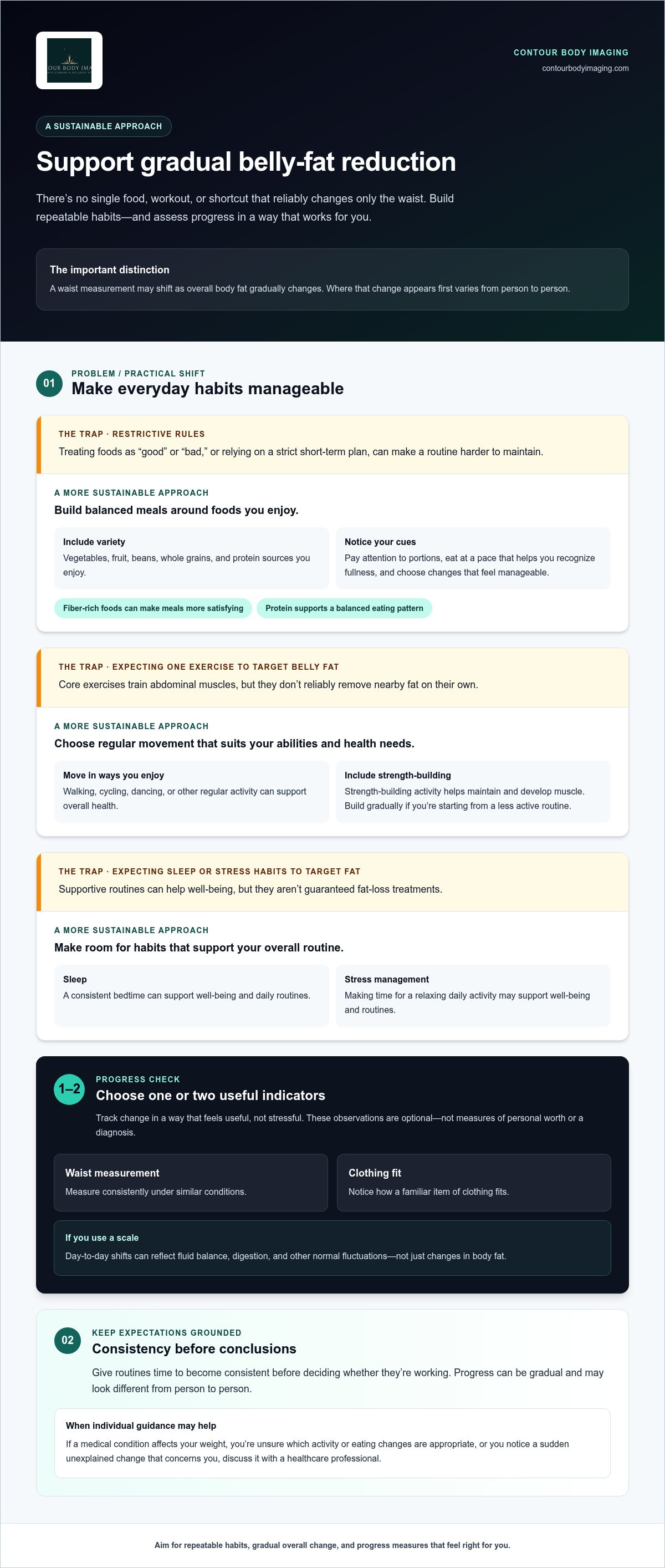
There’s no single food, workout, or shortcut that reliably changes only the waist. A waist measurement may shift as overall body fat gradually changes, and where that change appears first varies by person. For a practical approach to how to reduce stubborn belly fat, focus on habits you can repeat rather than a strict short-term plan. Rush University System for Health’s guidance on belly fat reduction also emphasizes sustainable eating and activity over exercises that promise spot reduction.
Which everyday habits can support a healthier routine?
Build meals around a variety of nourishing foods, such as vegetables, fruit, beans, whole grains, and protein sources you enjoy. Fiber-rich foods can make meals more satisfying, while protein supports a balanced eating pattern. You don’t need to label foods as “good” or “bad” or follow a restrictive diet. Pay attention to portions, eat at a pace that helps you recognize fullness, and make changes that feel manageable.
Movement can take many forms. Walking, cycling, dancing, or other regular activity can support overall health, while strength-building activity helps maintain and develop muscle. Choose options that suit your abilities and health needs, and build gradually if you’re starting from a less active routine. Sleep and stress-management practices, such as keeping a consistent bedtime or making time for a relaxing daily activity, can support well-being and routines. They aren’t guaranteed fat-loss treatments.
A sustainable routine often includes:
Balanced meals with fiber-rich foods and satisfying protein sources.
Regular movement and strength-building that fits your current ability.
Supportive sleep and stress-management habits, without expecting them to target belly fat directly.
How can you track progress without focusing only on weight?
Choose one or two indicators that feel useful, not stressful. You might measure your waist consistently under similar conditions or notice how a familiar item of clothing fits. These are optional ways to observe change, not measures of personal worth or a diagnosis. If you use a scale, remember that day-to-day shifts can reflect fluid balance, digestion, and other normal fluctuations, not just changes in body fat.
Give routines time to become consistent before deciding whether they’re working. If a medical condition affects your weight, or you’re unsure which activity or eating changes are appropriate, seek individualized guidance from a healthcare professional. If your goal includes the appearance of a localized area, a personalized aesthetic treatment discussion is a separate consideration from overall weight management.
Belly-Fat Myths: Spot Reduction, Quick Fixes, and Plateaus
Claims about a flatter stomach can make fat loss sound more precise and predictable than it is. A useful reality check: spot reduction is a common promise, not a reliable way to choose where your body loses fat. Targeted exercises can train particular muscles, but they don’t ensure that nearby fat will shrink. For a realistic approach to how to reduce stubborn belly fat, distinguish useful movement from claims that promise a specific result in a specific area.
Can abdominal exercises burn belly fat on their own?
Crunches, planks, and other core exercises can strengthen abdominal muscles and support strength and function. They can be worthwhile parts of a balanced activity routine, but doing more repetitions doesn’t guarantee less fat over those muscles. Fat loss, when it occurs, is a whole-body process, and where changes show up first differs from person to person. Choose core exercises for the benefits they offer, not as a targeted-fat-loss guarantee. The right routine depends on your ability, comfort, and needs.
Do detoxes, waist trainers, or quick-fix plans remove stubborn fat?
A quick change on the scale or a temporarily smaller-looking waist doesn’t necessarily mean body fat has changed. Short-term shifts can reflect fluid balance, digestion, or how clothing compresses the body. Sweating more or wearing a waist trainer may change how you feel or look temporarily, but that alone doesn’t show lasting fat loss. Treat detox claims and severe restrictions with particular caution, especially when they promise rapid or targeted results.
If a plan requires extreme restriction, makes you feel unwell, or conflicts with a health condition or medication, talk it through with a qualified healthcare professional. Sustainable routines are generally more practical to maintain than short bursts of drastic change. Be wary of products or programs that make dramatic promises without clearly explaining what they can and can’t do.
What about a plateau? Progress may slow or appear to stall as routines, body weight, and daily habits change. Measurements can also vary with fluid levels, digestion, and how consistently you take them. A flat stretch doesn’t automatically mean your effort is pointless or that you need a harsher plan. Look at patterns over time, consider whether your routine still fits your life, and make small adjustments only when they feel sustainable.
A Practical Plan for Addressing Stubborn Belly Fat
A realistic plan doesn’t need to overhaul your life all at once. Pick one or two habits that feel achievable, practice them consistently, then review how they’re working. The aim is to support health and comfort with routines you can maintain, not to force a particular waist size or promise a timeline.
How can you build a routine you can maintain?
Start with what fits your actual schedule and ability. That could mean adding a balanced breakfast, taking a regular walk, choosing a strength-building activity you enjoy, or setting a steadier bedtime. Make small adjustments instead of banning entire food groups or trying to exercise intensely every day. If an activity causes pain or you have health concerns, adapt it and seek guidance as appropriate.
Use this simple checklist as a starting point. It requires no special equipment:
Choose one routine. Pick a practical food, movement, or sleep habit you’re ready to repeat.
Make it specific. Decide what the habit looks like in your day, such as taking a walk after lunch or adding a vegetable to a regular meal.
Track consistency. Use a brief note or calendar mark to record whether you followed through. Treat missed days as information, not failure.
Reassess over time. Ask whether the habit feels manageable and supports your well-being. Keep it, adjust it, or try another small change.
Progress can mean more than a number on the scale. Energy, strength, comfort, and the ability to keep up a routine can all help you judge whether your approach is serving you. If you choose to track waist measurements or clothing fit, use them as optional observations rather than deadlines.
When is professional medical advice appropriate?
Sometimes lifestyle isn’t the whole story. Talk with a clinician about unexplained body changes, persistent concerns, or questions about whether a medication could affect your weight. A health assessment can help consider medication, hormonal, or other health factors without jumping to conclusions or trying to diagnose yourself. Don’t stop or change a prescribed medication without discussing it with the clinician who manages your care.
If your goal is an aesthetic change in a localized area, keep it separate from broader weight-management or health goals. A personalized conversation about body-contouring options can help clarify whether an aesthetic approach aligns with what you’re looking for, without replacing medical guidance or sustainable habits.
Where Body Contouring Fits: Options in The Woodlands and Plano
Body contouring and weight management serve different goals. Aesthetic contouring focuses on the appearance of selected areas; it isn’t a method for overall weight loss or a replacement for nutrition, physical activity, or medical care. If you’re exploring how to reduce stubborn belly fat, first consider whether your priority is broader health and weight management or the look of a localized area. Keeping those goals distinct helps set realistic expectations, whether you’re in The Woodlands, Plano, or Dallas, Texas.
How is body contouring different from weight loss?
Weight management involves whole-body habits and, when appropriate, guidance from a healthcare professional. Body-contouring services are aesthetic options for people focused on the appearance of a particular area, and outcomes can vary. They don’t address every type of abdominal fat or prevent future changes in body shape. For more context on the difference between non-invasive sculpting and broader weight goals, see Non-Invasive Body Sculpting: The Complete Guide to Results Without Surgery.
What can someone expect from a local treatment discussion?
Contour Body Imaging serves clients in The Woodlands and Plano, Texas, and offers Cryo T-Shock Body Contouring, which uses alternating hot and cold temperatures. A treatment discussion can focus on your aesthetic goals, the area you’d like to address, and whether this option may suit those goals. Suitability and possible outcomes are individual, so a specific result shouldn’t be promised.
It can also help to clarify what you hope to change and how that differs from a broader health goal. A personalized discussion is an opportunity to understand the service and consider whether it aligns with your preferences, without treating it as a substitute for medical advice or sustainable weight-management habits. For more details about the service, read Cryo T-Shock Body Contouring: The Ultimate Guide to Non-Invasive Slimming in 2026.
If localized contouring is relevant to your aesthetic goals, explore a personalized conversation about Cryo T-Shock Body Contouring in The Woodlands or Plano. There’s no need to rush a decision. A thoughtful discussion can help you understand the option and decide whether it feels right for you.
Choose a Steady Path Toward Your Goals
Understanding how to reduce stubborn belly fat starts with realistic expectations: fat distribution differs from person to person, and no single exercise can reliably target fat loss around the waist. Sustainable eating and movement habits offer a practical foundation, while consistent tracking can help you notice patterns without expecting change on a fixed schedule.
If your goal is the appearance of a specific area, body contouring is a separate aesthetic consideration, not a substitute for overall weight management or medical care. Contour Body Imaging serves clients in The Woodlands and Plano, Texas, and offers Cryo T-Shock Body Contouring, which uses alternating hot and cold temperatures. A personalized conversation can help you explore whether this option fits your aesthetic goals, with outcomes understood as individual rather than guaranteed.
Small, repeatable choices can build a more supportive routine over time. Be patient with yourself, adjust as your needs change, and choose the next step that feels right for you.
Frequently Asked Questions
Can you target belly fat with specific exercises?
No exercise can reliably make your body lose fat only from the area being worked. Crunches and planks can strengthen abdominal muscles, but they don’t guarantee a smaller waist. Choose core exercises for strength, stability, and function, and combine them with movement you can maintain. If you’re deciding how to reduce stubborn belly fat, focus on overall habits rather than expecting one exercise to selectively burn abdominal fat.
Why is belly fat so difficult to lose?
Belly fat can be slow to change because each person’s body stores and loses fat differently. Genetics, age, sleep, stress, medications, health conditions, and daily routines may all contribute, and no single factor explains every waistline. Changes in body composition can also happen unevenly, so a waist measurement may not shift as quickly as you expect. Slow progress isn’t proof that you lack discipline.
Does walking help reduce belly fat?
Walking can support general physical activity and may contribute to gradual overall fat loss when it’s part of a sustainable routine. It can be an accessible starting point: choose a comfortable route or build short walks into your day, then adjust the pace or duration to suit your ability. Walking won’t specifically target abdominal fat, and results vary. If you have health or mobility concerns, ask a healthcare professional what activity is appropriate.
Can stress or poor sleep affect belly fat?
Stress and insufficient sleep may make consistent routines harder and can influence factors related to weight, but neither guarantees belly-fat gain or loss. Supportive steps such as keeping a regular sleep schedule or making time to unwind can benefit overall well-being. Treat them as helpful parts of a broader approach, not stand-alone fat-loss treatments. If sleep problems or stress persist or affect daily life, consider discussing them with a healthcare professional.
Do body-contouring treatments reduce belly fat?
Body contouring is an aesthetic option for the appearance of selected areas, not a substitute for overall weight management or medical care. Suitability and outcomes vary, so don’t expect a guaranteed result or a treatment for deeper abdominal fat. A personalized discussion can help clarify whether the service aligns with your aesthetic goals.
Is stubborn belly fat always a sign of a health problem?
No. A particular waist shape or difficulty changing it doesn’t, on its own, diagnose a health condition. Body shape varies, and appearance can’t show exactly how much fat is stored around abdominal organs. If you notice sudden, unexplained changes, have persistent concerns, or wonder whether a medication or condition is affecting your weight, speak with a clinician. They can consider your health history and advise whether assessment is appropriate.
How long does it take to reduce belly fat?
There’s no reliable timeline that applies to everyone. Changes depend on individual factors and the consistency and suitability of a person’s approach; waist measurements can also fluctuate with fluid balance and digestion. Focus on repeatable habits and review patterns over time instead of chasing a promised deadline. If your progress concerns you or a health condition affects your weight, a clinician can offer guidance tailored to your circumstances.


Comments