

How to Reduce Cellulite on Legs: Realistic Options for Smoother-Looking Skin

If you’re trying to reduce cellulite on legs, conflicting advice about creams, workouts, and treatments can make it hard to know where to begin. Visible dimpling is common and isn’t proof that you’re unhealthy or unfit. Smoother-looking skin doesn’t require perfect discipline or a dramatic makeover.
Cellulite reflects the way bands beneath the skin interact with the tissue above them. Regular movement and balanced routines can support your overall well-being, but they can’t guarantee that dimples will disappear. Creams may offer modest, temporary changes, while professional options have different purposes and limitations.
This guide explains why cellulite appears, which practical habits may help, and how to assess treatment claims without expecting a quick fix. You’ll also learn what to consider when exploring non-invasive approaches at Contour Body Imaging, including Cryo T-Shock Body Contouring and Endosphere therapy. Whether you’re in The Woodlands or Dallas, Texas, the goal is to help you make an informed choice with realistic expectations.
Table of Contents
What Causes Cellulite on the Legs, and Is It a Health Problem?
Cellulite is a common skin-surface texture that can make areas look dimpled or uneven, often on the thighs, hips, and buttocks. It isn’t a diagnosis, and its appearance doesn’t reliably reveal someone’s health, fitness, or effort. Understanding what shapes the skin can replace self-blame with a more useful question: what, if anything, would you like to change about its appearance?
Why does cellulite appear on thighs and legs?
Cellulite reflects the arrangement of tissues beneath the skin. Fibrous connective bands, sometimes called septae, link the skin to deeper tissue. When some bands pull downward while the fat between them presses upward, the surface can develop dimples. The Cellulite overview describes this interaction between connective tissue, fat, and skin as part of the condition’s physical basis.
The pattern varies from person to person. Skin thickness and elasticity, the layout of connective bands, and the distribution of tissue all influence whether dimpling is visible and where it appears. Genetics may affect these characteristics. Hormonal influences and changes associated with age can also play a role, but no single factor explains everyone’s cellulite.
Body size can affect the way contours look, but it doesn’t determine whether cellulite appears. People with different body types and activity levels can have it. Exercise, weight changes, or personal effort therefore can’t guarantee a particular skin texture. If your goal is to reduce cellulite on legs, remember that appearance depends on individual tissue structure, not simply discipline or fitness.
Is cellulite a health problem or simply a skin concern?
For most people, cellulite is a cosmetic concern: a common variation in the skin’s appearance rather than a sign of poor health. Its presence alone doesn’t establish that circulation is impaired, that the body needs “detoxing,” or that someone should lose weight. Claims that frame cellulite as proof of a health problem can create unnecessary worry and confuse appearance goals with medical concerns.
Cellulite itself is usually not painful or harmful. Still, don’t assume every new skin change is cellulite. Seek medical advice if an area changes suddenly, becomes painful, feels warm, swells, or looks markedly different from the surrounding skin. Those symptoms can have causes that need individual assessment; a general description of cellulite can’t diagnose them.
A realistic starting point is to separate two questions: “Is this a health concern?” and “Would I prefer a smoother-looking surface?” If the texture is familiar and there are no concerning symptoms, the second question can guide a personal appearance choice without making cellulite a measure of well-being.
Can You Reduce Cellulite on Your Legs Naturally?
Healthy routines can support how you feel and may influence the appearance of your legs, but they aren’t a guaranteed way to remove cellulite. Changes in muscle tone, body composition, and skin appearance can happen gradually, and results differ between people. Choose habits you can sustain rather than treating cellulite as a problem you caused or must fix.
What can exercise and nutrition realistically change?
Walking, cycling, and other regular movement support general fitness. Strength training can build muscle and improve strength, which may change the contours of your legs over time. These habits benefit well-being, but they can’t selectively remove fat from the thighs or promise smoother skin. Spot reduction isn’t a reliable outcome of targeted exercises.
A balanced mix of nourishing foods can support overall health. There’s no need to follow a restrictive diet or judge progress by a particular body shape. If body composition changes gradually, the way cellulite looks may change too, but it may also remain visible. For anyone hoping to reduce cellulite on legs, consistency and realistic expectations are more useful than rapid-fix challenges.
Do creams, massage, or hydration remove cellulite?
Topical products may temporarily affect how skin feels or looks, but that surface effect doesn’t mean they’ve changed the deeper structures involved in cellulite. Massage may briefly alter the skin’s appearance for some people; it isn’t a proven permanent fix. Drinking enough fluids supports normal hydration, but extra water alone hasn’t been shown to remove cellulite.
The American Academy of Dermatology’s guidance on cellulite treatments offers a helpful perspective on what different approaches may achieve and where evidence is limited. Treat claims of permanent removal with caution, especially if they rely on detox language or promise targeted fat loss.
Before using a cream, read its ingredient list and follow the label directions. Try a new product cautiously, and stop using it if you notice irritation. A product that leaves skin feeling moisturized may still be useful for comfort, even if it doesn’t change cellulite itself.
Keep movement comfortable: Choose activities you can repeat, such as walks or strength sessions that fit your routine.
Measure success broadly: Notice changes in strength, energy, or comfort, not just skin texture.
Separate temporary effects from lasting change: A short-lived surface improvement isn’t proof that cellulite has been removed.
Lifestyle habits are worthwhile for well-being, but they can’t guarantee cellulite removal. If you’re considering another approach, compare its intended purpose and limitations with your own goals. Contour Body Imaging offers non-invasive options including Cryo T-Shock Body Contouring and Endosphere at its Texas locations. Explore non-invasive body-contouring options as part of a realistic, individualized approach.
Cellulite Treatments Compared: What Can Each Option Do?
Options differ in what they target, how they’re delivered, and how long any visible change may last. “Non-invasive” doesn’t mean a treatment will work the same way for everyone, and evidence and results vary. Use the comparison below to understand the general purpose of each approach, not as a promise of a particular outcome.
How do non-invasive cellulite treatments differ?
Non-invasive aesthetic options aren’t all the same. Cryo T-Shock Body Contouring at Contour Body Imaging uses alternating hot and cold temperatures as a body-contouring approach. Endosphere is a separate service focused on body sculpting and lymphatic drainage. Neither is a guaranteed way to remove cellulite. A useful comparison starts with your specific appearance goal, the treatment’s intended purpose, and realistic expectations.
Consider what kind of visible change you hope for and whether the treatment feels comfortable for you. A temporary improvement in surface appearance is different from a longer-lasting outcome, and neither phrase guarantees a specific result. Individual response matters.
What questions should guide treatment expectations?
Before choosing an approach, clarify what “smoother” means to you. Are you hoping for a subtle change in texture, or a more noticeable difference? Consider your comfort with the treatment itself and whether you’re prepared to follow the recommended plan. These preferences help frame the decision; they don’t predict an outcome.
What is my specific appearance goal? A clear, modest goal is easier to assess than a promise of flawless skin.
What does this option aim to do? Separate a treatment’s intended purpose from claims it can’t substantiate.
What should I expect over time? Consider how results may vary and whether changes could be temporary.
If you’re exploring Endosphere, use the phrase Endosphere therapy results for cellulite as a focused topic when reviewing information about the treatment. Whichever approach you consider to reduce cellulite on legs, suitability and response can differ. No single method should be presented as a permanent solution for everyone.
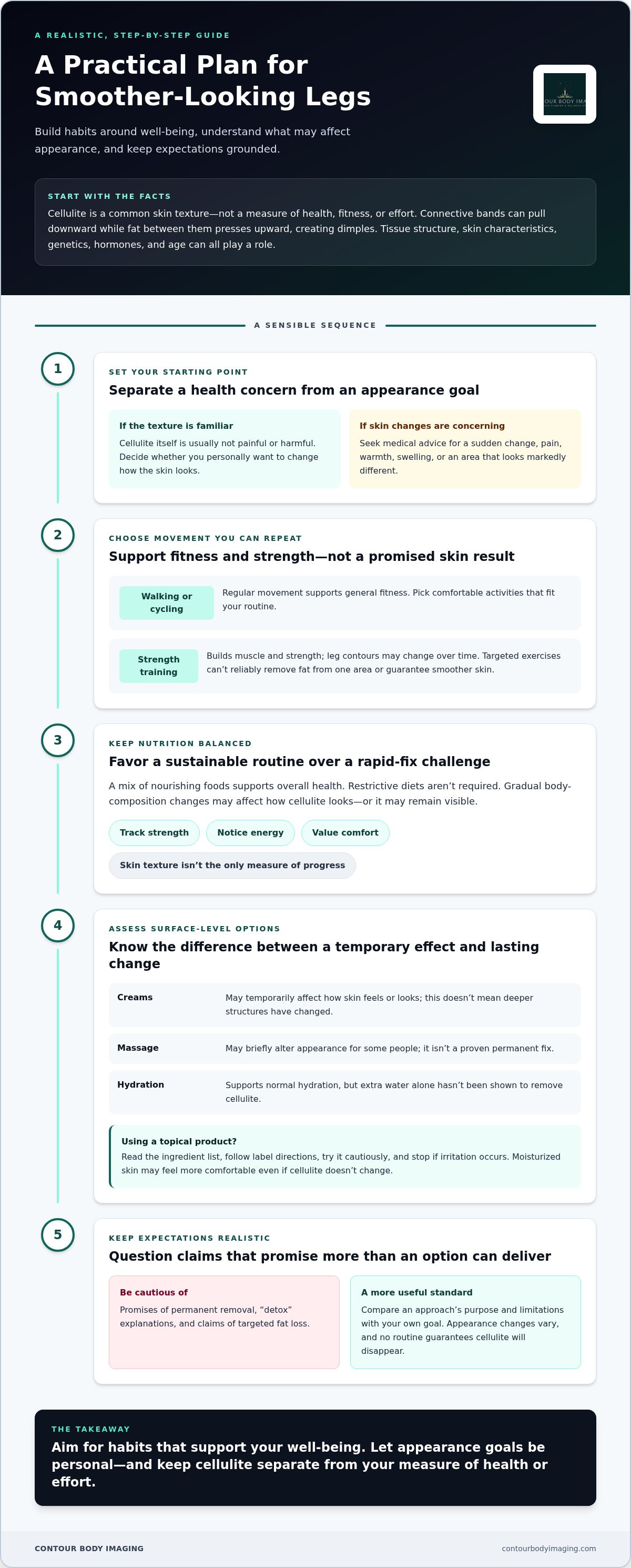
A Practical Plan for Smoother-Looking Legs
A useful plan begins with your priorities, not a promise of flawless skin. Decide what you’d like to notice, choose habits you can maintain, and give yourself a fair way to assess change. Natural texture may remain even if your legs look or feel different over time. The aim is an informed choice that supports your well-being, not making confidence depend on a particular result.
How can you set realistic cellulite goals?
Ask whether your priority is skin texture, a firmer appearance, or general well-being. These goals can overlap, but they aren’t interchangeable, and no routine can promise to change every feature. Avoid judging your legs against edited photos, idealized marketing, or another person’s body. Skin and tissue vary, so a realistic target should be personal, specific, and kind to you.
Name one appearance goal. For example, you might want to feel more comfortable wearing shorts, or understand your options before deciding whether to pursue a treatment.
Choose sustainable habits. Include movement and strength-building if they suit you, and favor balanced routines over restrictive eating, punishing workouts, or rapid-fix challenges.
Track changes consistently. If photos help, take them in similar lighting, at a similar distance and angle, and at intervals rather than checking every day. Daily scrutiny can make ordinary changes in posture, lighting, or skin appearance feel more meaningful than they are.
Review how you feel as well as how you look. Comfort, strength, and confidence are worthwhile outcomes, even if some texture remains.
When should you consider professional body-contouring care?
Professional care is an option, not a requirement for self-confidence. If you’re curious about a non-invasive approach, clarify the appearance goal you have in mind and consider realistic expectations and individual suitability. At Contour Body Imaging, Cryo T-Shock Body Contouring is an option for body-contouring goals, but it shouldn’t be viewed as a guaranteed way to remove cellulite. The clinic serves clients at its locations in The Woodlands and Plano, Texas.
Keep appearance planning separate from medical concerns. If a skin change is sudden, painful, swollen, warm, or otherwise concerning, seek medical advice rather than treating it as a cosmetic issue. If you choose to explore professional care, learn about Cryo T-Shock body contouring as one part of a considered plan to reduce cellulite on legs. Your goal can guide your decision without requiring you to pursue treatment.
How Contour Body Imaging Supports Cellulite Goals
Considering a treatment is a personal choice, not a requirement for feeling confident in your body. Contour Body Imaging offers non-invasive body-contouring and aesthetic wellness services at locations in The Woodlands and Plano, Texas. You can start by identifying the appearance change you hope for and considering which service’s purpose and limitations fit that goal. The focus is on realistic expectations, not a promise that cellulite will disappear.
Which Contour Body Imaging services relate to cellulite concerns?
Cryo T-Shock Body Contouring uses alternating hot and cold temperatures as a non-invasive body-contouring approach. Endosphere is another service, focused on body sculpting and lymphatic drainage. These are distinct options, and no particular result or response should be assumed. Individual goals and suitability can differ, so consider what you’d like to address rather than expecting one approach to work the same way for everyone.
If you’re learning about these services, the non-invasive body sculpting guide can serve as a useful overview topic to explore. As you compare approaches, focus on their intended purpose, the experience you feel comfortable with, and the limits of what a treatment can reasonably promise. Cellulite’s appearance may change, but elimination, permanent results, and a specific timeline aren’t guaranteed.
What happens when you explore a treatment option?
Start by describing your goal in plain terms. You might hope to soften the look of dimpling in a particular area, or simply want to understand whether body contouring fits your preferences. Consider what matters to you about comfort and what kind of change would feel worthwhile. These points keep the decision personal and grounded, without turning an appearance goal into a promise.
As you consider options, keep a few questions in mind:
Does the option relate to my goal? Focus on its intended purpose rather than relying on broad claims about cellulite.
Does the approach feel right for me? Your comfort and preferences are part of the decision.
Are my expectations realistic? Results vary, and no treatment should be presented as a guaranteed or permanent solution.
Professional care is only one possible step for people who want to reduce cellulite on legs. Take time to understand the options and decide whether they suit your priorities. For readers near The Woodlands or Plano, Texas, Contour Body Imaging offers non-invasive body-contouring services to explore.
Choose a Next Step That Feels Right for You
Your next step doesn’t need to be a major commitment. You might continue simple routines that support your well-being, take time to consider your appearance goals, or explore whether professional care fits what you want. Give yourself permission to make that decision at your own pace.
If you’re considering ways to reduce cellulite on legs, focus on informed, sustainable choices rather than promises of perfect skin. Cryo T-Shock Body Contouring and Endosphere are among the non-invasive body-contouring services offered by Contour Body Imaging. A realistic view of their purposes and limitations can help you decide whether either fits your preferences.
Whatever you choose, your skin doesn’t have to meet an idealized standard for you to feel comfortable and confident. Let your goals guide you, and take the path that supports your well-being.
Frequently Asked Questions
What is the fastest way to reduce cellulite on legs?
There’s no reliable overnight fix for cellulite. If an event is coming up, moisturizing may temporarily make skin look or feel smoother, but that isn’t lasting structural change. For longer-term decisions, compare options based on your goal, comfort, and realistic expectations rather than chasing a deadline. Avoid crash diets and products promising instant results. A measured approach to reduce cellulite on legs is more sustainable than an extreme quick fix.
Can exercise get rid of cellulite on your thighs?
No, exercise can’t guarantee that cellulite will disappear. Strength training can build muscle and support fitness, while regular movement benefits overall health. Those changes may influence how your legs look, but they don’t let you choose where fat is lost. For example, thigh exercises can strengthen your leg muscles, but they can’t promise to remove fat from that area alone. Choose activity for how it supports your well-being, not as punishment for having cellulite.
Does drinking more water reduce cellulite?
Drinking extra water isn’t a proven cellulite treatment. Hydration supports normal body functions, but it can’t be expected to change the tissue structures that influence skin texture. Follow your individual health needs rather than forcing extra fluids in hopes of a cosmetic result. If your skin feels dry, a moisturizer may improve surface comfort, but that’s different from changing cellulite. Ask a healthcare professional for advice if you have questions about your hydration needs.
Do cellulite creams actually work?
Some creams can moisturize skin or temporarily affect its surface appearance, but don’t expect one to permanently remove cellulite. Products differ, and marketing claims may sound more certain than the results warrant. Check the ingredient list and follow the label, especially if you have sensitive skin or known allergies. If a product causes burning, itching, or a rash, stop using it. A smoother feel after application doesn’t prove a lasting change beneath the skin.
Can cellulite go away permanently?
It isn’t realistic to count on permanent cellulite removal. Its visibility can shift with individual differences and changes over time, and results from habits or aesthetic treatments may be limited or may not last. Rather than measuring success by whether every dimple disappears, decide what degree of change would feel worthwhile to you. That perspective leaves room to adjust your approach without treating normal skin texture as a failure or expecting a guaranteed cellulite-free result.
Are non-invasive cellulite treatments safe?
Safety depends on the specific treatment and the individual, so “non-invasive” shouldn’t be taken to mean risk-free. Before proceeding, understand what the treatment involves and what precautions apply to your circumstances. Share relevant health concerns with a qualified medical professional, particularly if you have unusual or unexplained symptoms. General information can help you prepare, but it can’t determine whether a particular service is appropriate for you. Avoid relying on blanket safety claims or guarantees.
What treatment helps cellulite on the legs most?
There isn’t one best option for everyone. Lifestyle habits support general well-being, while professional aesthetic services have different intended purposes and may suit different appearance goals. At Contour Body Imaging, Cryo T-Shock Body Contouring and Endosphere are options to explore, not guaranteed cellulite cures. Consider what change you hope for and how each approach fits your preferences. For readers near The Woodlands or Plano, Texas, Contour Body Imaging offers non-invasive body-contouring services to explore.


Comments