

Repêchage Biolight Facial for Hyperpigmentation: What to Expect

What can a facial realistically do for the appearance of dark spots? If you’re considering a Repechage Biolight facial for hyperpigmentation, it’s natural to ask what a professional treatment may offer, especially if your skin is sensitive or reactive. A facial is a cosmetic skincare experience, not an instant fix or a way to diagnose the cause of discoloration.
A Biolight-focused facial may fit into a considered tone-care routine, but results can vary and aren’t guaranteed. Temporary dullness may look different from discoloration that persists or changes, and that distinction can help guide your next step. This article covers the facial’s cosmetic role, what to discuss before treatment, and how to approach aftercare without expecting overnight results.
Contour Body Imaging offers Repêchage facials tailored to individual skin concerns at its locations in The Woodlands and Plano, Texas. If you’re in The Woodlands or the wider Dallas area, learn how a personalized facial may fit alongside consistent at-home care, what to share about sensitivity, and when a changing spot deserves medical attention.
Table of Contents
What Is a Repêchage Biolight Facial for Hyperpigmentation?
Dark spots and uneven tone can have different causes, so appearance alone can’t tell you exactly what’s behind a mark. A Repechage Biolight facial for hyperpigmentation is best understood as professional cosmetic skincare for someone interested in the look of uneven tone. It is not a way to diagnose a skin condition or a guaranteed method of removing pigment. Repêchage’s Biolight skincare focuses on concerns such as dark spots and uneven tone, but that focus is not a promise that every spot will respond or disappear.
What does hyperpigmentation mean in everyday terms?
In everyday language, hyperpigmentation means that some areas of skin look darker than the surrounding skin. The term describes a range of appearances, not one single cause. Broad categories include sun-related spots and post-inflammatory marks, which can appear after skin irritation or inflammation. These examples provide context, but they can’t establish what caused a particular spot. The general overview of Hyperpigmentation describes common types and causes; it isn’t a substitute for an individual assessment.
It can help to distinguish temporary dullness from a spot that remains visible over time. Lighting, dryness, or the skin’s overall appearance can affect how noticeable unevenness seems, while persistent discoloration may have a different explanation. Don’t rely on a photo, a color description, or a facial consultation to identify the cause. If a spot is new or changing, seek evaluation from a medical professional rather than treating it as a cosmetic concern alone.
Where does a Biolight facial fit in skincare?
A professional facial is an in-clinic skincare experience focused on cosmetic goals. It may be one component of a broader routine for someone who wants to care for the appearance of uneven tone. It doesn’t replace ongoing home care or a medical plan when one is needed. A facial conversation can focus on your skincare preferences and comfort; persistent or unexplained discoloration may call for a different kind of assessment.
A Biolight facial is a professional cosmetic skincare option for the appearance of uneven tone, not a diagnosis or guaranteed treatment for the cause of pigmentation. Keep that distinction in mind when deciding what you hope to get from an appointment. Consider whether you’re looking for a professional skincare experience, whether your skin tends to react, and whether products in your current routine affect your comfort. Sharing those details helps make the conversation specific to you and keeps expectations realistic.
Visible changes vary with individual skin and the reason for discoloration. A facial shouldn’t be presented as an instant pigment eraser. Instead, consider it as one possible part of a thoughtful cosmetic routine, with your next step guided by your skin’s needs and the nature of the concern.

How a Biolight Facial Fits Into a Hyperpigmentation Care Plan
A facial can support a cosmetic skincare routine, but it isn’t a complete medical plan for discoloration. If your goal is to care for the appearance of uneven tone, a Repechage Biolight facial for hyperpigmentation may be one part of a broader conversation about your goals, comfort, and current routine. It shouldn’t be treated as a substitute for medical assessment or a guaranteed way to change pigment.
Make the discussion personal rather than assuming one approach suits everyone. For example, someone whose skin is easily irritated may have different comfort considerations from someone with a well-established routine. Sharing the products you use and how your skin responds helps shape a more relevant skincare conversation.
What can influence the appearance of uneven tone?
Sun exposure, past irritation, and post-inflammatory marks can all contribute to areas that look darker, but appearance alone can’t identify the cause. Harvard Health’s overview of Hyperpigmentation Causes and Treatments explains that discoloration has different causes and treatment considerations. This is one reason cosmetic facials and medical evaluation have distinct roles.
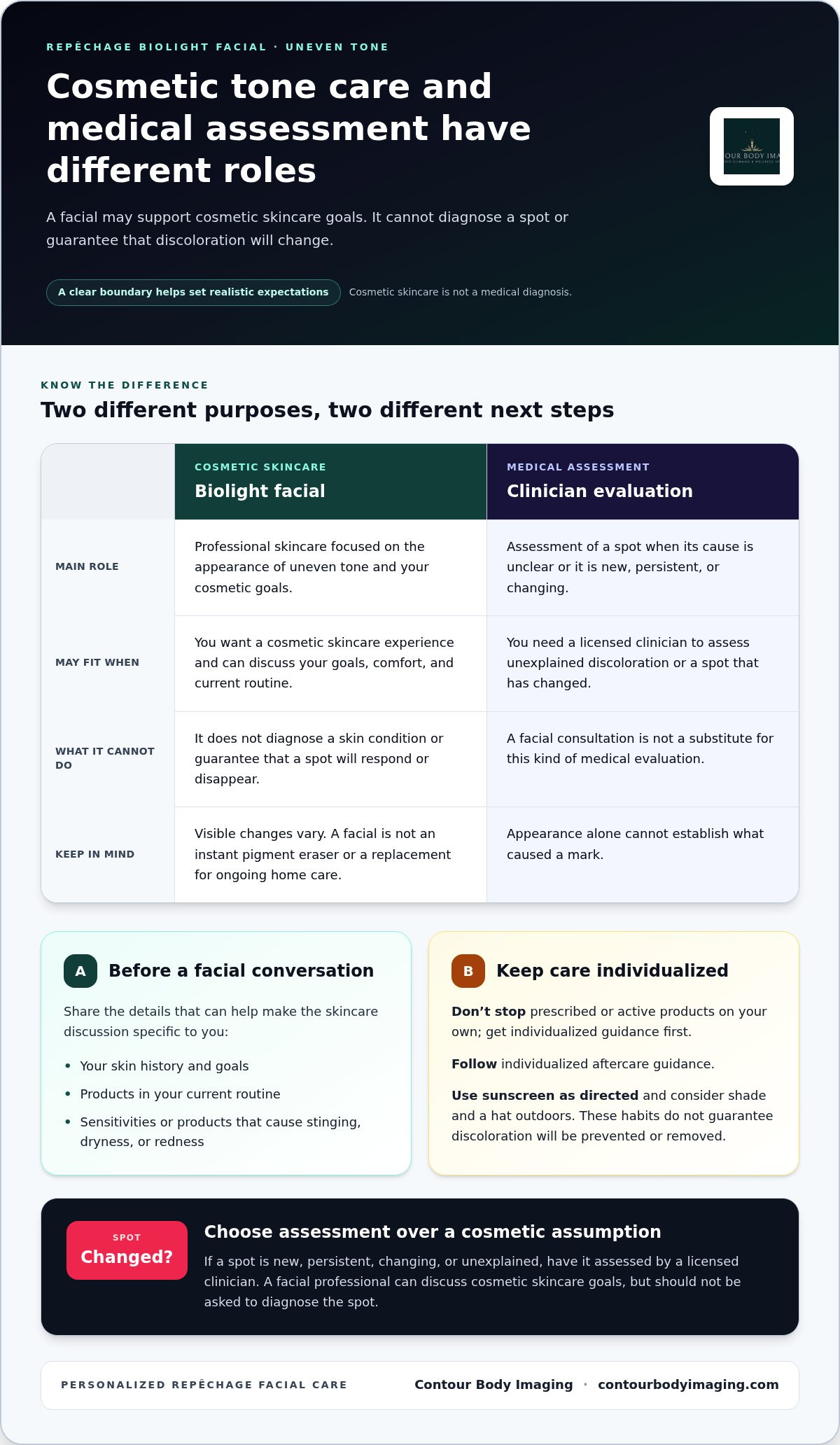
If a spot is persistent, new, or changing, have it assessed by a licensed clinician. A facial professional can discuss cosmetic skincare goals, but a facial shouldn’t stand in for evaluation of an unexplained or changing spot. Keeping that boundary clear helps you choose the right next step without asking a skincare service to answer a medical question.
Why should treatment expectations be individualized?
Skin history, sensitivity, existing products, and the cause of discoloration can vary from person to person. So can the skin’s response to cosmetic care. Any visible change is variable, not guaranteed or immediate. A careful conversation can clarify your priorities and comfort level without assuming what a facial can achieve for a particular spot.
Cosmetic facials do not diagnose pigmentation disorders. Their role is skincare support, not disease assessment or treatment. Before discussing an appointment, note which products cause stinging, dryness, or redness. Don’t stop a prescribed or active product on your own; get individualized guidance first.
Sun-conscious habits also belong in a thoughtful routine. Use sunscreen as directed and consider everyday sun-protective measures, such as seeking shade and wearing a hat outdoors. These steps support a sun-aware approach to skincare, but they don’t guarantee that discoloration will be prevented or removed. If you’re considering a personalized Repêchage facial, explore professional facial care at Contour Body Imaging as one cosmetic option to consider alongside your broader skin goals.
Is a Repêchage Biolight Facial the Right Choice for Your Skin?
Start with your goal, rather than assuming every dark spot needs the same approach. A Repêchage Biolight facial may suit someone seeking a professional skincare experience for uneven-looking tone, but it isn’t automatically right for every skin concern. Use the guide below to distinguish cosmetic goals from concerns that call for clinical attention.
This is not a diagnosis or a pass-or-fail checklist. It’s a way to choose a sensible next step: cosmetic skincare for a cosmetic goal, and clinical evaluation for a spot that is new, changing, symptomatic, or otherwise concerning. Don’t try to identify the cause from appearance alone.
When might a professional facial match your goals?
A facial may be worth discussing if you’re looking for professional skincare support for the look of uneven tone and feel comfortable with a cosmetic approach. Suitability depends on your goals, skin history, and comfort, not on a promise of a particular result. Contour Body Imaging tailors Repêchage facials to individual skin concerns. Its Repêchage facial guide for The Woodlands offers related context about the professional skincare experience.
When should a dermatologist assess dark spots?
Choose clinical evaluation before a cosmetic facial if a spot is new, changing, symptomatic, or worrying you. A dermatologist can assess the concern in a medical setting; neither a facial nor a photograph can establish what a mark is. Discuss a facial for cosmetic skincare goals, and bring medical questions to a licensed clinician.
For a personalized facial conversation, be ready to describe what you’d like to address and how your skin typically responds to skincare. That context helps keep the discussion focused on comfort and realistic cosmetic goals. A Repechage Biolight facial for hyperpigmentation may be one option to discuss, but your decision should reflect your individual needs rather than a blanket promise of suitability.
How to Prepare for a Biolight Facial and Aftercare
A little preparation can make a professional skincare appointment more comfortable and focused. Before a Repechage Biolight facial for hyperpigmentation, gather the information that will help the practitioner understand your skin and goals. You don’t need to guess which details matter or change your routine in advance. Share what you know, then follow individualized guidance.
What information should you share before treatment?
Use this checklist to prepare for a clear conversation:
Skin history: Mention sensitivities, past reactions to skincare, and any recent changes you’ve noticed.
Current routine: Describe the products you use, including anything that has caused discomfort. Bring product names or photos of labels if that’s easier.
Recent care: Tell the practitioner about recent skin procedures and any guidance you’ve received from a clinician that may be relevant.
Your goals: Explain what you’d like to address, what a comfortable experience means to you, and what you hope to understand about the facial.
This information supports a personal conversation without assuming that a particular product, sensitivity, or health history automatically rules you in or out. If a clinician has given you specific skincare instructions, mention them rather than setting them aside for an appointment.
What should you ask before the appointment?
Ask the practitioner to explain the planned experience in clear terms and outline any aftercare they recommend for you. You can also ask what to expect during the appointment and how to raise a concern if something feels uncomfortable. These questions help you make an informed choice without relying on assumptions about the facial’s steps, intensity, or results.
Don’t stop prescribed products or change your usual skincare routine on your own to prepare. If you’re unsure whether a product or recent procedure matters, share the details and follow individualized practitioner guidance. This keeps preparation relevant to your circumstances rather than based on generic instructions that may not fit your skin.
What should you keep in mind after a facial?
Follow the aftercare guidance given for your appointment. Recommendations can depend on your experience and your skin’s needs, so avoid adding extra steps or products based on someone else’s routine. Keep sun-conscious care in the discussion, too. Ask what approach is appropriate for you, without treating sunscreen or any other habit as a guarantee against discoloration.
Pay attention to how your skin feels afterward. If you experience unexpected or persistent irritation, seek professional advice rather than trying to manage it by adding more products. If a spot itself is new or changing, a cosmetic facial isn’t a substitute for clinical evaluation.
Contour Body Imaging tailors Repêchage facials to specific skin concerns, making your goals and comfort useful starting points for a personalized conversation.
Explore Repêchage Facials at Contour Body Imaging in Texas
Choosing a professional facial is more straightforward when the conversation starts with your skin concerns, not a promise of a specific result. Contour Body Imaging offers Repêchage facials tailored to individual skin concerns. If you’re exploring a Repechage Biolight facial for hyperpigmentation, a personalized approach gives you space to explain your goals, share how your skin responds to products, and discuss whether cosmetic skincare fits what you’re looking for.
Contour Body Imaging has locations in The Woodlands and Plano, Texas, serving clients seeking professional skincare in the area. For people in The Woodlands and the wider Dallas area, a local appointment offers an in-person option for discussing skincare goals. A facial can be part of a considered cosmetic routine, while questions about a new or changing spot belong in a clinical setting. Keeping those purposes distinct helps you make an informed, comfortable decision.
What makes a personalized facial experience useful?
Personalization centers the conversation on your priorities. You might want to discuss the appearance of uneven tone, how your skin tends to react to products, or what would make an appointment feel comfortable. Sharing that context gives the practitioner a clearer understanding of your cosmetic goals and concerns. It also keeps expectations grounded: a tailored facial is a professional skincare experience, not a guarantee of a particular change in pigmentation.
For local context, the The Woodlands aesthetic clinic guide provides information about the clinic setting. As you explore, focus on what you want from a facial and the questions you’d like answered. You don’t need to arrive with a diagnosis or a fixed plan; being clear about your preferences is a useful starting point.
How can local clients take the next step?
Explore the clinic’s Repêchage facial information to understand the professional skincare option, then consider how it aligns with your goals and comfort. Bring questions about the experience, your skin concerns, and any sensitivities into the conversation. If you have concerns that call for medical assessment, keep that evaluation separate from a cosmetic facial discussion.
There’s no need to rush the decision. A skincare conversation can help you understand the facial’s cosmetic role and decide whether it belongs in your routine. Contour Body Imaging offers tailored Repêchage skincare at its locations in The Woodlands and Plano, Texas, for local clients seeking professional facial care.
Take Your Next Skincare Step With Confidence
Your next step doesn’t have to be a big commitment. Start by naming what you’d like from your skincare routine, then consider whether a professional facial aligns with that goal. If you’re weighing a Repechage Biolight facial for hyperpigmentation, keep expectations grounded in cosmetic care and give yourself room to ask about comfort and personal priorities.
A thoughtful skincare choice is one that fits your needs, not one driven by pressure to change your skin quickly. Contour Body Imaging offers professional Repêchage skincare tailored to individual concerns at its locations in The Woodlands and Plano, Texas.
Take your time, clarify your goals, and explore Repêchage facial care at Contour Body Imaging when you’re ready.
Frequently Asked Questions
Can a Repêchage Biolight facial get rid of hyperpigmentation?
No. A Repêchage Biolight facial can’t be promised to get rid of hyperpigmentation. It’s a cosmetic skincare experience, and visible changes can vary with individual skin and the reason for discoloration. If you’re hoping to address a specific spot, consider whether your goal is cosmetic or whether the spot needs medical evaluation. A facial can’t establish its cause or replace care for an underlying skin condition.
Is a Biolight facial suitable for sensitive skin?
A facial can be discussed even if your skin is sensitive, but suitability depends on your individual history and comfort. Before an appointment, describe past reactions, products that cause stinging or redness, and any current irritation. This gives the skincare professional useful context for a personalized discussion. Don’t assume sensitivity automatically rules a facial in or out, and speak up if anything feels uncomfortable.
How many Biolight facials are needed to see a difference in uneven skin tone?
There isn’t a set number that guarantees a visible difference. Skin response and the reasons for uneven tone vary, so don’t assume a specific schedule in advance. Ask about realistic expectations for your cosmetic goals and how progress would be discussed, rather than committing to a fixed number of appointments based on a general claim. If discoloration is persistent or concerning, seek clinical guidance about its cause and care.
What should I avoid before a facial for dark spots?
Don’t stop prescribed skincare or change your routine on your own before an appointment. Instead, share the products you’ve been using, any recent procedures, and relevant instructions from a clinician. For example, mention a product that recently caused burning or unusual dryness. The practitioner can use those details to guide an individualized conversation about preparation. If you’re unsure whether something matters, disclose it rather than guessing or leaving it out.
Can a facial treat melasma or diagnose the cause of dark spots?
No. A cosmetic facial can’t diagnose the cause of dark spots or serve as medical treatment for melasma. If you suspect melasma, or a spot is new, changing, symptomatic, or concerning, arrange an evaluation with a dermatologist or another licensed clinician. You can discuss cosmetic skincare separately, but don’t use a facial appointment or a photograph to identify a condition or decide what medical care it needs.
Do I need sunscreen after a facial for hyperpigmentation?
Keep sun protection in your skincare conversation, and follow any individualized aftercare guidance you receive. Sunscreen can be part of sun-conscious care, but no product or habit guarantees that discoloration will be prevented or removed. Ask what approach fits your skin and routine, especially if you’ll be outdoors. If you already use sunscreen, mention which one you use and whether it feels comfortable on your skin.
Where can I get a Repêchage facial near The Woodlands or Plano, Texas?
Contour Body Imaging offers professional Repêchage facials tailored to individual skin concerns at its locations in The Woodlands and Plano, Texas. Explore the clinic’s facial information and consider what you’d like to discuss, such as your skin goals, product sensitivities, or comfort preferences. For new or changing spots, seek medical evaluation separately from your cosmetic skincare appointment.



Comments