

Non-invasive skin tightening for neck: how to choose a treatment
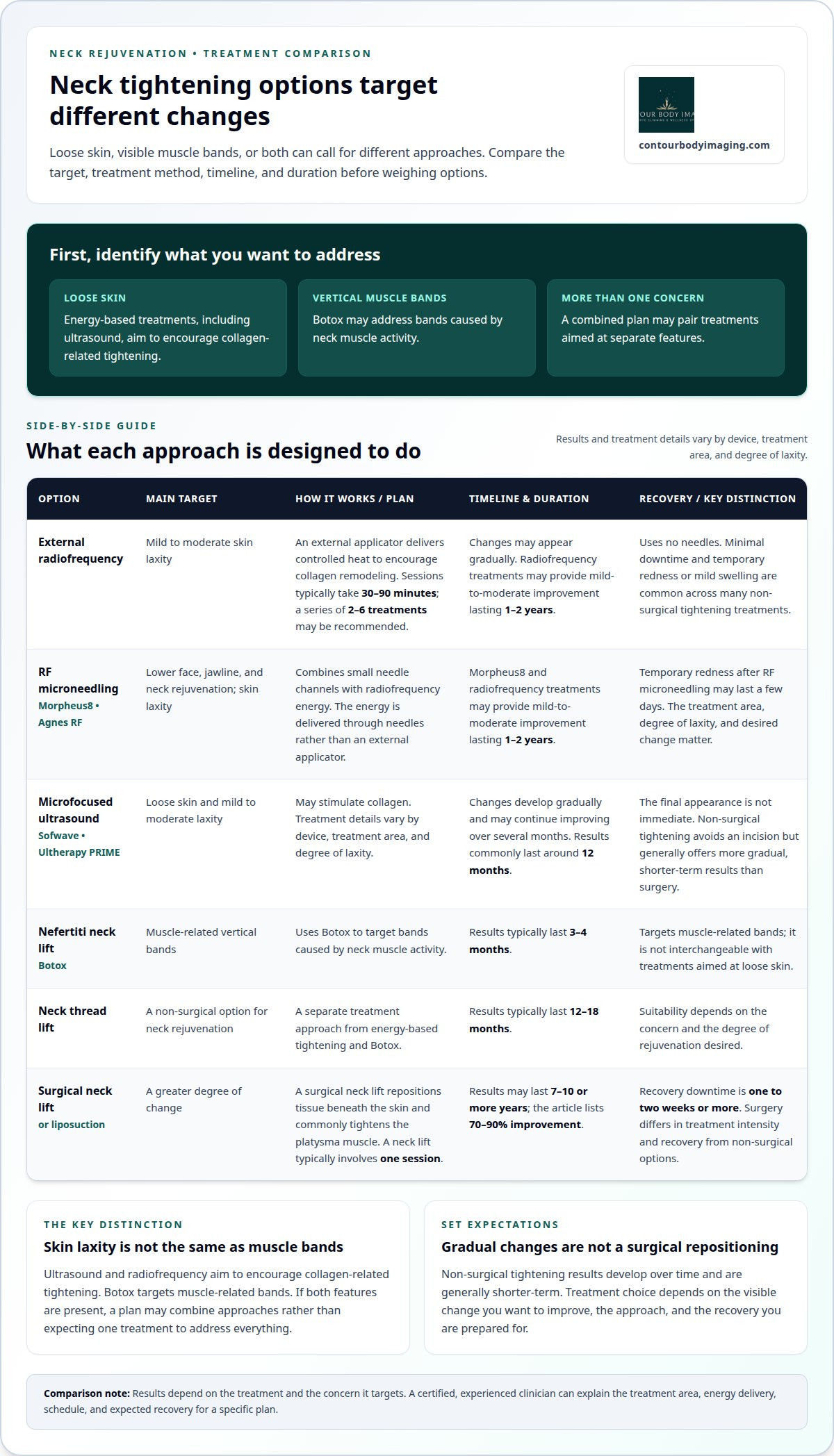
The best neck-tightening treatment is the one that matches what’s causing the change: mild skin looseness, visible muscle bands, or both. For mild to moderate laxity, non-invasive skin tightening for the neck can offer gradual improvement without an incision, while other non-surgical options target specific concerns such as muscle-related bands.
It’s understandable to want a fresher, firmer-looking neck without surgery or a lengthy recovery. Finding non-invasive skin tightening for the neck starts with understanding why skin changes and what each treatment can realistically address, rather than choosing a procedure by name alone.
This guide explains how aging and sun exposure affect neck elasticity, how radiofrequency and ultrasound treatments work, and how they compare with other non-surgical options. You’ll also learn what to weigh when choosing a treatment and how long results may last, so you can approach your next step with clearer expectations.
Table of Contents
How Long Do Non-Surgical Neck Lift Results Last?
Good candidates for non-surgical neck skin tightening often have mild to moderate laxity, including people in their 30s and 40s with early changes. It may suit someone noticing loose skin or early neck bands who wants gradual improvement without an incision.
Results depend on the treatment and the concern it targets. Non-surgical tightening can last up to 1 year, while microfocused ultrasound results commonly last around 12 months. Ultrasound changes develop gradually and may continue improving over several months, so the final appearance isn’t immediate.
Ultrasound options include Sofwave and Ultherapy PRIME. Ultrasound tightening treatments may stimulate collagen, though treatment details vary. These details help set expectations: treatment time is relatively brief, but collagen-related changes emerge over time. The device, treatment area, and degree of laxity influence the approach.
Other non-surgical treatments address different signs of aging. A Nefertiti neck lift uses Botox to target muscle-related bands, with results typically lasting three to four months. Neck thread-lift results typically last 12 to 18 months. These options aren’t interchangeable: skin laxity, visible bands, and the desired degree of rejuvenation help determine which approach fits.
Loose skin: Energy-based treatments, including ultrasound, aim to encourage collagen-related tightening.
Vertical muscle bands: Botox may address bands caused by neck muscle activity.
More than one concern: Combining treatments may address separate features as part of neck rejuvenation.
A combined plan can pair treatments that target different concerns, rather than expecting one procedure to address everything. For example, ultrasound may focus on skin laxity, while Botox targets muscle-related bands. Combining treatments can address more than one concern, but each method needs to match the change being treated. Microneedling is another category, though its suitability depends on the area and goal.
Surgery offers a different degree and duration of change. A surgical neck lift repositions tissue beneath the skin and commonly tightens the platysma muscle; surgical neck lifts or liposuction may provide results lasting 7-10 or more years, with 70-90% improvement listed. A neck lift typically involves one session and recovery downtime of one to two weeks or more. Non-surgical treatments avoid incisions but generally provide more gradual, shorter-term results, making the choice a balance between treatment intensity, recovery, and the visible changes you want.
Radiofrequency skin tightening
Radiofrequency (RF) devices deliver controlled heat into the skin to encourage collagen remodeling. Collagen provides structural support, so stimulating its production may gradually improve mild to moderate laxity. Non-invasive RF treatment uses an external applicator, while RF microneedling delivers energy through small needles. That distinction affects the treatment experience and expected recovery.
A clinical study found non-invasive RF tightened cheek and neck skin without scarring or pigment changes. In-office sessions typically take 30 to 90 minutes, and a series of 2 to 6 treatments may be recommended. The number depends on the device, the area treated, and the degree of laxity. Changes may appear gradually rather than as an immediate lift.
RF microneedling combines needle channels with radiofrequency energy. Morpheus8 is a named example used for lower-face, jawline, and neck rejuvenation; RF microneedling has been shown to rejuvenate these areas. Morpheus8 and radiofrequency treatments may provide mild-to-moderate improvement lasting 1-2 years. Temporary redness can last a few days after RF microneedling, while minimal downtime and temporary redness or mild swelling are common across many non-surgical tightening treatments.
Agnes RF is another named radiofrequency microneedling option. The name alone doesn’t determine whether it fits a neck concern: the treatment area, skin laxity, and desired change matter. A certified, experienced clinician can explain whether the plan uses needles, where energy is delivered, and what recovery to expect. For example, someone focused on surface-level laxity may weigh an external RF approach differently from someone considering microneedling.
Before choosing, clarify the treatment’s purpose and schedule. A useful comparison includes:
Energy delivery: External RF heats skin without needles; RF microneedling combines needles and energy.
Plan: A 2-to-6-treatment course may be recommended for RF, depending on the treatment area and laxity.
Recovery: RF microneedling may cause temporary redness for a few days.
These approaches support gradual rejuvenation, not surgical repositioning of tissue. If your interest also includes facial skin care, a Cryo Facial is a separate facial treatment option.
What Causes a ‘Turkey Neck’ and Neck Sagging in the First Place?
Neck aging reflects changes in skin support and the platysma muscle, not just one cause. Knowing which changes are visible can help you understand what a tightening treatment might target.
Causes of Neck Skin Laxity
Skin laxity means the neck skin has lost some firmness and elasticity. Aging, sun exposure, and reduced collagen and elastin production contribute to this change. Collagen and elastin production naturally declines with age, which can contribute to changes in neck skin firmness. That gradual shift matters because treatments that stimulate collagen aim to address skin support, not every cause of neck sagging.
Factors Behind Neck Sagging
Neck sagging can involve loose skin, visible muscle bands, or both. The platysma is a broad muscle beneath the skin; its inner edges may separate and sag, creating vertical bands by about age 55. This distinction matters when choosing a treatment, because a procedure targeting skin laxity may not address muscle-related bands. A visible fold or band is a sign to identify, not a diagnosis by itself.
Early Neck Aging
Early neck aging often reflects gradual loss of elasticity alongside repeated sun exposure. Collagen and elastin production can decline with age, and visible changes may appear before deeper sagging becomes noticeable. Daily broad-spectrum sunscreen with SPF 30 or higher can help protect the neck from sun exposure. This habit supports skin care, but it doesn’t reverse existing laxity or reposition the platysma.
Look at the pattern of change rather than relying on the phrase “turkey neck.” Fine, crepey texture suggests a different concern from prominent vertical bands or loose skin beneath the chin. These signs can overlap, so describing their location and appearance helps clarify your neck rejuvenation goal. A treatment plan needs to match the feature being addressed.
Sun exposure is one factor people can address through daily care; age-related changes continue gradually. Applying broad-spectrum SPF 30 or higher to the neck each day is a practical protective step. It supports ongoing skin care, while energy-based treatments aim to stimulate collagen. Neither step should be expected to correct every cause, especially when muscle bands contribute to the appearance.
The distinction matters because “tightening” can describe different goals. Improving skin texture, reducing mild looseness, and addressing platysma bands are not the same aim. An assessment considers whether skin laxity, muscle separation, or both are visible before matching a treatment to the concern. This keeps expectations grounded in the actual cause of the change.
What Is the Best Non-Surgical Treatment for Neck Tightening?
The best option depends on the concern, treatment method, and recovery you can accommodate. Results from non-surgical treatments often develop gradually, so timing and maintenance matter.
Results Timeline
The results timeline is the period between treatment and visible change. It matters because collagen remodeling takes time, and early appearance may not reflect the final outcome. Some non-surgical tightening results take up to 3 months to become final. Ultrasound-related improvement can continue over several months, while energy-device treatment commonly involves 1 to 3 sessions, plus maintenance.
Distinguish the appointment date from the results timeline. A session may take an hour or less, but smoother-looking skin can develop gradually afterward. Someone with mild laxity, for example, may notice changes over time rather than an immediate lift. The treatment type and skin concern shape the timeline.
Recovery and Expected Results
Recovery describes short-term effects after treatment, while results refer to changes in skin laxity. Minimal downtime is common with many non-surgical treatments, and temporary redness or mild swelling are typical possible side effects. RF microneedling can cause temporary redness for a few days. These effects can influence scheduling, even when you return to work the same day.
Non-surgical treatments aim for gradual improvement, not surgical repositioning of tissue. A smoother appearance may develop as collagen production responds to energy-based treatment. The degree of change depends on the concern and method. Consider possible temporary redness or tenderness when planning work, events, or other activities.
Results Maintenance
Maintenance means preserving improvement after the initial treatment course. It matters because non-surgical results are temporary, and energy-device treatments commonly include follow-up maintenance. Non-surgical tightening results can last up to 1 year. Microfocused ultrasound results commonly last around 12 months, while Botox results for neck muscle bands typically last three to four months.
The treatment category helps set maintenance expectations. Botox targets muscle-related bands, while energy-based methods address skin laxity through collagen stimulation. These approaches have different result timelines. A maintenance plan should account for the original concern, the method used, and how the tissue changes over time.
Radiofrequency and Ultrasound Compared
Radiofrequency and ultrasound both use energy to support gradual tightening, but they deliver it differently. RF heats tissue, while some ultrasound treatments reach depths of up to 5 mm to stimulate collagen. This distinction matters when comparing treatment plans, because method, treatment area, and the concern being addressed all influence the approach.
RF treatment may involve a series of 2 to 6 sessions; ultrasound treatments typically take 30 to 90 minutes and have no downtime. Both can cause temporary effects, including redness or mild swelling. For non-invasive neck tightening, the choice depends on desired improvement, recovery preferences, and whether skin laxity or muscle bands are the main concern.
How non-surgical skin tightening works
Non-surgical tightening treatments use energy or injectables to address specific signs of neck aging. They don’t use an incision to reposition tissue like a surgical neck lift.
In the United States, the price depends on the case and is provided after a quote request. Cost factors include the device, treatment area, and number of sessions.
At-home creams, exercises, and devices aren’t interchangeable with in-office procedures. Creams moisturize the skin’s surface, while exercises work muscles; neither replicates energy delivered into tissue during a clinical treatment.
How Energy-Based Treatments Work
Radiofrequency heats tissue to stimulate collagen production, which may gradually improve skin firmness. Ultrasound also uses focused energy to heat tissue and trigger collagen production. Both approaches aim to support tightening without an incision, but they deliver energy differently.
Laser procedures use light energy to target skin concerns, while chemical peels work on the skin’s surface. The appropriate method depends on whether the goal is improving texture, mild laxity, or another visible concern. These treatments support gradual cosmetic change rather than physically lifting sagging tissue.
Botox addresses a different cause: muscle-related lines and bands. It affects muscle activity rather than directly tightening loose skin. That distinction matters when choosing a treatment, since skin laxity and visible platysma bands require different approaches. A combination may address separate concerns, but each method has its own purpose.
Non-Surgical Options and Recovery
Non-surgical options include radiofrequency, ultrasound, laser procedures, Botox, and chemical peels. Some energy-device treatments involve one to three sessions, plus maintenance. In-office procedures often take an hour or less, and many involve little recovery time. Temporary redness or mild swelling can occur, depending on the treatment.
Some treatments may produce changes gradually rather than an immediate lift. For example, ultrasound-related changes may continue improving over several months. Skin texture, the degree of sagging, and the treatment method all shape the visible outcome. These options may suit mild to moderate laxity, but they don’t reposition deeper tissue.
When Surgery Is Different
A surgical neck lift works beneath the skin to reposition tissue and commonly tightens the platysma muscle. A deep neck lift addresses deeper structures, rather than relying only on surface-level tightening. Surgery may be considered when pronounced sagging or deeper tissue changes exceed the goals of non-surgical cosmetic treatments.
That difference is practical: energy treatments stimulate gradual changes, while surgery physically alters tissue position. Choosing between them means weighing the degree of change you want against recovery and invasiveness. Non-surgical methods are not a substitute for surgery when the goal requires repositioning tissue.
Contour Body Imaging
Contour Body Imaging can help you explore non-invasive skin and wellness options alongside your neck rejuvenation goals. If you’re considering how to support overall skin health, Lumaray 360 red light therapy is one option; Cryo Facial offers a separate facial treatment approach.
Contour Body Imaging’s services complement the information in this guide, but they aren’t substitutes for ultrasound or radiofrequency neck-tightening procedures. Consider your treatment priorities when discussing which available services fit your broader wellness goals.
Contact Contour Body Imaging to discuss your goals and explore a suitable next step.
Choose a Next Step That Fits Your Goals
Use your priorities to shape the next conversation: which neck changes matter most, how gradually you’re comfortable with results developing, and what recovery fits your routine. Choosing non-invasive skin tightening for the neck is easier when you can describe the change you want to address, rather than starting with a device name. A focused discussion can help distinguish skin laxity from muscle bands and clarify which approaches match your goals.
Contour Body Imaging also offers Cryo T-Shock Body Contouring, Cryo Facial, and Endosphere for broader wellness and aesthetic interests. These are distinct services, not substitutes for neck-tightening procedures. Keeping that difference clear helps you explore options with realistic expectations and decide what feels relevant to you.
Take your time, consider the questions that matter to you, and choose an informed, comfortable path.
Frequently Asked Questions
Can You Tighten a Saggy Neck Without Surgery?
Yes, non-surgical treatments can improve the appearance of mild to moderate neck laxity. Radiofrequency and ultrasound aim to stimulate collagen, while Botox targets muscle-related bands. These approaches can’t reposition deeper tissue like a surgical neck lift. The best fit depends on whether loose skin, muscle bands, or both are the main concern, and on how much change you want to see.
What changes in the neck with age?
With age, the neck can develop looser skin, less elasticity, and visible vertical bands. Sun exposure contributes to lost elasticity, while the platysma muscle may separate and sag, making bands more noticeable. Fine, crepey skin and distinct vertical cords, for example, are different visible changes. Identifying the pattern helps clarify whether a treatment is intended to address skin texture or muscle-related bands.
At What Age Should You Consider a Neck Lift or Its Alternatives?
There’s no single age to begin considering neck treatments. People in their 30s and 40s with early, mild laxity are often good candidates for non-surgical options, but visible changes and treatment goals matter more than age alone. Someone noticing early looseness may explore non-surgical approaches, while pronounced sagging may call for a discussion of surgical options. The decision is about the concern, not a birthday.
What non-invasive treatments can tighten loose skin on the neck?
Options for non-invasive skin tightening for the neck include radiofrequency and ultrasound treatments, while radiofrequency microneedling combines energy with tiny needles. Botox addresses muscle-related bands; laser procedures and chemical peels target other skin concerns. Match the treatment to the change you want to address, since each method has a different purpose. A Cryo Facial is a facial rejuvenation service, not a substitute for a neck-tightening procedure.
How effective are non-invasive neck tightening treatments, and how long do results last?
Non-surgical treatments can create gradual improvement, especially for mild to moderate laxity, but they don’t produce the same tissue repositioning as surgery. Results vary by method: energy-based tightening may last up to 1 year, while Botox for neck muscle bands typically lasts three to four months. Changes can take time to develop, so judge progress after the expected treatment timeline, not immediately after an appointment.
How many treatment sessions are needed, and what is the recovery time?
The treatment plan depends on the device and the concern being treated. Energy-device treatment commonly involves one to three sessions, plus maintenance; radiofrequency plans may involve a series of two to six treatments. Many non-surgical procedures involve minimal downtime, with temporary redness or mild swelling possible. Ultrasound treatments commonly take 30 to 90 minutes, and people can typically return to work the same day.
How can I find a qualified provider for neck skin tightening near me?
Look for a provider whose documented training and experience match the specific treatment you’re considering. Ask how the method addresses your concern, what results and recovery to expect, and whether the plan distinguishes loose skin from muscle bands. For local aesthetic services, Contour Body Imaging proudly serves The Woodlands and Dallas areas. Its Cryo Facial is a separate facial service.

Comments