

Red Light Therapy for Inflammation in The Woodlands: What to Know Before You Book
What if a therapy promoted for inflammation isn’t equally well supported for every concern? If you’re considering red light therapy for inflammation The Woodlands, look beyond broad wellness claims and ask what is known about your specific goal.
Red light therapy, also called photobiomodulation, is thought to influence cellular energy processes. That proposed mechanism doesn’t mean it’s proven to treat every inflammatory condition, or that findings for one concern apply to another. A wellness session shouldn’t replace medical advice or established care for a health condition.
This guide explains what red light therapy may and may not do, what to ask about equipment and session plans, and how to consider safety and provider suitability before booking. Contour Body Imaging offers Lumaray 360 red light therapy in The Woodlands, Texas. Before deciding, ask about the session’s intended use, current details, and whether it may be appropriate for you. The goal is an informed choice, not a promise of a cure.
Table of Contents
Red Light Therapy for Inflammation: What the Term Means, and What It Does Not
How Red Light Therapy May Interact With Inflammation, and What Evidence Can Show
Choosing Red Light Therapy in The Woodlands: Questions That Matter More Than Big Claims
What to Expect From a Red Light Therapy Session Near The Woodlands
Explore Lumaray 360 Red Light Therapy at Contour Body Imaging in The Woodlands
Red Light Therapy for Inflammation: What the Term Means, and What It Does Not
If you’re exploring options for discomfort, recovery, or general wellness, it can be tempting to look for one solution. But “inflammation” describes a body response, not a single diagnosis. A wellness service shouldn’t substitute for finding out what may be causing your symptoms.
What does inflammation mean in everyday health discussions?
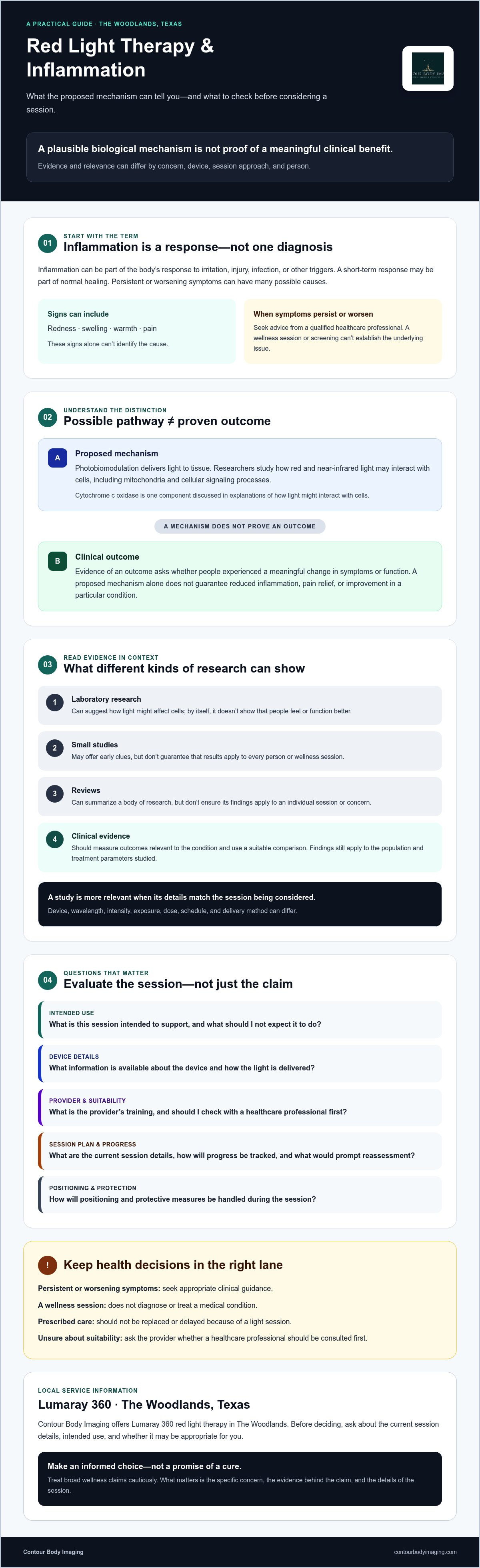
Inflammation is part of the body’s response to irritation, injury, infection, or other triggers. A short-term response can be part of normal healing. Persistent or worsening symptoms are different: they may have many possible causes and are a reason to seek advice from a qualified healthcare professional.
Redness, swelling, warmth, or pain can occur with inflammation, but those signs alone can’t identify its cause. Similar joint discomfort, for example, can arise in different circumstances. A symptom or wellness screening can’t establish the underlying issue. If symptoms concern you, seek appropriate clinical guidance rather than relying on a light session to explain them.
What is red light therapy intended to do?
Red light therapy is often discussed as photobiomodulation: light is delivered to tissue, where it may interact with cells. Researchers have proposed that this interaction could affect cellular processes, including energy production in mitochondria. Cytochrome c oxidase is one component discussed in explanations of how light might interact with cells; this overview of Low-level laser therapy describes the proposed mechanism and related terminology.
In brief: a proposed mechanism describes how light might affect cells; a demonstrated clinical outcome shows whether people experience a meaningful change. One doesn’t prove the other. A proposed mechanism does not guarantee reduced inflammation, pain relief, or improvement in a particular condition. Evidence and relevance can differ by concern, device, and session approach.
So what does that mean if you’re considering red light therapy for inflammation The Woodlands? Treat broad claims cautiously. Ask what a session is intended to support, what is known about the specific device, and whether the provider recommends checking with a healthcare professional first. A consumer wellness session doesn’t diagnose or treat a medical condition, and it shouldn’t replace prescribed care or delay assessment of persistent symptoms.
How Red Light Therapy May Interact With Inflammation, and What Evidence Can Show
Photobiomodulation research examines how red and near-infrared light may interact with tissue. The type of light and how it is delivered matter: wavelength, intensity, exposure, and delivery method can differ between devices. A general explanation, such as this WebMD guide to red light therapy, can provide background, but it can’t tell you whether a particular device or session suits your concern.
What does the proposed mechanism involve?
Researchers study possible effects on mitochondria, which help cells produce energy, and on signaling processes within cells. These are proposed biological pathways, not proof that a person will experience a meaningful change in pain, inflammation, or function. Findings from one device, dose, or condition also can’t automatically be applied to another. Ask a local provider what device information is available rather than assuming all red light sessions are equivalent.
Evidence and outcomes vary by condition, protocol, and person; a plausible mechanism alone doesn’t establish a clinical benefit.
How should readers interpret claims about inflammation?
Look closely at what kind of evidence supports a claim. Laboratory research can suggest how light might affect cells, but it doesn’t show by itself that people feel or function better. Small studies may offer early clues, while reviews can summarize a body of research; neither guarantees that results apply to every person or wellness session. Clinical evidence should measure outcomes relevant to the condition and use a suitable comparison. Even then, findings apply to the population and treatment parameters studied.
Before treating a headline or provider statement as relevant to you, check:
Who was studied? A result in one group may not apply to a different condition or population.
What was used? Wavelength, dose, treatment schedule, and device can affect how closely a study matches the session being offered.
What changed? A laboratory marker is not the same as a measured improvement in symptoms or everyday function.
Compared with what? A control or comparison group helps put reported changes in context.
For red light therapy for inflammation The Woodlands, use these questions to guide a conversation, not to self-diagnose or change prescribed care. If you’re exploring Lumaray 360 at Contour Body Imaging, you can review Lumaray 360 information and ask the clinic about the session’s intended use and current device details. Keep medical questions about persistent or worsening symptoms with a qualified healthcare professional.
Choosing Red Light Therapy in The Woodlands: Questions That Matter More Than Big Claims
A useful provider conversation should clarify the service without turning a wellness session into a promise about a medical condition. If you’re comparing red light therapy for inflammation The Woodlands, focus on the intended use, what the provider can explain about the device, and whether your circumstances call for guidance from a healthcare professional.
What should you ask a red light therapy provider?
Use these questions to understand what’s actually being offered. A provider should explain the session in plain language, acknowledge its limits, and invite questions about suitability.
How can you assess a treatment claim?
Ask what evidence relates to your exact concern, not just red light therapy in general. A relevant explanation should clarify who was studied, what device and session parameters researchers used, and whether they measured a meaningful change in symptoms or function. If a provider can’t connect a claim to evidence or explain its limits, treat it cautiously.
Specific, transparent answers matter more than generalized outcome promises. Be wary of language suggesting a cure, guaranteed results, or universal suitability. Ask how the provider distinguishes wellness goals from medical evaluation or treatment. A session shouldn’t delay clinical assessment for persistent symptoms or replace prescribed care. Clear communication, thoughtful screening, and honest limits are more useful comparison points than a device label alone.
What to Expect From a Red Light Therapy Session Near The Woodlands
A first session should begin with clear information, not assumptions about how long treatment takes or what you’ll feel afterward. Duration, positioning, protective measures, and the session plan depend on the provider and device. Ask for those details before booking, then decide whether the service fits your goals.
How might a first appointment proceed?
Use this as a guide to what to discuss, not as a promise of a specific clinic protocol. The process can vary.
Explain your goal. Tell the provider what you hope to explore, such as general wellness or recovery. If you’re concerned about symptoms, describe them without assuming red light therapy addresses their cause.
Share relevant health information. Mention health concerns and personal circumstances that could affect suitability. Ask whether you should consult your clinician before scheduling.
Clarify the service and device. Ask what device is used, how it’s set up, what protective measures are recommended, and what you’ll be asked to do. For Lumaray 360, confirm current session details with the clinic rather than assuming duration, positioning, or protocol.
Check that instructions are clear. Before proceeding, make sure you understand what to expect and how to raise a concern during the session. It’s reasonable to pause if an explanation or instruction doesn’t make sense.
Discuss follow-up thoughtfully. Ask what the provider suggests observing afterward and how progress is discussed. Don’t assume you’ll notice an immediate change or need a particular schedule; ask what the provider can substantiate for that service.
When should you seek medical guidance first?
Talk with a qualified healthcare professional before relying on a wellness session if symptoms are persistent, severe, unexplained, or worsening. A clinician can help assess what may be causing them and advise you about your individual circumstances, including whether personal health factors affect suitability.
A provider should explain the service’s intended wellness use and its limits. If you’re considering red light therapy for inflammation The Woodlands, keep that distinction clear: a wellness session doesn’t diagnose or treat a medical condition. Don’t delay an assessment or replace prescribed care with a session. If you’re unsure whether it’s appropriate for you, ask your clinician first.
Explore Lumaray 360 Red Light Therapy at Contour Body Imaging in The Woodlands
Contour Body Imaging offers Lumaray 360 red light therapy in The Woodlands, Texas. If you’re weighing red light therapy for inflammation The Woodlands, treat this as an opportunity to ask informed questions about a wellness service, not as a promise of a health outcome. Lumaray 360 doesn’t diagnose inflammation or guarantee treatment for it.
Is Lumaray 360 a fit for your wellness goals?
Start by describing what you hope to explore, whether that’s general wellness or another personal goal. Then ask what the Lumaray 360 service is intended to offer and what it isn’t designed to do. A clear answer should distinguish the service’s stated purpose from medical assessment or treatment, without promising relief, recovery, or a specific result.
Before deciding, ask the clinic to explain the current session details in practical terms. You might ask:
What device and session format are used, and what technical information is available?
What should I expect for positioning, duration, and protective measures?
Are there personal circumstances that mean I should check with my clinician first?
How can I discuss my experience afterward without assuming a particular outcome?
These questions help you understand what you’re agreeing to. Session specifics can change, so confirm them directly rather than relying on general descriptions of red light therapy or assumptions about a device.
How to take a comfortable next step in The Woodlands
You don’t need to arrive with a decision already made. Review the aesthetic clinic guide for The Woodlands for broader local service context, then contact the clinic to ask about Lumaray 360’s current session details, availability, and any client-facing suitability guidance. If your concern is persistent, severe, unexplained, or worsening, discuss it with a qualified healthcare professional; a wellness service shouldn’t delay assessment or replace prescribed care.
Once you’ve considered your goals and questions, you can contact Contour Body Imaging to learn more. A straightforward conversation can help you decide whether to explore the service, seek clinical guidance first, or take another next step that better fits your needs.
Make Your Next Step an Informed One
Red light therapy may be worth exploring as a wellness service, but a proposed cellular mechanism isn’t proof that it will improve inflammation-related symptoms. Evidence can vary by condition, device, session approach, and individual. Before booking, ask what the session is intended to offer, what device details and safety guidance the provider can share, and whether your circumstances call for advice from your clinician.
If symptoms are persistent, severe, unexplained, or worsening, seek clinical guidance rather than relying on a wellness session. Red light therapy doesn’t diagnose or guarantee treatment for inflammation, and it shouldn’t replace prescribed care.
Contour Body Imaging offers Lumaray 360 red light therapy in The Woodlands and serves clients in Plano, Texas. A conversation with the clinic can help you confirm current session details, discuss suitability, and decide whether the service aligns with your wellness goals. Asking questions is a confident place to start.
Take the next step at your own pace, with clear expectations and the information you need to make a choice that feels right for you.
Frequently Asked Questions
Can red light therapy reduce inflammation?
Red light therapy may influence cellular processes linked to inflammation, but that proposed mechanism doesn’t prove it will reduce symptoms for a particular person or condition. Research findings depend on the condition studied and the device and treatment parameters used. Treat broad claims cautiously, and don’t use a wellness session to diagnose symptoms or replace appropriate clinical advice. Ask what evidence relates to your specific concern before booking.
Is red light therapy safe for everyone?
No. Suitability can depend on personal health circumstances, and a provider shouldn’t assume every client is a candidate. Before scheduling, share relevant health concerns and ask about the device, protective measures, and any reasons to seek guidance from a clinician first. If you’re unsure, check with your healthcare professional. Don’t proceed if the instructions or safety information are unclear; ask questions and take time to decide.
How many red light therapy sessions are needed for inflammation?
There isn’t one established session count that applies to every person, condition, and device. The number and frequency of sessions can depend on the provider’s service plan, but a suggested schedule isn’t proof of effectiveness. Ask what the plan is based on, how progress would be discussed, and when you should reassess. Be cautious of promises that a fixed number of sessions will resolve inflammation or guarantee a result.
What happens during a red light therapy appointment?
An appointment should include a conversation about your goals, relevant health circumstances, and what the service involves. The provider should explain the device, positioning, session duration, protective measures, and how to raise a concern. These details vary by device and provider, so confirm them before booking. For a Lumaray 360 session, ask Contour Body Imaging about the current process rather than assuming a particular setup or immediate effect.
Can red light therapy replace medical treatment for inflammation?
No. Red light therapy at a wellness clinic isn’t a diagnosis or a replacement for medical evaluation or prescribed treatment. Inflammation-related symptoms can have different causes, so persistent, severe, unexplained, or worsening symptoms warrant advice from a qualified healthcare professional. Don’t delay assessment or change a care plan because of a wellness service. You can ask your clinician whether exploring a session makes sense alongside your existing care.
What should I ask before booking red light therapy in The Woodlands?
Ask what the session is intended to support, what device and format are used, and which current technical details the provider can explain. Clarify duration, positioning, protective measures, provider training, and how progress is discussed, without assuming results are guaranteed. If you’re comparing red light therapy for inflammation The Woodlands, also ask what evidence applies to your specific concern and whether your health circumstances call for clinician guidance first.
Does Contour Body Imaging offer red light therapy in The Woodlands?
Yes. Contour Body Imaging offers Lumaray 360 red light therapy in The Woodlands and also serves clients in Plano, Texas. The service isn’t a diagnosis or a guaranteed treatment for inflammation. Before booking, ask the clinic about current session details, intended use, protective measures, and any client-facing suitability guidance. If you have persistent or concerning symptoms, seek advice from a qualified healthcare professional rather than relying on a wellness session.


Comments