

Lymphatic drainage massage at home vs professional benefits
More pressure doesn’t mean better lymphatic drainage. Lymphatic drainage massage at home vs professional care differs mainly in guidance and technique: both use gentle, light-pressure movements, while professional treatment follows a more structured approach. The massage may help move excess fluid, but for people with a healthy lymphatic system, benefits may be limited beyond relaxation.
It makes sense to compare your options before deciding what feels right. This guide explains what lymphatic drainage massage involves, how professional care differs from at-home techniques, and what benefits may apply when your lymphatic system is working normally. You’ll also learn why this gentle method differs from deep-tissue massage, what to consider when choosing professional care, and when swelling or other symptoms call for medical advice rather than a wellness treatment.
Table of Contents
What is lymphatic drainage massage?
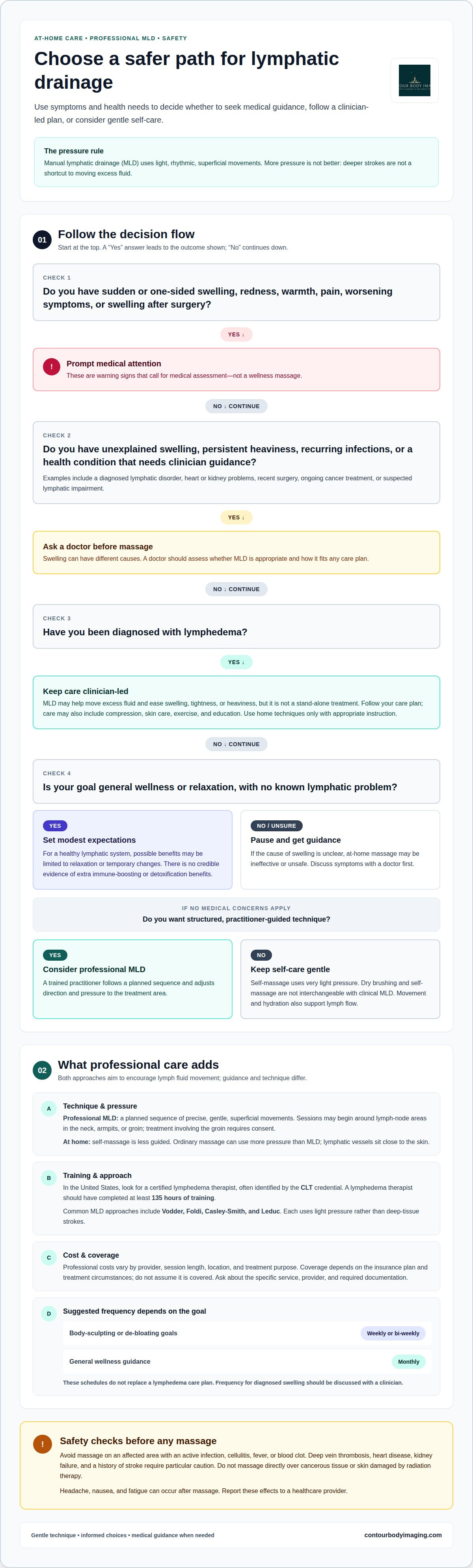
Lymphatic drainage massage, also called manual lymphatic drainage (MLD), is a gentle technique using light pressure and rhythmic movements. A trained practitioner lightly stretches the skin to encourage lymph fluid toward lymph vessels and nodes. Unlike deep-tissue massage, MLD works close to the skin’s surface, where superficial lymph vessels sit. Its approach is designed to support fluid movement, not to knead muscles or provide a general relaxation massage.
The lymphatic system helps balance fluid levels, remove excess fluid and waste from tissues, and support immune function. Unlike the circulatory system, it has no pump. Movement and muscle activity help keep lymph flowing, while blockage or damage can cause fluid to collect in tissues. When drainage is impaired, swelling, heaviness, discomfort, and skin changes can follow.
Lymphedema is a chronic condition involving fluid buildup when lymph doesn’t travel through the body properly. Surgery, infection, trauma, and cancer-related disease can affect lymphatic vessels. Rheumatoid arthritis, fibromyalgia, chronic venous insufficiency, and lipedema are also associated with lymphedema. Manual lymphatic drainage (MLD) may form part of lymphedema care, but it isn’t a stand-alone treatment. Care may also include compression, skin care, exercise, and education.
Some conditions make lymphatic massage unsafe or unsuitable. Avoid massage on an affected area if there’s an active infection, cellulitis, fever, or blood clot. Deep vein thrombosis, heart disease, kidney failure, and a history of stroke also require particular caution. A practitioner should not massage directly over cancerous tissue or skin damaged by radiation therapy.
Seek medical advice first: A doctor should assess whether massage is appropriate with heart or kidney problems, a diagnosed lymphatic disorder, recent surgery, ongoing cancer treatment, or suspected lymphatic impairment.
Get urgent care for warning signs: Sudden or one-sided swelling, redness, warmth, pain, worsening symptoms, or swelling after surgery needs prompt medical attention.
Medical clearance matters because swelling can have different causes, and massage may worsen some conditions. If you have unexplained swelling, persistent heaviness, or recurring infections, discuss your symptoms with a doctor before trying MLD. Headache, nausea, and fatigue can occur after massage. Report these effects to a healthcare provider.
Possible benefits depend on the health condition. For people with lymphedema, MLD may help move excess fluid and ease swelling, tightness, or heaviness. It may also ease later-stage rheumatoid arthritis symptoms. Evidence for fibromyalgia symptoms and quality of life remains limited, while effects on chronic venous insufficiency beyond increased blood flow are unclear. For healthy people, there’s no credible evidence that MLD provides extra immune-boosting or detoxification benefits.
At-home techniques compared with professional lymphatic drainage
Both approaches aim to encourage lymph fluid movement, but professional care adds structured technique and guidance. Choosing lymphatic drainage massage at home vs professional treatment depends on your health needs, experience, and goals.
At-home options include dry brushing and self-massage, but they aren’t interchangeable with clinical manual lymphatic drainage (MLD). Self-massage uses very light pressure, while a trained practitioner follows a sequence designed to prepare and clear lymphatic pathways. Ordinary massage can use more pressure than MLD, so deeper strokes aren’t a shortcut to moving excess fluid.
Professional sessions may begin around lymph-node areas in the neck, armpits, or groin. Treatment involving the groin requires consent. The practitioner then uses gentle, rhythmic movements to direct fluid toward functioning pathways. Vodder, Foldi, Casley-Smith, and Leduc are four commonly used MLD approaches. Each uses light pressure rather than deep-tissue strokes.
For lymphedema, a trained clinician may adapt care to the affected area and combine MLD with compression and other treatments. If you have diagnosed lymphedema, follow your care plan, including any prescribed compression garments. At-home massage without instruction can be ineffective or unsafe, especially when the cause of swelling is unclear. Movement and hydration also support lymph flow without massage.
Differences in Technique and Pressure
Professional MLD follows a planned sequence of precise, superficial movements; self-massage is less guided. This matters because lymphatics lie close to the skin and are vulnerable to external pressure. A practitioner adjusts the direction and pressure for the treatment area instead of using ordinary massage strokes. For lymphedema, a certified lymphedema therapist can teach an appropriate self-care method.
In the United States, look for a certified lymphedema therapist, often identified by the CLT credential. A lymphedema therapist should have completed at least 135 hours of training.
Cost and Insurance Coverage
Professional massage costs in the United States vary by provider, session length, location, and treatment purpose. Rates differ across settings, and insurance coverage depends on the plan and treatment circumstances, so don’t assume it’s covered. Before scheduling, ask your insurer whether the specific service and provider are covered and what documentation is required.
Treatment Frequency
Frequency depends on your goal and care plan. For body-sculpting and de-bloating goals, suggested sessions are weekly or bi-weekly; general wellness guidance suggests a monthly session. These schedules don’t replace a lymphedema care plan.
If you have diagnosed swelling, ask a clinician how home care fits your treatment plan. A specialist may combine professional MLD with compression, exercise, and daily care. When comparing lymphatic drainage massage at home vs professional sessions, the key distinction is whether you need guided treatment or self-care support. New or worsening swelling needs medical assessment before you increase massage frequency.
Benefits for people with healthy lymphatic systems
For a healthy lymphatic system, lymphatic drainage massage isn’t a detox or fat-loss treatment. Its clearest potential value is relaxation, with temporary changes in fluid-related puffiness for some people.
Abdominal manual drainage may promote relaxation during psychological stress. Neck treatment may temporarily slow heart rate and lower blood pressure in healthy people. These effects aren’t the same as lasting health improvements, and massage hasn’t been shown to give healthy people extra immune benefits. Regular movement, hydration, and balanced nutrition support lymph flow without relying on massage.
Potential Benefits and Limitations
For people without lymphedema, possible benefits are generally modest and short-lived, so keep expectations realistic. Some people notice less bloating or a temporarily more defined contour after a session. Fluid movement can change appearance, but it doesn’t remove body fat or produce long-term weight loss. A healthy lymphatic system already manages fluid balance, so massage may add little beyond a relaxing experience.
A professional therapist may be useful if you want guided, comfortable treatment or have a specific concern. For example, someone recovering from a procedure should follow their medical team’s advice before massage. A therapist can adapt pressure and technique, but a medical condition, unexplained swelling, or active infection calls for clinical assessment rather than a wellness session. The reason for treatment matters more than the promise of a dramatic result.
Realistic Results Across Settings
At-home and professional massage can both feel calming, but neither guarantees a visible change. A trained professional uses a planned manual technique, while self-massage depends on your knowledge and ability to apply light pressure. For healthy people, any de-puffing is temporary, with effects described as lasting several days to weeks. It isn’t evidence of fat loss or a lasting change in body size.
People with lymphedema have different care needs. A certified lymphedema therapist can assess the affected area and provide manual drainage as part of broader care. Treatment may help move excess fluid and ease swelling or heaviness, but it doesn’t replace prescribed compression or the rest of a care plan. A therapist may also teach suitable self-care, so home techniques support rather than substitute for professional guidance.
Consider your goal before booking: relaxation and temporary de-puffing differ from managing a lymphatic condition. If swelling is unexplained or worsening, prioritize medical evaluation; massage can’t diagnose its cause. For general wellness, movement and hydration are practical daily supports, while professional treatment offers guided technique if you prefer hands-on care.
Professional versus self-performed lymphatic drainage massage
Professional treatment provides guided manual care, while self-care supports lymphatic function between appointments. This distinction matters most when swelling, a diagnosed condition, or unclear symptoms affect your care.
At-Home Lymphatic Self-Care
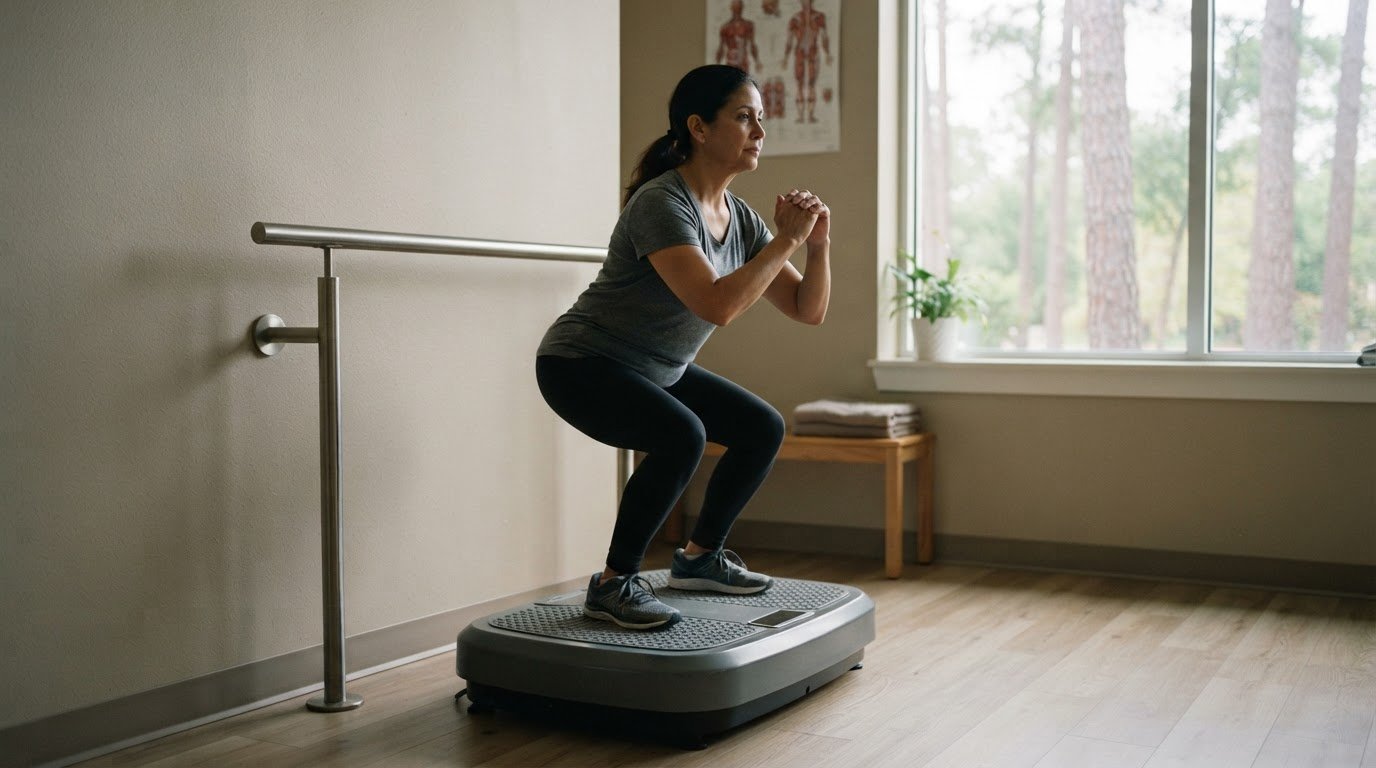
At-home self-care supports the lymphatic system through movement, hydration, and techniques taught for your needs. It shouldn’t replace an assessment if swelling or heaviness persists. A network of vessels and lymph nodes carries fluid through the body, and general movement helps maintain flow without massage.
If you have lymphedema, a trained medical professional can teach suitable self-massage. That guidance helps you understand the appropriate pressure and direction for your condition. It also clarifies how self-care fits with prescribed compression garments, exercise, and skin care. These details matter because an approach used for one area or diagnosis may not suit another.
Self-treatment without instruction can be ineffective or unsafe, particularly when the cause of swelling is unknown. New, worsening, or one-sided changes need medical assessment, not an attempt to manage them with massage. Cancer treatment, recent surgery, infection, or a known lymphatic disorder also affects the care context. A clinician’s advice helps establish whether massage belongs in your plan.
Choosing Between Professional and Self-Performed Massage
Professional MLD is delivered by a trained practitioner who can adapt the technique to your needs; self-massage relies on instruction and practice. This difference affects comfort and safety, especially when lymphatic function is impaired. If you have diagnosed lymphedema, seek a certified lymphedema therapist, often identified by the CLT credential, rather than treating massage as general bodywork.
A qualified therapist can explain the purpose of treatment, assess the area, and teach appropriate home care. Ask about their training in manual lymphatic drainage and experience working with lymphedema. For example, someone with arm swelling after cancer treatment may need care coordinated with their medical team, not a routine massage approach.
Let the evidence and your treatment goals guide your expectations. Professional MLD can form part of lymphedema care, alongside compression and other prescribed measures. It doesn’t replace medical evaluation or a complete care plan. At home, movement and hydration support lymph flow; if a condition is involved, follow professional instruction for massage techniques.
Choose professional care when a clinician recommends MLD, when symptoms need assessment, or when you need self-care training. If you’re healthy and seeking general wellness, movement and hydration support everyday lymphatic function without a massage appointment. If swelling is unexplained or worsening, contact a healthcare provider before using massage.
Gentle lymphatic drainage massage and manual lymphatic drainage
Manual lymphatic drainage (MLD) is a specialized, gentle technique, not ordinary massage with lighter pressure. It involves precise movements that stretch and move the skin along lymph flow pathways. Because superficial lymph vessels lie just beneath the skin, deep pressure isn’t needed to reach them. A session usually lasts 15 to 60 minutes, depending on the treatment area and approach.
MLD follows a deliberate sequence rather than rubbing directly over a swollen area. Practitioners commonly begin around lymph nodes in the neck, armpits, and groin, then work toward affected tissues. Depending on the method, movements may include stretching, compressing, gliding, or cupping. The aim is to encourage lymph fluid to move through pathways that can carry it, not to force fluid through blocked vessels.
That distinction matters because ordinary massage strokes can reach deeper tissues and use more pressure. Superficial lymphatics are vulnerable to external pressure, and traditional strokes may affect their anchoring filaments and endothelial lining. More force isn’t more effective. In MLD, light, rhythmic contact is essential; deep-tissue kneading serves a different purpose.
Four commonly used MLD approaches are Vodder, Foldi, Casley-Smith, and Leduc. They share gentle, skin-level movements but organize treatment differently. A trained therapist considers your condition and treatment area when selecting an approach. For example, care for swelling after breast cancer surgery may form part of a broader lymphedema plan rather than an isolated massage session.
For diagnosed lymphedema, MLD may help move excess fluid and ease swelling, heaviness, or tightness. It’s commonly combined with compression, exercise, skin care, and education. A certified lymphedema therapist or physical therapist trained in MLD can tailor treatment and teach appropriate self-care. After surgery, a doctor may recommend sessions as part of recovery, but massage should follow medical guidance.
Evidence for postoperative MLD varies by procedure, and further research is needed for some cosmetic recovery outcomes. MLD doesn’t directly cause weight loss, though reducing fluid may temporarily change how swollen tissues look or feel. It also doesn’t replace evaluation of unexplained swelling. Sudden or one-sided swelling, redness, warmth, or pain calls for prompt medical care, not a massage appointment.
The practical takeaway is simple: choose MLD for gentle, targeted fluid movement, especially within a lymphedema care plan. A regular massage that feels relaxing may use different strokes and pressure. If you’re considering MLD after surgery or for ongoing swelling, discuss it with your healthcare provider and follow their recommended plan.
Contour Body Imaging
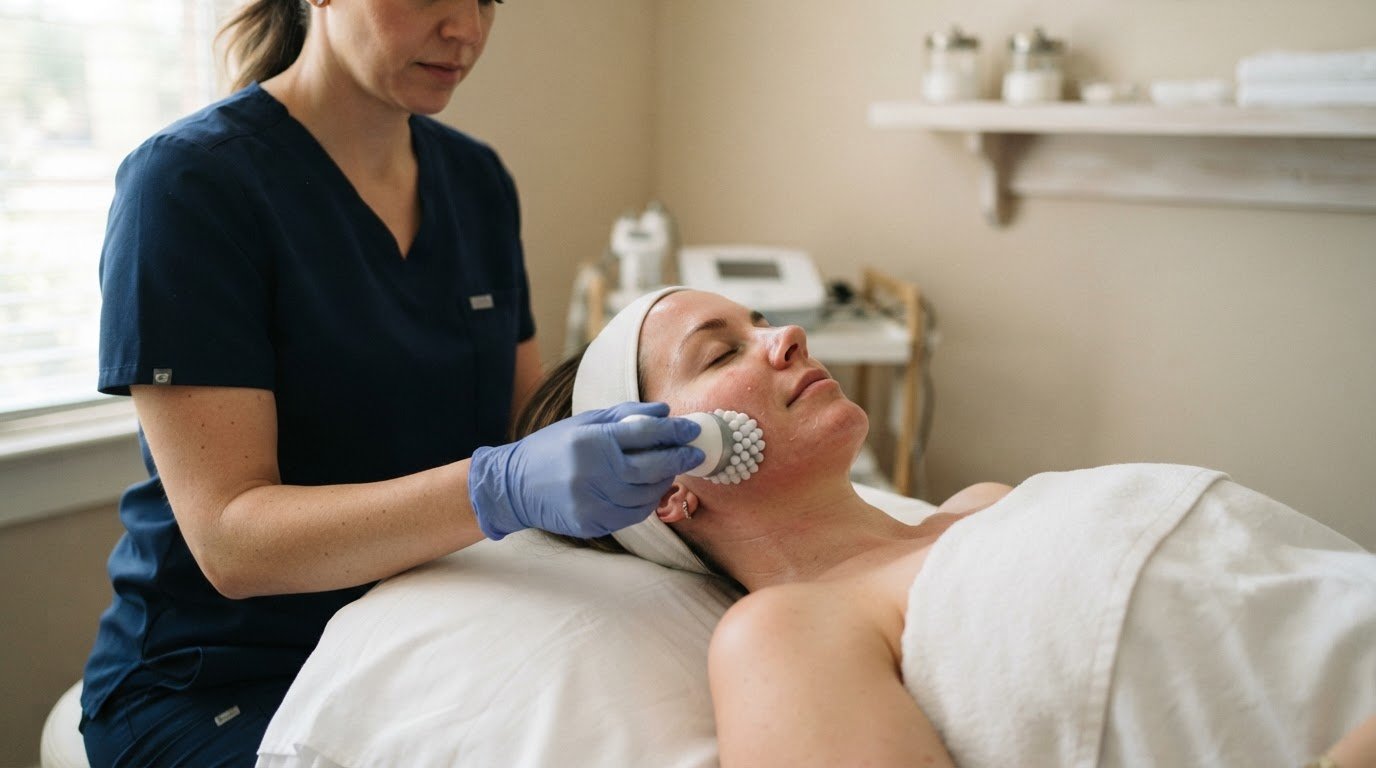
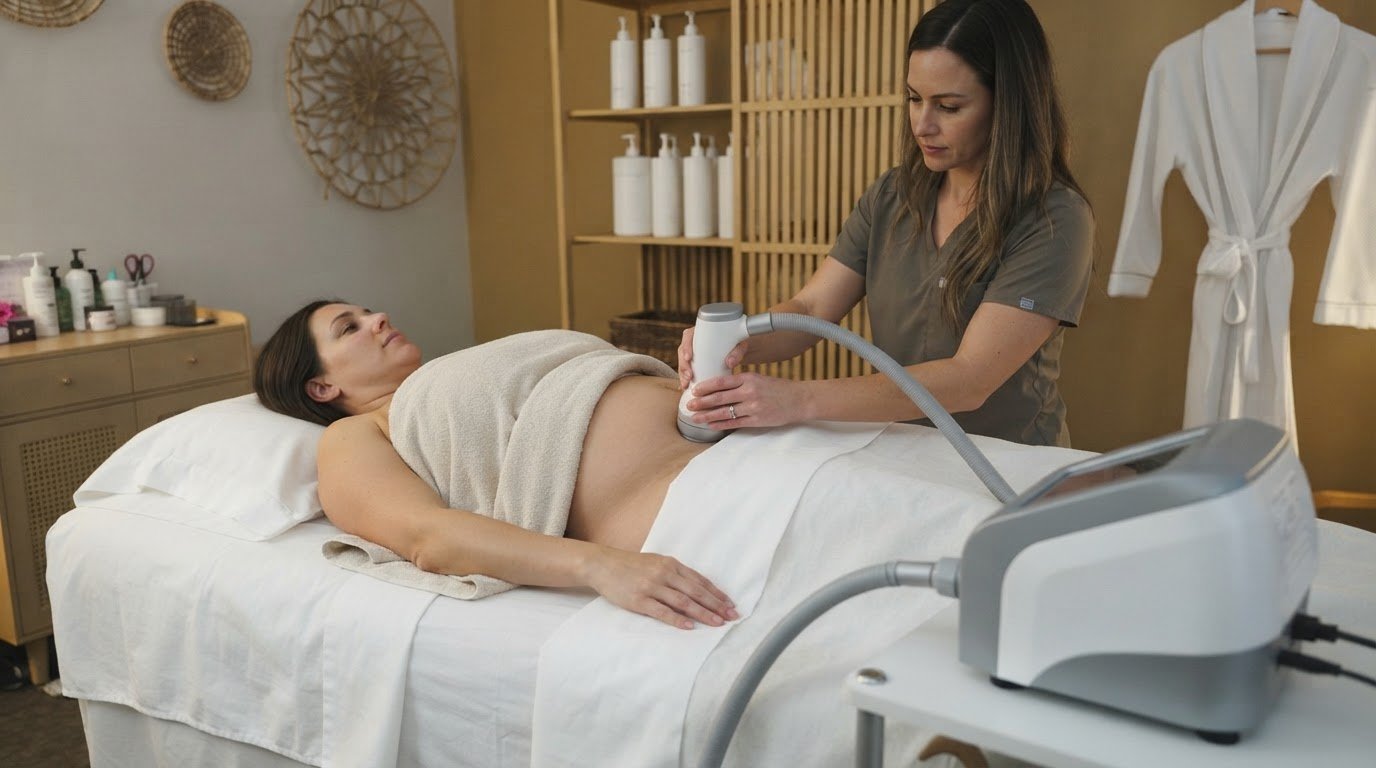
Contour Body Imaging can help you explore non-invasive wellness and body-contouring options after you’ve clarified whether you need medical lymphatic care or a general aesthetic treatment. Its offerings include Endosphere, Cryo T-Shock Body Contouring, Cryo Facial, Lumaray 360, and Repechage Facials. These services are distinct from manual lymphatic drainage and aren’t a substitute for medical assessment or lymphedema care.
If you want to discuss aesthetic or wellness options, consider which outcome matters most, such as skin care or body contouring. For unexplained swelling or a diagnosed lymphatic condition, speak with your healthcare provider about appropriate care.
Contact Contour Body Imaging to discuss your wellness goals.
Choose a Next Step That Fits Your Goal
Let your reason for considering lymphatic drainage massage guide your next step. If you have swelling or a diagnosed lymphatic condition, prioritize medical care and follow your healthcare provider’s advice. If your interest is general wellness or an aesthetic goal, clarify what you hope to feel or change before choosing a treatment. This keeps expectations grounded and helps you focus on care that matches your needs.
Choosing lymphatic drainage massage at home vs professional care isn’t only about convenience. Consider whether you need medical guidance, instruction for self-care, or support with a separate wellness goal. Identify that goal, then choose a next step that respects your health and feels manageable. There’s no need to rush into treatment before you understand what you’re seeking.
A thoughtful choice starts with your needs. Move forward at your own pace.
Frequently Asked Questions
What is the Lymphatic System and Why Does it Matter?
The lymphatic system is a body-wide network that helps manage tissue fluid and supports immune function. It includes lymph vessels, lymph nodes, and other structures that collect excess fluid and help process it. For example, lymph nodes filter material carried through lymph fluid. When this network can’t move fluid effectively, swelling or heaviness can develop. Its role differs from blood circulation, so lymphatic symptoms need appropriate assessment.
How long will it take for me to feel better?
There’s no single timeline for noticing a change after lymphatic drainage massage. Some people don’t notice an immediate difference, and the reason for treatment affects what improvement might mean. Track practical changes, such as whether a limb feels less heavy or clothing fits more comfortably. If several sessions bring no noticeable improvement, or symptoms worsen, contact your healthcare provider to discuss next steps.
What is manual lymphatic drainage massage and what is it used for?
Manual lymphatic drainage is a specialized, gentle technique used mainly to help manage lymphedema. A trained practitioner uses light, rhythmic movements on the skin to encourage fluid through lymphatic pathways. For example, after breast cancer surgery, a care team may include MLD in a broader plan for swelling. It isn’t intended to remove body fat or replace treatment for the underlying cause of fluid buildup.
How does at-home lymphatic drainage massage compare with treatment by a licensed professional?
At-home care is convenient, while professional treatment provides direct guidance on technique and suitability. Someone with lymphedema may benefit from learning self-care from a therapist familiar with manual drainage. If you don’t have a diagnosed condition, movement and hydration can support everyday lymph flow without massage. If you’re unsure whether swelling is suitable for massage, seek medical assessment before trying either approach.
How does a professional perform gentle lymphatic drainage massage, and what should clients know before treatment?
A practitioner uses light, rhythmic movements and may follow a sequence that includes lymph-node areas. Treatment involving the groin requires your consent. Before a session, share relevant details such as recent surgery, cancer treatment, infection, heart or kidney problems, and unexplained swelling. This helps determine whether massage is suitable and which areas require care or should be avoided.
What are the risks and contraindications of lymphatic drainage massage?
Massage may be unsafe with active infection, cellulitis, fever, blood clots, deep vein thrombosis, heart disease, kidney failure, or a history of stroke. It shouldn’t be applied directly over cancerous tissue or skin damaged by radiation. Possible after-effects include headache, nausea, or fatigue. Sudden one-sided swelling, warmth, redness, or pain needs prompt medical attention rather than massage.
When should someone consult a doctor or physical therapist before trying lymphatic drainage?
Consult a doctor before massage if you have unexplained swelling, a diagnosed lymphatic disorder, an ongoing medical condition, recent surgery, or current cancer treatment. A physical therapist trained in manual lymphatic drainage may help with technique and self-care as part of a treatment plan. Sudden or worsening swelling, persistent heaviness, or recurring infections also warrant medical assessment before you try massage at home.
Can lymphatic drainage massage help with lymphedema, swelling, or post-surgery recovery?
MLD may help manage lymphedema-related fluid buildup, swelling, heaviness, or tightness as part of broader care. That care may include compression, exercise, skin care, and education. After surgery, a doctor may recommend a series of sessions depending on the recovery plan. Massage alone isn’t a complete treatment, and new or increasing swelling after surgery should be discussed with your healthcare team.
Comments