

LymphaPress or Manual Lymphatic Drainage: Which Should You Choose
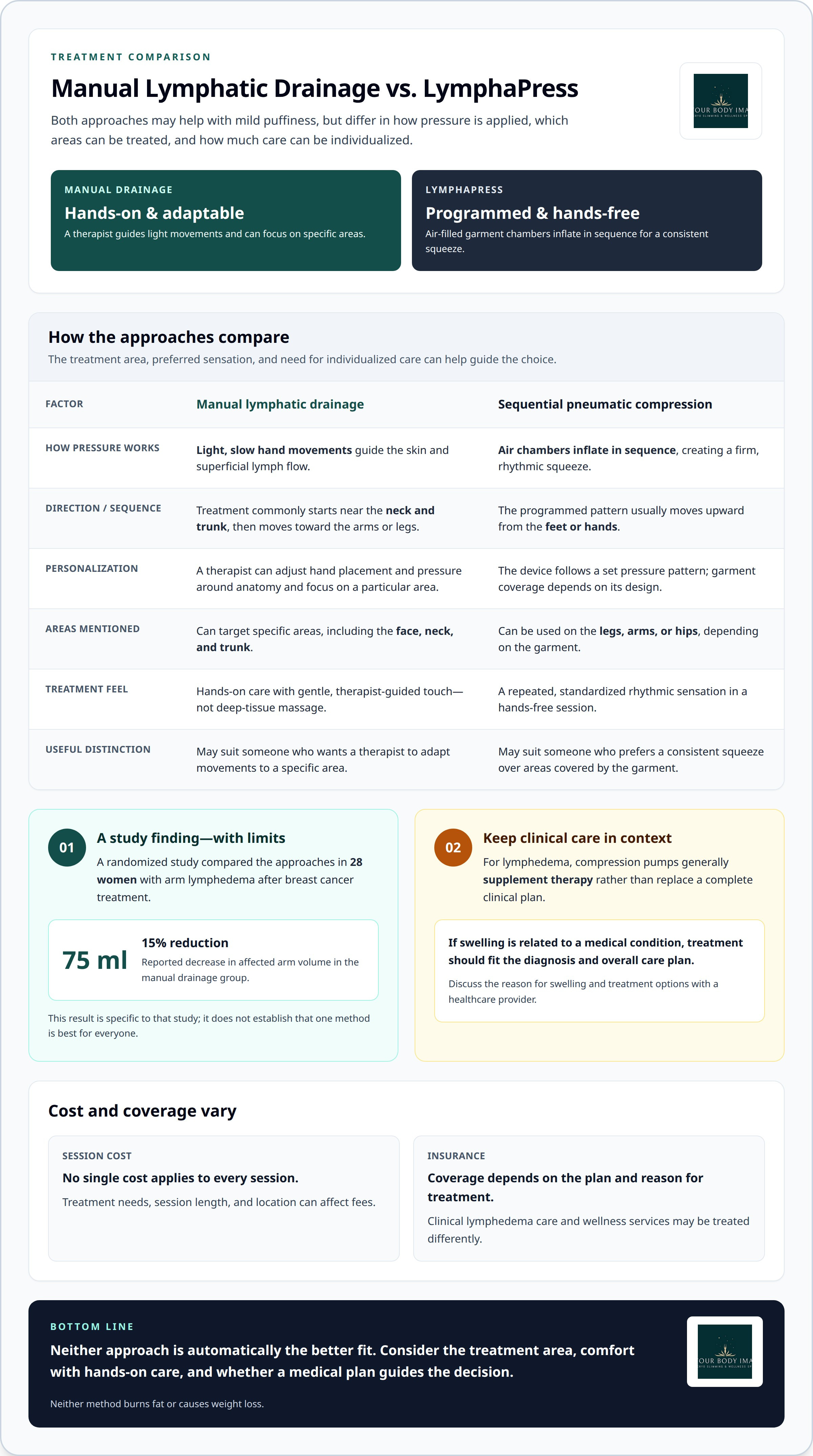
The hands-on option isn’t automatically the better fit. In the LymphaPress vs manual lymphatic drainage comparison, LymphaPress uses pneumatic compression to create a controlled, rhythmic squeeze through air-filled garments. Manual lymphatic drainage uses light, therapist-guided strokes tailored to the treatment area. Both approaches may help with mild puffiness, but they differ in method and experience.
If you’re weighing the two, it’s natural to want clarity about what each involves and which factors matter for your needs. This guide compares compression therapy with manual drainage, describes what a session may feel like, and outlines safety considerations to discuss with a healthcare provider. It also offers a practical way to think about when hands-free compression may suit your goals and when individualized manual techniques may be more appropriate.
Table of Contents
Lymphatic Drainage Massage vs Pressotherapy: What’s the Difference?
Manual lymphatic drainage uses a therapist’s hands, while pressotherapy uses programmed air compression. The main differences are how pressure is applied, how treatment is tailored, and what the evidence shows.
Manual Lymphatic Drainage
A therapist uses slow, light movements to guide the skin and superficial lymph flow. Treatment commonly starts near the neck and trunk, then moves toward the arms or legs. This sequence lets the therapist adjust hand placement and pressure around specific areas, including lymph nodes. Unlike a compression garment, manual therapy can respond to a person’s anatomy during the session.
That hands-on flexibility can matter when one area needs focused attention. For example, a therapist can adapt movements around an affected arm rather than applying the same programmed pattern throughout a garment. Manual drainage is not deep-tissue massage. Its light touch distinguishes it from stronger pressure techniques.
Sequential Pneumatic Compression
Pneumatic compression uses air-filled garments with chambers that inflate in sequence. The pattern usually moves upward from the feet or hands, creating a firm, rhythmic squeeze. A device follows a set pressure pattern, unlike a therapist who can adjust hand movements as treatment progresses. Compression is hands-free, but less adaptable to individual areas.
For someone experiencing mild puffiness, either method may help. Compression offers a consistent cycle, while manual drainage lets a therapist focus on a particular area. Neither approach burns fat or causes weight loss. Whether you prefer a programmed sensation or hands-on care can help narrow the choice.
Choosing Between Compression and Manual Drainage
Consider the treatment area, the experience you prefer, and whether care needs to be individualized. Someone with heavy-feeling legs, for example, may prefer the even squeeze of a garment, while a person seeking attention to one specific area may value a therapist’s hands. These preferences describe comfort and delivery, not a guaranteed result.
Recovery goals need context, too. Compression and manual drainage are not interchangeable with a complete clinical plan for lymphedema. In that setting, compression pumps generally supplement therapy rather than replace it. If swelling is related to a medical condition, treatment should fit the diagnosis and overall care plan.
Effectiveness, Cost, and Insurance
What does clinical research say about LymphaPress versus MLD effectiveness? The study authors compared manual lymph drainage with sequential pneumatic compression in a randomized study of 28 women with arm lymphedema after breast cancer treatment. The study authors reported that the manual lymph drainage group’s affected arm volume fell by 75 ml, a 15% reduction. The comparison is specific to that study and does not establish that one method is best for every person.
How much does manual lymphatic drainage cost in the United States, and is it covered by insurance? There is no single cost for every session. Treatment needs, session length, and location can affect fees. Coverage depends on the insurance plan and reason for treatment, so it may differ between clinical lymphedema care and wellness services.
Choose based on the treatment area, your comfort with hands-on care, and whether a medical treatment plan guides the decision.
Is compression therapy the same as lymphatic drainage?
No. Compression therapy applies external pressure, while lymphatic drainage refers to techniques intended to encourage lymph flow. A therapist performs manual lymphatic massage with their hands; pneumatic compression uses garments with air chambers. Both approaches can support fluid movement, but differ in how they apply pressure, which areas they cover, and how much treatment can be tailored.
Treatment area is a practical distinction. Pneumatic compression can be used on the legs, arms, or hips, depending on the garment. Manual lymphatic drainage can target specific areas, including the face, neck, and trunk. Compression coverage depends on the garment, so a device-based session may not address every area that hands-on treatment can reach.
Pressure feels different, too. A pneumatic device repeats a standardized pressure pattern, creating a rhythmic sensation during treatment. Manual techniques allow a therapist to adapt pressure and movements to the person and area being treated. A therapist can focus on the face, for example, while a compression garment’s coverage depends on its design.
Your preferences and goals can help guide the choice. Someone who prefers a hands-free session may favor pneumatic compression. A person who wants a specific area addressed or values hands-on adjustment may prefer manual drainage. Neither method is automatically the better fit. The treatment area and reason for treatment matter.
For legs, arms, or hips: compression may suit areas covered by the available garment.
For the face, neck, or trunk: manual techniques can target specific areas.
For adjustable touch: a therapist can tailor manual movements and pressure.
Professional LymphaPress treatment is accessed through a clinic that provides pneumatic compression. For certified manual lymphatic drainage, look for a therapist with focused training and experience in lymphatic care. A Certified Manual Lymphatic Drainage Therapist credential involves at least 40 hours of focused instruction, while the Certified Lymphedema Therapist designation demands about 135 hours of comprehensive training.
For lymphedema, a healthcare professional experienced in its management can help match treatment to the condition, affected areas, and wider care plan. This guidance matters because compression and hands-on drainage may serve different roles, even when both aim to support lymphatic fluid movement. Treatment should feel comfortable, not painful.
If you’re considering device-based compression for wellness or body care, explore these lymphatic drainage treatment options as one way to understand the approach and decide whether it fits your goals.
How manual lymphatic drainage works
The lymphatic system moves fluid and waste through the body. Unlike the heart, it has no central pump. Muscle movement and pressure changes help move lymph, so manual lymphatic drainage uses gentle, rhythmic skin movements to encourage flow. A trained therapist guides these movements rather than pressing deeply into muscle tissue.
The touch is deliberately light. Lymphatic drainage massage stretches the skin and superficial lymph vessels without collapsing them. The pressure is about 1 to 4 ounces, not the firm force used in deep-tissue massage. This distinction matters: stronger pressure doesn’t make the technique more effective, because the goal is to move the skin gently.
A therapist commonly begins near the neck and trunk, then works outward toward the arms or legs. This sequence organizes the treatment rather than starting directly at a puffy area. If someone is concerned about an arm, for example, the therapist first works near central areas before addressing the limb. Hand movements can be adjusted for the treatment area.
Breathing can also be part of the session. Deep breathing before and during lymphatic massage may enhance lymphatic pumping by changing pressure in the body. A therapist may pair this breathing with slow, repeated strokes. Each movement remains gentle, and the therapist can adapt the rhythm and placement as the session progresses.
Manual drainage isn’t simply a general relaxation massage. A trained therapist uses a specific sequence and light touch, focusing on the skin’s movement and the area being treated. A face-focused session, for example, calls for movements suited to the face rather than the same strokes used on an arm or leg. For wellness care, the goal and treatment area help shape the session.
Start with the pathway: the therapist begins near the neck and trunk.
Use light contact: slow strokes stretch the skin, not the muscle.
Work toward the treatment area: movements progress outward to arms or legs.
Coordinate breathing: deep breaths may be included before and during massage.
For mild puffiness, manual drainage may support fluid movement, but it isn’t a weight-loss or fat-burning treatment. The lymphatic system relies partly on movement and pressure changes, so the therapist focuses on gentle, directed skin movement. Understanding the technique helps distinguish specialized lymphatic drainage from conventional massage designed to work more deeply into muscles.
Safety considerations and conditions to discuss with a provider
Both pneumatic compression and manual lymphatic drainage affect fluid movement, so health history matters. People with a history of blood clots, heart failure, active infections, or cancer treatment should discuss lymphatic treatments with a healthcare provider first. These conditions don’t dictate the same decision for everyone, but make individual medical context important.
What are the risks and contraindications of LymphaPress and MLD? Discuss a history of blood clots, heart failure, active infection, or cancer treatment with a healthcare provider. New, one-sided, painful, or persistent leg swelling needs medical assessment before either treatment, because it can signal a blood clot or another medical condition.
Pay close attention to changes in swelling. A newly swollen leg on one side is different from familiar, mild puffiness in both legs. Pain or persistent swelling also needs medical assessment before a session. Don’t treat these symptoms as a routine wellness concern or address them with compression or massage before their cause is assessed.
Share relevant health details before treatment, including:
A previous blood clot, and whether swelling is new or one-sided.
Heart failure, active infection, or current cancer treatment.
Leg swelling that is painful, persistent, or different from usual.
Any change in comfort during manual strokes or air compression.
These details help a healthcare provider weigh the condition, affected area, and type of pressure involved. Pneumatic compression applies repeated pressure through a garment; manual drainage uses light, therapist-guided strokes. The methods differ, but neither should replace assessment of a concerning symptom or relevant medical history.
Comfort is another safety signal. Manual lymphatic drainage and pressotherapy should feel comfortable and relaxing, not painful. If a stroke or compression cycle causes pain, tell the treating professional rather than assuming stronger pressure will improve lymphatic flow. Gentle treatment is the appropriate comparison, not deep muscle work or an increasingly forceful squeeze.
For example, a person with a history of clots and new, painful swelling needs medical assessment before choosing between methods. Someone with a past health concern but no new symptoms should still discuss that history before treatment. Distinguishing these situations keeps the decision focused on circulation concerns and current symptoms.
Before proceeding, share the specific condition, where the swelling occurs, and whether it is new, painful, or persistent. These details help determine whether treatment should wait for medical assessment or fit within an existing care plan.
Choosing manual drainage for face or specific areas
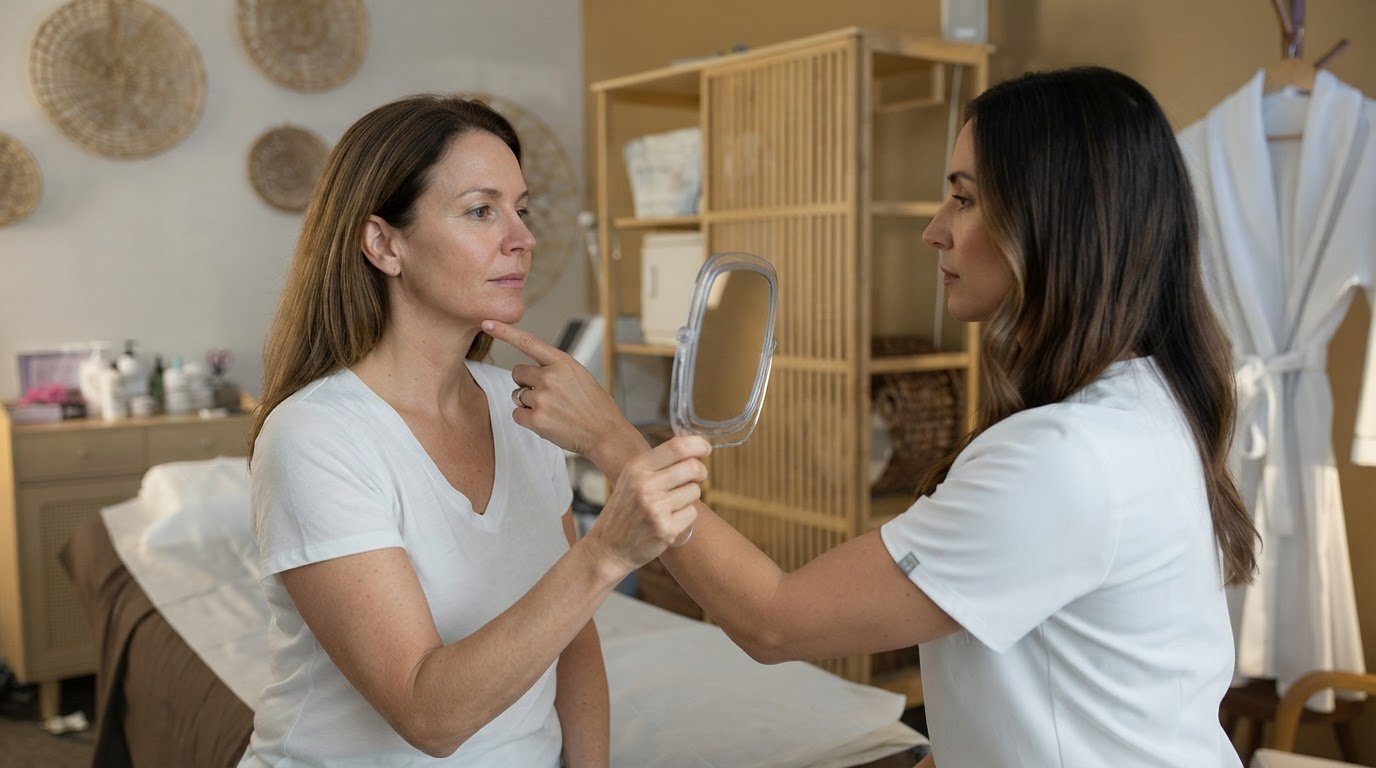
For a face-focused goal, manual lymphatic drainage offers targeted treatment. A therapist can adapt hand movements to the face, neck, or trunk. Pneumatic compression depends on garment coverage, so it may not address every specific area. The choice often comes down to the treatment location and the kind of session you prefer.
Start by identifying the area you want treated. Someone focused on facial puffiness, for example, may value a hands-on approach that targets the face. Someone whose goal involves the legs or arms may consider compression if the garment covers that area. Depending on garment coverage, pneumatic compression can also address the hips.
Coverage is not the only difference. Manual treatment gives the therapist room to adapt the technique to the selected area. Compression therapy applies a programmed pattern through its garment. The sensation and treatment approach differ, even when both methods aim to encourage lymphatic fluid movement. Don’t choose based only on the word “drainage.”
The sensation during a session can also guide your preference. Manual lymphatic drainage uses a therapist’s gentle, rhythmic strokes. Compression creates a firmer, repeated squeeze. If hands-on care feels more comfortable, manual treatment may suit you. If you prefer a consistent, device-led pattern, compression may feel like a better fit for an area covered by the garment.
Face or neck: consider manual treatment because it can target specific areas.
Legs or arms: compare the treatment goal with the garment’s coverage.
Hips: pneumatic compression may be an option when the garment covers the area.
Touch preference: weigh gentle therapist-guided strokes against a repeated compression pattern.
Be specific about your goal when discussing treatment. “My face feels puffy” identifies a particular area and concern. “I want my legs to feel less heavy” points to a different treatment area and preference. These examples help clarify whether manual techniques or a garment-based approach better matches the area being considered.
For facial or other localized goals, the ability to target a specific area can make manual drainage a practical option. For a larger area covered by a garment, compression may offer a consistent treatment pattern. Compare your desired area, available coverage, and preferred sensation instead of assuming one method suits every goal.
Choose based on the area you want addressed and the treatment style that feels right for you. A focused conversation about facial care or garment coverage can clarify the next step.
Contour Body Imaging: LymphaPress
Contour Body Imaging offers LymphaPress for people considering device-based compression as part of a wellness or body-care routine in The Woodlands and Dallas, Texas. Its air-compression approach may suit those who prefer a consistent, hands-free session to therapist-guided manual techniques. It isn’t a substitute for medical assessment or a treatment plan for diagnosed lymphedema.
When choosing, consider your goals, preferred treatment style, and whether a healthcare professional has advised you to seek medical care. If you’re exploring compression for general wellness, LymphaPress may be an option to discuss at Contour Body Imaging in The Woodlands or Dallas, Texas. For new, painful, one-sided, or persistent swelling, seek medical assessment before treatment.
Contact Contour Body Imaging to discuss whether LymphaPress fits your wellness goals.
Take the Next Step With a Clear Goal
Let your treatment goal guide the next conversation. Be ready to describe the area you want addressed, whether care is for a medical condition or general wellness, and whether hands-on touch or programmed compression better fits your preferences. These details give a provider useful context to discuss an approach that suits your needs.
Choosing between LymphaPress and manual lymphatic drainage is one part of deciding what care fits your priorities. For other wellness and body-care interests, Contour Body Imaging in The Woodlands and Dallas, Texas, also offers Cryo T-Shock Body Contouring, Cryo Facial, and Endosphere. Each addresses a different treatment interest, so keep your goals in focus as you consider what comes next.
Move forward at a pace that feels right, with your comfort and personal goals guiding your choice.
Frequently Asked Questions
Can I do both?
Yes, both can be used within one care plan when appropriate. Regular compression may be paired with occasional manual lymphatic massage, combining a consistent device routine with hands-on attention to selected areas. The methods serve different roles, so using both doesn’t mean replacing one with the other. A plan might include regular compression and periodic therapist-guided manual care. The care plan determines how they fit together.
What Is Pressotherapy?
Pressotherapy is pneumatic compression therapy delivered through an air-filled garment. Its chambers inflate in sequence, usually moving upward from the feet or hands, to create repeated pressure. Unlike lymphatic massage, the device follows a programmed cycle rather than adapting each movement by hand. The garment determines which body areas receive compression. Pressotherapy may support fluid movement, but it doesn’t burn fat or cause weight loss.
What is LymphaPress and how does it work?
LymphaPress is a form of pneumatic compression that applies pressure through a garment, with air chambers creating a repeated sequence. This pressure supports lymphatic fluid movement, while garment coverage determines the areas treated. The device follows a programmed pattern rather than therapist-guided strokes. Contour Body Imaging offers LymphaPress for wellness treatment in The Woodlands, Texas, and Dallas, Texas. It isn’t a substitute for medical care for diagnosed lymphedema.
How does LymphaPress compare with manual lymphatic drainage (MLD) for lymphedema?
For lymphedema, manual lymphatic drainage is a core part of therapy, while compression pumps generally supplement complete care rather than replace it. MLD lets a therapist adapt the technique; a pump applies standardized pressure. The practical comparison is about roles, not a universal winner. The affected limb, swelling pattern, comfort, and broader treatment plan matter. Lymphedema care may also include compression garments, exercise, and skin care.
Can LymphaPress and MLD be used together, and in what order?
Yes, both may be combined, with a plan pairing regular compression use and occasional manual lymphatic massage. There isn’t one sequence that suits every care plan. The purpose of each method and the affected area can inform scheduling. A therapist may coordinate manual treatment around ongoing pump use, rather than treating the methods as competing alternatives. For diagnosed lymphedema, follow the sequence established in your treatment plan.
How often and how long should LymphaPress or MLD treatments be used?
Session length varies by method: pneumatic compression often lasts 20-30 minutes, while manual lymphatic drainage usually runs 15 to 60 minutes, depending on lymphatic involvement. For wellness and body care, clinics often schedule treatments once or twice per week, followed by maintenance sessions. Lymphedema treatment frequency follows a different approach: the treating therapist or doctor determines it based on the care plan.
Which is better for arm or leg lymphedema, and what factors determine the choice?
Neither method is automatically better for every arm or leg. The affected area, garment coverage, swelling pattern, comfort, and wider care plan all influence the choice. A pump may suit an area covered by its garment, while manual treatment allows hands-on attention to a specific area. For lymphedema, an experienced healthcare professional considers these factors alongside other care, such as garments, exercise, and skin care.
How do I get a LymphaPress device or find a certified MLD therapist near me?
For LymphaPress treatment, contact a clinic that provides pneumatic compression. For manual lymphatic drainage, look for a therapist with focused training and experience in lymphatic care; a Certified Manual Lymphatic Drainage Therapist has at least 40 hours of focused instruction.
Comments