

LymphaPress for Athletic Recovery in The Woodlands
Recovery isn’t only about how hard you train; it’s also about how your body feels between workouts. For athletes exploring LymphaPress for athletic recovery in The Woodlands, this compression suit provides lymphatic drainage as a wellness treatment that may complement a broader recovery routine. It can be considered when seeking a non-invasive approach to post-exercise comfort.
It makes sense to look beyond the workout itself when soreness, heaviness, or a demanding training schedule leaves you feeling less refreshed. LymphaPress for athletic recovery in The Woodlands uses compression to support lymphatic flow, while circulation, rest, and a gradual return to activity also matter. It isn’t a replacement for care related to an injury.
Here, you’ll learn who may find this approach useful, how lymphatic drainage differs from blood circulation, and what to consider when exploring LymphaPress for athletic recovery in The Woodlands. You’ll also see how compression may fit into a wellness routine, helping you make an informed choice about your next step.
Table of Contents
Athlete case example in The Woodlands
A useful case example needs context, not just a dramatic result. One Lympha Press user reported losing 12 inches during the first week while using a Lympha Jacket and Lympha Pants. That is a personal testimonial, not a measured athletic recovery outcome or a prediction for other users. It also doesn’t establish that the user was an athlete in The Woodlands.
For an athlete, the relevant question is what a measurement represents. A change in body measurements alone doesn’t show whether training soreness eased, movement improved, or performance changed. Those are different outcomes. A runner tracking recovery, for example, might note how their legs feel after a session and whether they return comfortably to their usual training routine.
The example identifies a jacket and pants, but not a universal athlete setup. Garment coverage should match the treatment area, while compression pressure and cycle should follow the treatment plan and the person’s comfort. Don’t copy a setting based on someone else’s testimonial; the same setting may not suit different goals or circumstances.
To make an example more useful, separate the details into three steps:
Identify the outcome: distinguish a change in measurement from a change in comfort or training readiness.
Record the context: note the garment used, body area, and timing relative to exercise.
Track the response: compare the same practical measure across sessions, such as perceived heaviness after a run.
This approach gives athletes a clearer way to judge whether a therapy fits their routine. A cyclist, for instance, might focus on how their legs feel after a long ride, while a strength athlete may pay attention to comfort during the next planned workout. Neither example proves compression caused a particular outcome; it helps define what the athlete wants to observe.
In The Woodlands, the 12-inch testimonial can prompt questions, but it shouldn’t be treated as a recovery benchmark. Athletic treatment goals are more useful when they describe function and comfort, not a dramatic measurement alone. Keep the focus on the intended body area, garment coverage, and response to the session. That makes the case example a starting point for understanding the approach, rather than a promise about what another athlete will experience.
Athletic performance and recovery
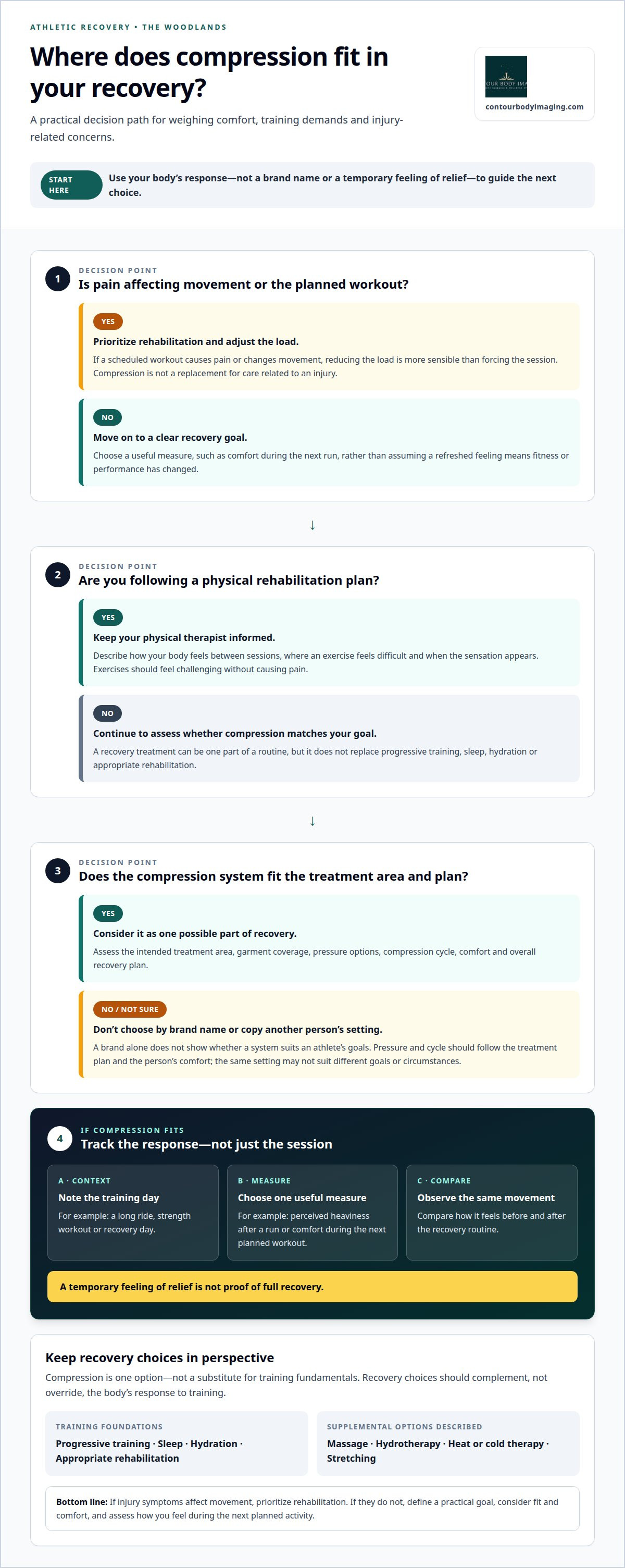
Compression is one possible part of an athlete’s recovery routine, not a substitute for training fundamentals. When comparing LymphaPress with Normatec and other recovery boots, consider the intended treatment area, garment coverage, pressure options, and compression cycle. A brand name alone doesn’t show whether a system suits an athlete’s goals. Assess the equipment in the context of training demands, comfort, and the overall recovery plan.
Performance depends on more than how refreshed someone feels after a session. A runner, for example, might track whether leg discomfort affects the next planned workout. A tennis player might notice whether shoulder fatigue changes their serve practice. These examples distinguish a subjective feeling from a measurable change in fitness or performance. A recovery treatment can support a routine, but it doesn’t replace progressive training, sleep, hydration, or appropriate rehabilitation.
In The Woodlands, The Woodlands Sports Medicine Centre cautions that pushing too hard during recovery can lead to new injuries or reinjury. Its guidance also describes supplemental recovery therapies such as massage, hydrotherapy, heat or cold therapy, and stretching. This offers athletes a practical framework: recovery choices should complement, not override, the body’s response to training. If a scheduled workout causes pain or changes movement, reducing the load is more sensible than forcing the session.
Set a clear goal: choose one useful measure, such as comfort during the next run.
Note the training context: record whether the session followed a long ride, strength workout, or recovery day.
Observe the response: compare how the same movement feels before and after the recovery routine.
Adjust training thoughtfully: avoid treating a temporary feeling of relief as proof of full recovery.
Patients following physical rehabilitation have another consideration. Exercises should support the return of movement and function, while feedback about discomfort helps shape each session. The Woodlands Sports Medicine Centre advises patients to tell their physical therapist how their body feels between sessions and when they reach their limits during exercises. It also says exercises should feel challenging without causing pain. For example, an athlete can describe which movement feels difficult and when the sensation appears.
Use those observations to decide whether compression belongs in your recovery routine, rather than using it to chase a performance promise. A practical sequence is to note the workout, choose a recovery method that fits the goal, and assess comfort during the next planned activity. If injury symptoms affect movement, prioritize rehabilitation over attempts to maintain fitness at any cost. This keeps recovery focused on function, consistent training, and a sensible return to activity.
Circulation and blood flow
Blood circulation and lymphatic flow are connected, but they aren’t the same process. The heart moves blood through blood vessels, while lymph travels through lymphatic pathways. For an athlete, that distinction matters: a recovery routine can address comfort and movement without claiming to improve every aspect of circulation. A runner with heavy-feeling legs, for example, can describe that sensation separately from fitness or workout performance.
The Woodlands Sports Medicine Centre says physical therapy exercises are intended to improve circulation, flexibility, and muscle strength. Those goals connect movement with recovery in practical ways. An athlete might complete a prescribed exercise, then notice whether the motion feels easier or remains restricted. This focuses the observation on function, not just a temporary sensation after massage or compression.
External compression applies pressure through a garment, while massage uses hands or tools to work on soft tissue. Neither is interchangeable with exercise. A cyclist, for instance, may use a recovery method after riding, but still needs a suitable movement plan to build strength and flexibility. Each approach has a different role, and the athlete’s goal helps clarify which one fits.
Describe the concern: distinguish heaviness, stiffness, soreness, and reduced range of motion.
Connect it to activity: note whether the sensation appears after running, cycling, or strength training.
Track function: observe how a familiar movement feels during the next planned session.
Keep methods distinct: treat compression, massage, and exercise as separate parts of a routine.
For example, a tennis player might notice calf tightness after court practice. That detail doesn’t establish a circulation problem; it identifies when the feeling occurs and which area is involved. A physical therapist can use such observations alongside movement and strength exercises. In The Woodlands, local sports medicine guidance links exercise with circulation, flexibility, and muscle strength, making active rehabilitation an important part of the discussion.
Lymphatic drainage focuses on supporting lymph movement, while circulation usually refers to blood moving through vessels. A compression garment applies sequential pressure to the covered area, creating a repeated external squeeze and release. That mechanical action differs from the heart’s pumping action and from muscle work during exercise. Athletes can keep these distinctions clear when discussing recovery options and goals.
A practical way to evaluate a routine is to record the activity, the body area, and the next movement that matters. A runner could note post-run leg comfort, then compare it with how the stairs feel later. This doesn’t prove a change in blood flow. It gives the athlete a concrete way to discuss comfort, function, and treatment choices without confusing lymphatic support with improved athletic performance.
Finding lymphatic drainage in The Woodlands
In The Woodlands, start by matching the service to your goal. An athlete seeking post-training comfort may have different needs from someone receiving care for a diagnosed condition. This distinction helps identify whether a wellness setting or a medical rehabilitation pathway fits the situation. Note the body area, the reason for considering drainage, and any current injury before discussing treatment.
Sports medicine clinics near The Woodlands may offer compression-based recovery, but services differ by practice. Referral requirements also depend on the clinic and whether treatment is part of medical rehabilitation or a wellness service. Ask about the pathway that matches your goal rather than assuming every clinic follows the same process.
Compression therapy isn’t appropriate for everyone. It may cause discomfort or skin irritation, and some health conditions can make compression unsuitable. Careful screening should account for health history, current symptoms, the treatment area, and how the pressure feels. If pain, unusual swelling, or a new injury is involved, medical assessment should come before a recovery-focused session.
A practical way to organize your search is to clarify these points:
Purpose: explain whether you want support after exercise or help with a diagnosed concern.
Area: identify whether the legs, arms, or another region concerns you.
Health context: share relevant conditions, recent injuries, and changes in symptoms.
Access: establish whether the service is wellness-based or tied to rehabilitation and referral.
Comfort: discuss how pressure, fit, and positioning will be adjusted during treatment.
For example, a runner with temporary leg heaviness after a workout can describe when it starts and which movements feel affected. A player with swelling after an injury needs a different starting point. This distinction helps prevent a wellness treatment from standing in for injury assessment. It also gives the practitioner useful context for choosing an appropriate approach.
Ask how the session supports your goal, which body area it addresses, and how you can communicate discomfort. Flexibility matters: pressure and garment fit should feel tolerable, not painful. If the session causes pain or a concerning change, stop and report it. Clear communication helps distinguish expected compression sensations from discomfort that needs attention.
For athletes in The Woodlands, a useful next step is a concise conversation about purpose, health history, and access requirements. Bring a short description of your training or injury concern, along with the movements affected. This helps clarify whether lymphatic drainage fits a recovery routine or whether clinical assessment should come first. A local search is more useful when it focuses on the care pathway, not just the treatment name.
Some sports medicine clinics may offer compression-based recovery, but services vary by practice. Referral requirements depend on the clinic and whether treatment is part of medical rehabilitation or a wellness service.
What evidence supports pneumatic compression therapy for post-workout recovery?
Evidence needs to distinguish a device’s proposed mechanism from outcomes athletes care about. Pneumatic compression applies pressure through a garment, but that action alone doesn’t prove faster recovery, better performance, or fewer injuries. For a runner, useful outcomes might include next-day soreness, comfortable movement, or completing the planned workout. Each measure answers a different question.
A study or report is more informative when it defines its participants, comparison group, treatment method, and outcome. For example, a comparison between compression and rest should specify how recovery was assessed. A report measuring comfort cannot establish improved race performance. Likewise, a short-term change after one session doesn’t establish a lasting training benefit.
Testimonials can describe personal experiences, but they don’t replace controlled comparisons. An athlete’s report of feeling lighter after treatment may help explain why they value it. It doesn’t show whether compression caused the change or whether sleep, training load, or another recovery method contributed. This distinction keeps personal stories useful without treating them as clinical proof.
For a practical self-assessment, define the intended result before a session and use the same measure afterward:
Choose one outcome: track comfort, range of motion, or readiness for a specific workout.
Keep the activity consistent: compare similar training sessions rather than a long ride with a rest day.
Record the timing: note whether the measure is taken immediately or during the next planned activity.
Consider other factors: include sleep, training intensity, and other recovery methods in your notes.
A strength athlete could record how a familiar squat feels during the next workout. A cyclist might note comfort during an easy ride after a demanding session. Neither example proves a performance effect. Repeating a consistent observation makes it easier to discuss what changed and what stayed the same.
Research is strongest when it measures outcomes that matter to athletes, not only immediate sensations. Pain ratings, movement, return to training, and athletic performance are related but distinct. A finding about one outcome shouldn’t be presented as evidence for all the others. The type of athlete, exercise, garment, pressure protocol, and comparison method also shape what a result can reasonably show.
Use pneumatic compression as one possible element of recovery, not as proof that the body has fully recovered. A clear goal, a consistent measure, and attention to training context make the experience easier to evaluate. For example, if comfort improves but movement remains limited, those observations point to different conclusions. An evidence-minded approach values both what the athlete notices and what the measure demonstrates.
Contour Body Imaging: LymphaPress
Contour Body Imaging offers LymphaPress Lymphatic Drainage as a wellness option for people exploring recovery support in The Woodlands. If your goal is to add compression therapy to a post-workout routine, this service may be a relevant next step. It’s distinct from treatment for an injury, which calls for medical assessment and rehabilitation tailored to the condition.
Before choosing a session, consider what you want to address, such as post-exercise comfort or a feeling of heaviness. Sharing that goal and relevant health context helps guide an informed conversation about fit. Other available options include Endospheres Therapy®, Cryo T-Shock, and Cryo Facial, each serving a different wellness or aesthetic purpose.
Contact Contour Body Imaging to discuss whether LymphaPress fits your recovery goals.
Make your next recovery step intentional
Before adding a new recovery method, decide what you want it to support. LymphaPress for athletic recovery in The Woodlands may be worth exploring if your goal is post-workout comfort, not a promise of improved performance. Bring a clear goal and relevant health context to the conversation. If an injury or persistent symptoms affect movement, prioritize appropriate medical assessment over a wellness session.
A simple training note can help you describe your experience: record the activity, the area that feels affected, and how movement feels afterward. For athletes considering LymphaPress for athletic recovery in The Woodlands, these details offer a practical starting point for discussing whether compression fits their routine. Your recovery plan should complement training and any care you’re already receiving.
Contact Contour Body Imaging to discuss LymphaPress and your recovery goals.
A thoughtful next step can help you build a recovery routine that feels clear, comfortable, and aligned with your goals.
Frequently Asked Questions
Who Can Benefit in The Woodlands?
Athletes in The Woodlands who want to explore lymphatic drainage as a wellness complement to training may consider LymphaPress. For example, a recreational cyclist seeking post-ride comfort has a different goal from an athlete recovering from an injury. LymphaPress isn’t a substitute for medical evaluation or rehabilitation. If pain, swelling, or limited movement is related to an injury, prioritize appropriate clinical care before adding a wellness treatment.
Will my treatment plan affect my training schedule?
Plan sessions around your training demands and how your body responds. A demanding workout immediately before or after a session may feel different from a rest day, so consider your schedule and recovery goals together. LymphaPress at Contour Body Imaging requires no downtime required, but that doesn’t mean every athlete should train hard right afterward. Build the session into a routine that leaves room to notice comfort and movement.
What is LymphaPress and how does it work for athletic recovery?
LymphaPress is a specialized compression suit used for lymphatic drainage. The garment applies external pressure to the covered area, providing a non-invasive wellness treatment athletes may consider alongside their broader recovery routine. It doesn’t establish that an athlete has recovered from an injury or is ready to compete. For example, feeling more comfortable after a session is different from restoring strength or returning to full training capacity.
How long and how often should athletes use LymphaPress after training?
There isn’t one schedule that fits every athlete; the appropriate plan depends on the treatment goal, area addressed, training demands, and personal response. A runner with a heavy training week may have different recovery priorities from someone doing occasional strength sessions. Avoid setting frequency based solely on another athlete’s routine. Share your training pattern and health context during planning, then use comfort and function to assess how the routine fits.
Where can athletes in The Woodlands, Texas get LymphaPress treatment?
Athletes in The Woodlands can receive LymphaPress treatment at Contour Body Imaging. The clinic offers lymphatic drainage as part of its wellness treatments. If you’re deciding whether it suits your routine, bring a clear goal, such as post-workout comfort, and note any relevant injury or health concerns. That gives the conversation a practical starting point and helps distinguish wellness support from injury care.
What LymphaPress devices and compression settings are used for athletes?
The example mentions a Lympha Jacket and Lympha Pants, but it doesn’t establish a universal athlete setup. Garment coverage should match the treatment area, and pressure and cycle should follow the treatment plan and the person’s comfort.


Comments