

How the Red-Out Facial May Help with Rosacea Redness
Rosacea redness isn’t simply a surface issue, and a facial can’t cure the condition. A Repechage Red-Out facial for rosacea may be a skincare option for a soothing, moisturizing experience, but it isn’t intended to treat, diagnose, cure, or prevent rosacea.
If redness flares easily, it makes sense to be cautious about products and treatments that touch sensitive skin. Understanding common triggers and the signs that deserve medical attention can help you make more comfortable, informed choices.
This article explains how rosacea can cause facial redness, ways to manage flares and triggers, and what to consider about the Hydra 4 Red-Out facial, including the possibility of irritation. It also clarifies how a cosmetic facial differs from medical care, so you can decide whether this approach fits your skincare goals.
Table of Contents
Managing flares and avoiding triggers
Before a Red-Out facial, share your rosacea history, known triggers, and any product sensitivities. Afterward, keep care gentle: use a mild cleanser, protect your skin from sunlight with broad-spectrum SPF 30 or higher, and avoid personal triggers such as spicy food or extreme heat.
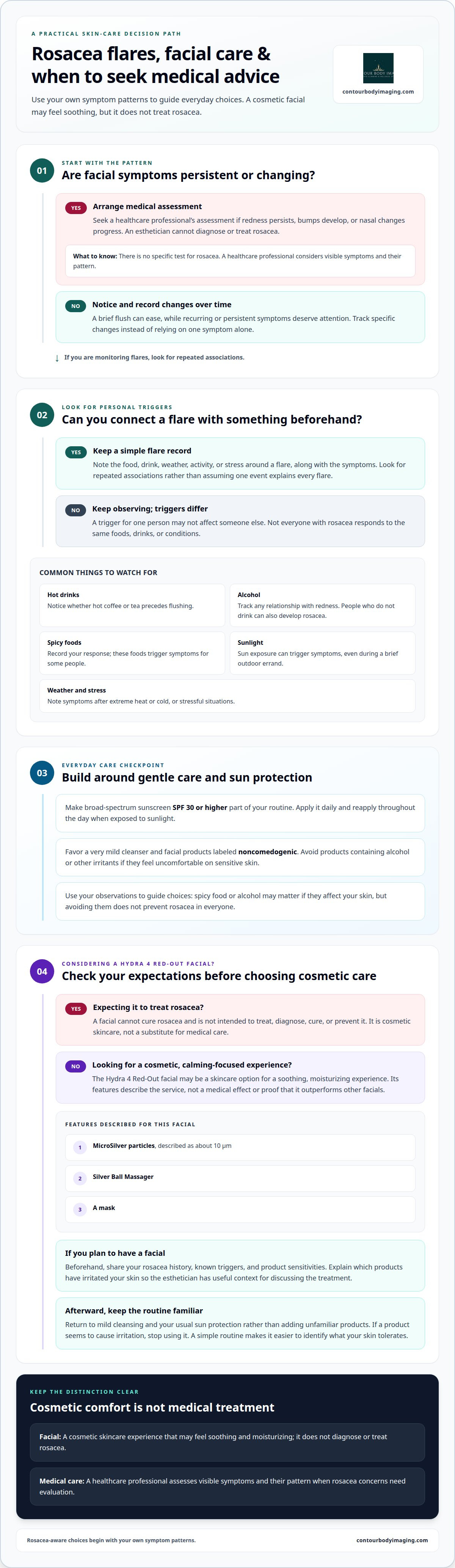
Rosacea triggers vary, so noticing what happens before a flare can make everyday choices easier. Hot drinks, alcohol, spicy foods, stress, sunlight, and extreme heat or cold are common triggers. One person may flush after hot coffee, while another notices symptoms after a sunny walk. A trigger for one person may not affect someone else.
A simple record can help reveal patterns. Note the food, drink, weather, activity, or stress around a flare, along with the symptoms you noticed. For example, record whether facial redness followed a spicy meal or time outdoors. Look for repeated associations instead of assuming one event explains every flare. This can help you identify which changes matter most to your routine.
Hot drinks: Notice whether coffee or tea served hot precedes flushing.
Alcohol: Track any relationship with redness; people who don’t drink can also develop rosacea.
Spicy foods: Record your response, since these foods trigger symptoms for some people.
Sunlight: Apply broad-spectrum sunscreen with SPF 30 or higher when expecting sun exposure.
Weather and stress: Note symptoms after extreme temperatures or stressful situations.
Make sun protection a consistent part of a rosacea-aware routine. Sunlight can trigger symptoms, so use sunscreen daily and reapply it throughout the day. Even a brief outdoor errand means sun exposure, so plan protection around your time outside. Choose facial products labeled noncomedogenic to help avoid clogged pores, and favor very mild cleansers. Avoid products containing alcohol or other irritants, which may feel uncomfortable on sensitive skin.
Before a facial, explain which products have irritated your skin and which triggers you’ve identified. This gives the esthetician useful context for discussing the treatment. Afterward, return to mild cleansing and your usual sun protection rather than adding unfamiliar products. If you notice discomfort, stop using a product that seems to cause irritation. Keeping your routine simple makes it easier to identify what your skin tolerates.
Alcohol may worsen rosacea symptoms, but avoiding it won’t prevent rosacea in everyone. Likewise, spicy foods matter only if they affect your skin. Use your own observations to guide choices, and keep sunscreen and gentle cleansing as practical parts of everyday care.
Rosacea symptoms and facial redness
Rosacea can cause persistent facial redness, flushing, visible blood vessels, and acne-like bumps. Symptoms often appear after age 30, though age alone cannot identify the condition. Redness may center on the cheeks and nose, while flushing can make the face look temporarily more intense. Recognizing changes over time helps distinguish a brief flush from recurring symptoms that deserve medical attention.
Compared with other facials, the Repêchage Hydra 4 Red-Out facial has a defined calming skincare approach, including MicroSilver particles described as about 10 µm, a Silver Ball Massager, and a mask. Those features describe its method; they don’t establish that it outperforms other facials or treats rosacea.
Rosacea-related papules and pustules can resemble acne, but they differ from teenage acne in a useful way: they aren’t associated with blackheads or whiteheads. Small bumps may appear alongside redness, so the overall pattern matters. The condition affects more than 14 million people in the United States, but its signs can vary between individuals.
Flushing: Facial color may intensify and then ease.
Persistent redness: Redness may remain across the cheeks or nose.
Visible vessels: Small blood vessels can become noticeable on the nose and cheeks.
Papules and pustules: Bumps can appear without acne-related blackheads or whiteheads.
Nasal changes: Small, flesh-colored bumps may enlarge and cause swelling or disfigurement.
Rosacea affects women more often, while men are more prone to rhinophyma, a condition involving thickened, enlarged nose tissue. These patterns don’t diagnose an individual. Someone may have redness without bumps, bumps without obvious visible vessels, or symptoms that change over time. Track specific changes, such as persistent cheek redness or new nasal bumps, rather than relying on one symptom alone.
There’s no specific test for rosacea. A healthcare professional considers visible symptoms and their pattern when assessing a diagnosis. Estheticians can’t diagnose or treat rosacea because it’s a medical condition. If facial redness persists, bumps develop, or nasal changes progress, seek medical assessment. Cosmetic care can’t replace that evaluation.
Rosacea cannot currently be cured, but it can be controlled. Treatment depends on the symptoms: Mirvaso, a prescription gel containing brimonidine, is applied once daily to control associated facial redness. Pulsed dye laser can treat visible blood vessels on the nose and cheeks. These medical options address different signs, while a facial is cosmetic skincare. Knowing the difference helps set realistic expectations before choosing a treatment.
Repêchage Hydra 4 Red-Out facial
The Hydra 4 Red-Out facial is a cosmetic skincare treatment with a calming focus. A Repechage Red-Out facial for rosacea may appeal to someone seeking a gentle-feeling facial experience, but it isn’t rosacea therapy. Its ingredients and massage technique describe the service, not a medical effect.
Facial Suitability for Rosacea-Prone Skin
The Red-Out facial is a skincare option with a calming focus for redness-prone complexions. Suitability depends on how your skin responds to the products and treatment steps. Before booking, explain known sensitivities and any current irritation. This helps you discuss the experience and decide whether it fits your comfort level, without mistaking a cosmetic facial for medical care.
Ingredients in the Red-Out Facial
The facial features MicroSilver and a mask intended to infuse vitamins, minerals, trace elements, amino acids, and antioxidants. The MicroSilver particles are described as approximately 10 µm in size. Repêchage describes MicroSilver as helping address bacteria that can cause irritation while moisturizing skin. Those product details explain the cosmetic approach, not a rosacea treatment or guaranteed result.
Treatment Duration and Frequency
There isn’t a universal session duration or repeat schedule for every Red-Out facial. Timing depends on the protocol and steps performed; frequency should reflect skin response and skincare goals. Before treatment, discuss the planned session length and suggested interval. That conversation helps you understand the commitment without assuming every provider follows the same schedule.
When considering a Red-Out facial, look for an esthetician trained in the protocol who can explain its products and steps. Ask how the treatment may be adapted for sensitive skin, and describe any previous reactions. Training in a facial protocol doesn’t qualify an esthetician to diagnose or treat rosacea.
The Red-Out Calming Facial includes a facial massage using a Silver Ball Massager. Its mask is intended to infuse the listed nutrients and antioxidants. These components describe the treatment experience, not a promise that redness will disappear. If you’re considering a Repêchage Red-Out facial for rosacea, distinguish its cosmetic purpose from medical care for persistent or changing symptoms.
Repêchage states that Hydra 4 Red-Out products aren’t intended to treat, diagnose, cure, or prevent disease. This distinction matters if you’re considering the facial because of rosacea symptoms. A cosmetic service may fit into a skincare routine, but it can’t replace medical assessment or prescribed treatment. Share your skin concerns before deciding whether this experience suits your comfort level.
Before booking, clarify which Red-Out protocol will be used, which products it includes, and how the steps may feel on sensitive skin. If a product or technique has caused discomfort before, explain that history. Understanding the planned treatment helps you make an informed skincare choice while keeping rosacea concerns in the right context.
Rosacea and skin irritation
The main concern with a Red-Out facial is that sensitive skin may become irritated. Hydra 4 Red-Out products are cosmetic, not rosacea treatment.
Possible Facial Side Effects
Possible side effects are unwanted skin reactions during or after a cosmetic facial. For rosacea-prone skin, irritation matters because it can add discomfort to existing redness. The treatment details don’t establish a specific list or frequency of side effects. Pay attention to how your face feels during each step, especially when products or massage touch reactive areas.
Tell the esthetician about previous reactions, such as stinging after a cleanser or discomfort with facial massage. If a step feels uncomfortable, speak up so the treatment can be paused. Afterward, keep your routine simple and avoid adding unfamiliar products while your skin settles. These steps can help you notice whether a particular product or technique seems to bother your skin.
Risks of Skin Irritation
Skin irritation is an uncomfortable response that can follow contact with a product or treatment step. Rosacea-prone skin may already feel sensitive, so consider the facial’s products and massage carefully. A calming purpose doesn’t guarantee that every ingredient or technique will suit every complexion. Your history, including reactions to cleansers or masks, offers useful context before treatment.
Hydra 4 Red-Out products use MicroSilver, which Repêchage describes as helping address bacteria that can cause irritation and moisturizing the skin. That product description doesn’t mean irritation cannot occur, or that the facial treats rosacea. Repêchage states that these products aren’t intended to treat, diagnose, cure, or prevent disease. Keep that distinction clear when weighing cosmetic skincare against medical care.
A practical conversation before treatment can reduce uncertainty. Describe current symptoms, previous product reactions, and areas that feel especially sensitive. Give specific examples, such as redness after a mask or discomfort during massage. The esthetician can discuss the facial’s steps and products, while a healthcare professional handles diagnosis and medical treatment. Estheticians can’t diagnose or treat rosacea.
After the facial, avoid changing several parts of your routine at once. Continue with very mild cleansing, and avoid products containing alcohol or other irritants. If a product seems to worsen discomfort, stop using it. Note what you applied and when the reaction appeared. This record can help distinguish a product reaction from a rosacea flare.
Persistent or changing symptoms need medical attention, not a cosmetic explanation. Rosacea can cause redness and bumps, and facial irritation can make the skin feel more uncomfortable. A facial should not delay assessment of ongoing symptoms. Treat Hydra 4 Red-Out as skincare, and keep prescribed medical care separate from cosmetic services.
Is the Repêchage Red-Out facial suitable for rosacea-prone skin?
The Hydra 4 Red-Out facial is a cosmetic skincare service, not rosacea therapy. A Repechage Red-Out facial for rosacea may interest someone seeking a calming-focused facial, but the name alone can’t determine whether it suits an individual complexion. Consider your skin’s current comfort, known sensitivities, and the treatment steps before making a choice.
Repêchage states that Hydra 4 Red-Out products aren’t intended to treat, diagnose, cure, or prevent disease. This means the facial cannot replace medical assessment or care for rosacea. The condition can be controlled, though it cannot yet be cured. Persistent redness, new bumps, or changing symptoms should remain a medical concern, not a reason to rely on a cosmetic service.
Your previous skincare experiences offer practical clues. For example, describe discomfort after a mask, cleanser, or facial massage. Explain which areas feel sensitive and whether you have irritation now. Ask the esthetician to outline the planned products and steps before treatment begins. With that information, you can decide whether the experience suits your comfort level and skincare goals.
Review your skin history: Share reactions to masks, cleansers, or other skincare products.
Discuss the treatment: Ask what products and massage steps the facial involves.
Set a cosmetic goal: Consider the facial as skincare, not a way to control rosacea.
Keep medical care separate: Seek clinical assessment for persistent or changing symptoms.
The Hydra 4 Red-Out facial features MicroSilver, a Silver Ball Massager, and a mask intended to infuse nutrients and antioxidants. These features explain the treatment approach, but don’t establish that every rosacea-prone complexion will tolerate it. Repêchage describes MicroSilver as helping address bacteria that can cause irritation and moisturizing skin. That description doesn’t prove a rosacea outcome or rule out sensitivity.
Let comfort guide your decision during treatment. If a product or massage step feels uncomfortable, tell the esthetician rather than pushing through. Afterward, keep your routine simple and note any reaction alongside the products used. This can help you identify a possible product-related response without assuming every change in redness reflects rosacea.
For a Repêchage Red-Out facial for rosacea, keep medical care central when symptoms persist or change. Estheticians can’t diagnose or treat rosacea, so a cosmetic facial shouldn’t delay assessment. A healthcare professional can assess symptoms and appropriate care, while the facial remains a separate skincare choice. This distinction lets you consider the cosmetic experience without expecting it to manage rosacea.
Contour Body Imaging: Cryo Facial
Contour Body Imaging offers a Cryo Facial for people seeking a non-invasive skin treatment. Its thermal shock technology is used to rejuvenate the skin, making it a separate cosmetic option from a Repêchage Red-Out facial. A Cryo Facial doesn’t diagnose or treat rosacea, so it isn’t a substitute for medical care or guidance about persistent redness.
If you’re considering a facial while managing sensitive skin, share your concerns and treatment goals before choosing. This keeps the conversation focused on comfort and the purpose of each cosmetic option. For ongoing rosacea symptoms, keep medical care central to your plan.
Contact Contour Body Imaging in The Woodlands to discuss whether a Cryo Facial fits your skincare goals.
Choose a Skin-Care Next Step That Feels Right
Let your next decision reflect your main goal: medical guidance for rosacea symptoms or cosmetic care for a separate skincare concern. A Repêchage Red-Out facial for rosacea is a cosmetic option, not a treatment for the condition. If you’re considering a facial, share your sensitivities and comfort concerns before beginning.
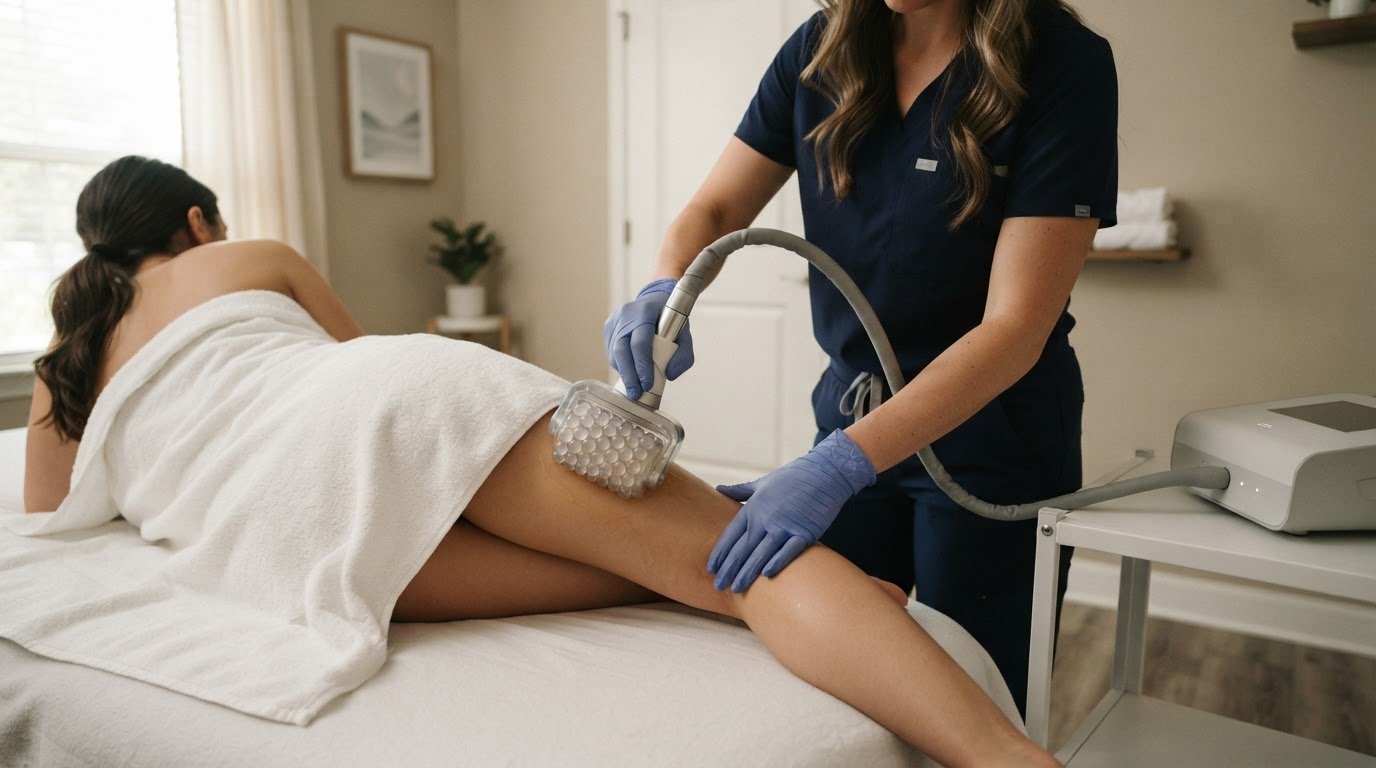
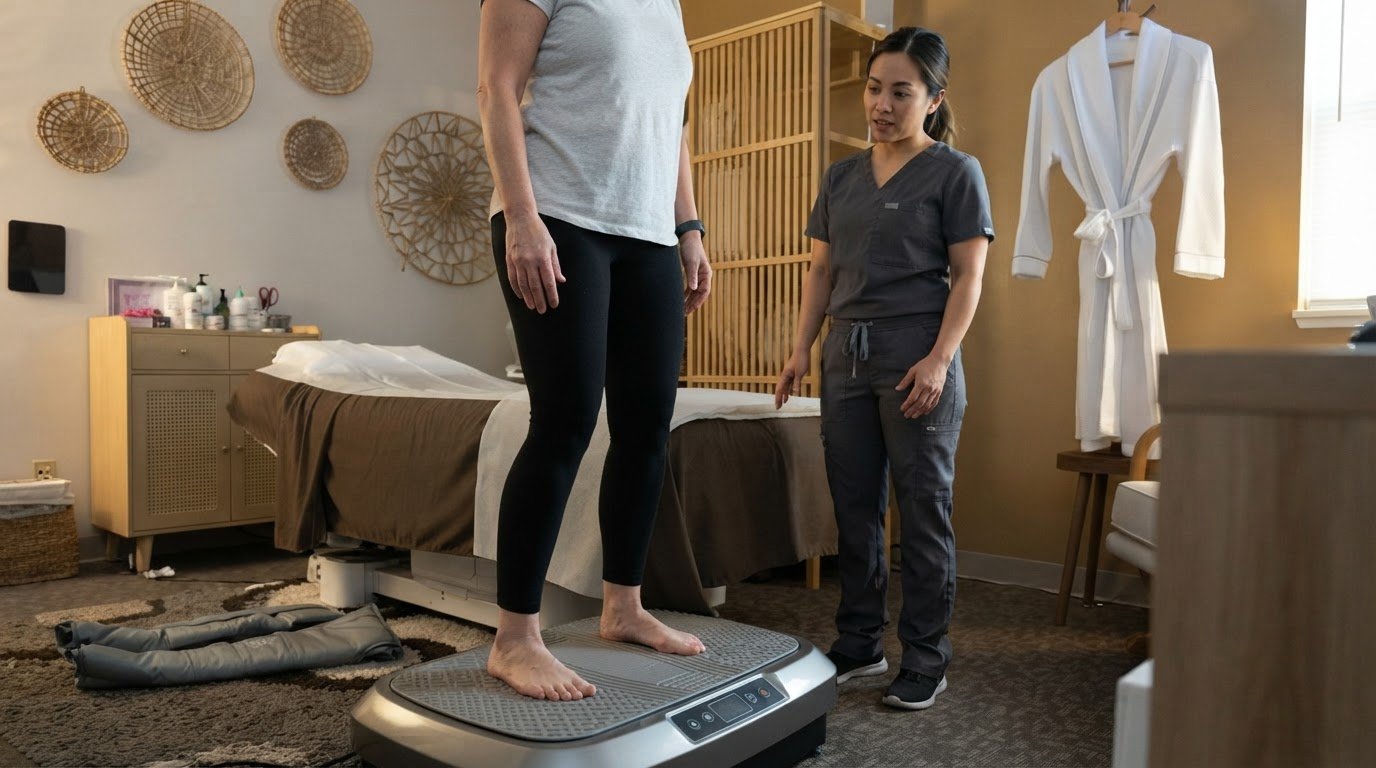
Contour Body Imaging also offers Cryo T-Shock Body Contouring and Endospheres Therapy® for other wellness goals. These services are distinct from rosacea care, so choose based on what you want to address. A thoughtful conversation can help you explore an appropriate cosmetic option without confusing it with medical treatment.
Take the next step at your own pace, keeping your comfort and skin needs in view.
Frequently Asked Questions
Rosacea … How can you take the red out?
There isn’t one cosmetic step that removes rosacea redness for everyone. Track situations that bring on flushing, then use gentle skincare and sun protection to limit avoidable irritation. For temporary visual coverage, Cleveland Clinic recommends green-tinted base moisturizers as an option to minimize redness. This changes the appearance of redness, not the underlying condition. Persistent or changing symptoms call for medical assessment.
How soon after treatment will I feel better?
A Red-Out facial has no established timeline for rosacea symptom relief because it isn’t a rosacea treatment. Separate how your skin feels after a cosmetic facial from changes in the condition itself. After medical treatment, rosacea symptoms may take several weeks to a few months to reduce. If redness persists or changes, discuss it with a healthcare professional rather than judging progress by one facial visit.
What are the benefits?
The facial’s potential benefits are cosmetic: it offers a skincare experience focused on calming and moisturizing the skin. A soothing treatment may suit someone seeking a dedicated facial-care session, but that isn’t the same as controlling rosacea. Consider the benefit you want, such as a more comfortable-feeling skincare routine, and keep expectations separate from medical outcomes like lasting redness reduction.
What is the Repêchage Red-Out facial and what does it involve?
The Repêchage Red-Out facial is a cosmetic facial using products from the Hydra 4 Red-Out line. The Red-Out Calming Facial includes a Silver Ball Massager facial massage and a mask intended to infuse vitamins, minerals, trace elements, amino acids, and antioxidants. The protocol’s components describe the treatment experience, not a medical procedure or a diagnosis for facial redness.
What results can people with rosacea expect from a Red-Out facial?
Expect a cosmetic skincare experience, not a predictable rosacea result. The facial isn’t intended to diagnose, treat, cure, or prevent disease, so it can’t promise that redness or bumps will improve. If your goal is symptom management, keep medical care central and use a facial only as a separate skincare choice. In The Woodlands and Dallas, make that distinction before deciding which outcome matters most to you.
How does the Repêchage Red-Out facial compare with other facials for rosacea?
The Repêchage Red-Out facial takes a calming skincare approach featuring MicroSilver, a Silver Ball Massager, and a mask. These features don’t establish that it outperforms other facials or treats rosacea.
How can you find a certified Repêchage Red-Out facial provider near you?
Look for an esthetician trained in the Red-Out protocol who can explain the products and steps. Ask how the treatment may be adapted for sensitive skin.
Comments