

How Many Endosphere Treatments Are Needed, Including Maintenance?
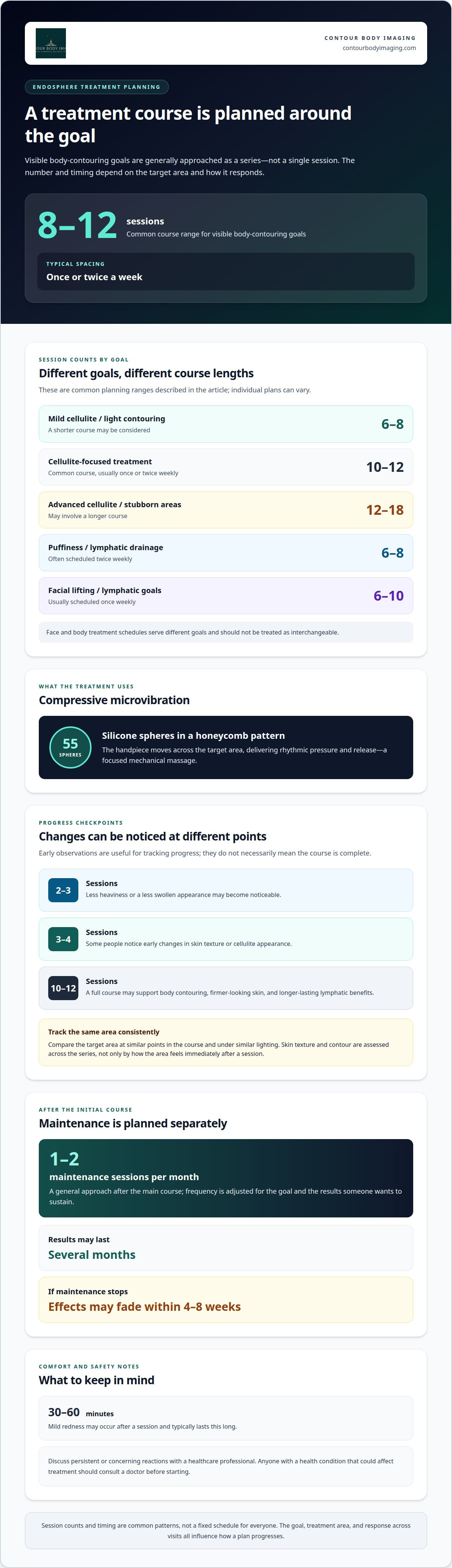
One Endosphere session may offer temporary benefits, but visible body contouring is usually planned as a course. For that goal, how many Endosphere treatments are needed typically comes to 8-12 sessions, scheduled once or twice a week, followed by periodic maintenance tailored to the goal.
It’s understandable to want a clear number before committing to a routine. How many Endosphere treatments are needed depends on your goal, such as improving the appearance of cellulite, contouring a specific area, or addressing puffiness, as well as how your body responds. This article explains how Endospheres Therapy® works and how a personalized treatment plan can account for session frequency and follow-up. A drainage-focused plan may differ from a body-contouring course, and one session isn’t the same as a series intended to support gradual visible changes.
Table of Contents
What Is Endosphere Treatment?
Endosphere treatment is a noninvasive body therapy using compressive microvibration. Its handpiece contains 55 silicone spheres arranged in a honeycomb pattern. As the device moves across a treatment area, the spheres provide a rhythmic mechanical massage. Plans can target cellulite appearance, body contouring, drainage, or facial goals. The right session count depends on the area treated and the desired outcome, so the answer to how many Endosphere treatments are needed varies by goal.
For cellulite reduction, a common course involves 10-12 sessions, usually scheduled once or twice weekly. The repeated visits build a treatment series rather than relying on one appointment. A single session may provide temporary benefits, but visible changes to cellulite and body contours are generally associated with a course. Some people notice early changes in skin texture or cellulite appearance after 3-4 sessions. That early point is useful for tracking progress, not a reason to assume the course is complete.
Cellulite severity can shape the plan. Mild cellulite and light contouring may call for 6-8 sessions, while more advanced cellulite or stubborn treatment areas may involve 12-18 sessions. Stage 2-3 cellulite is one factor associated with a longer course. These ranges help explain why two people seeking smoother-looking skin may follow different schedules. The treated area, visible texture, and response across visits all matter when assessing progress.
Drainage goals use a different schedule from cellulite-focused body treatment. A common plan for puffiness or lymphatic drainage involves 6-8 sessions, often twice weekly. This approach focuses on drainage rather than treating cellulite as the primary concern. Facial lifting and lymphatic goals are commonly planned as 6-10 sessions, usually once weekly. Because the face and body have different treatment areas and goals, their schedules shouldn’t be treated as interchangeable.
Cellulite describes an appearance beneath the skin, while skin texture describes how smooth or uneven the surface looks. A course may address both, but they are not the same measure of change. For example, you may first notice smoother-looking texture after several visits, while contouring is assessed across the full course. Keeping the goal specific, such as improving thigh texture or reducing the appearance of cellulite, makes progress easier to discuss.
What are the risks or side effects of repeated Endospheres treatments? Mild redness may occur after a session and typically lasts 30-60 minutes. Follow the planned treatment schedule and discuss persistent or concerning reactions with a healthcare professional.
Who should avoid Endospheres treatments or consult a doctor first? Anyone with a health condition that could affect treatment should consult a doctor before starting. A medical professional can consider your health circumstances and advise whether treatment is appropriate.
What is endospheres therapy and how does it work?
Endospheres Therapy® uses mechanical stimulation to address appearance, skin texture, and fluid-related heaviness. The handpiece moves over a target area, applying repeated pressure and release. The sensation can feel like a focused massage, rather than a single, lasting change. After one session, some people notice less puffiness or lighter-feeling legs. These early sensations differ from gradual changes in cellulite appearance or body contour, which are assessed across a treatment series.
Timing depends on the result being observed. Reduced heaviness or a less swollen appearance may become noticeable after 2-3 sessions. Changes in cellulite appearance and skin texture can take longer to assess because they develop progressively. A useful approach is to compare the same target area at consistent points in the course. For example, note whether thigh texture looks smoother, rather than relying only on how the area feels immediately after treatment.
A full course can build toward broader changes. After 10-12 sessions, people may notice body contouring, firmer-looking skin, and longer-lasting lymphatic benefits. Results may last several months, though the effect can fade within 4-8 weeks after maintenance stops. These timelines describe common patterns, not a fixed schedule for every person. The starting concern, treatment area, and consistency of visits all influence what changes become visible and when.
Lifestyle habits can complement a treatment series. Regular movement, balanced meals, and steady hydration support general wellbeing, while therapy focuses on the selected area. For instance, someone addressing leg puffiness may pair sessions with regular walking and consistent daily routines. Lifestyle measures don’t replace treatment or guarantee an outcome.
Consistency also makes progress easier to assess. Keep the target stable, such as the same area of the thighs, and compare its appearance under similar lighting. Changes in skin texture may be easier to spot in photographs than from memory alone. Consider how the area looks and feels between appointments, not only right after a session. This helps distinguish a brief sensation of lightness from gradual changes across the series.
After completing a course, periodic maintenance can help support results alongside sustainable habits. If you’re considering treatment for contouring, skin texture, or drainage, Endosphere therapy can be planned around that goal and the area you want to target. A clear goal makes it easier to discuss progress over time and decide what ongoing care may suit your routine.
Maintenance treatment frequency
Yes, maintenance sessions are commonly planned after an initial course. A general approach is 1-2 sessions per month, adjusted for the goal.
Planning Maintenance Sessions
Maintenance scheduling means spacing occasional sessions after the main treatment course. The suggested body plan is one session every 2-3 weeks, while lymphatic and circulation support commonly uses one session per month. These intervals give the schedule a practical starting point. The goal matters: someone focused on thighs and cellulite reduction may need a different rhythm from someone prioritizing drainage.
Maintenance After a Treatment Course
A treatment course is the initial series; maintenance is the follow-up schedule intended to support its results. After the course, 1-2 sessions per month is a common general recommendation. That doesn’t mean every aesthetic goal follows an identical calendar. For example, a body-contouring plan may use sessions every 2-3 weeks, while lymphatic support may use a monthly visit.
Keep your original goal central when planning session intervals. For cellulite appearance or contouring, consider whether the treated area is moving toward your desired outcome. For lymphatic drainage, note whether puffiness or heaviness recurs. These observations can inform a suitable schedule, rather than adding sessions simply because the initial course has ended.
Maintenance isn’t the same as restarting a full course. A follow-up session may continue tissue stimulation after the initial series, while a new course may address a renewed or different concern. For example, after completing thigh treatments, you could discuss whether periodic visits fit your routine. The choice should reflect your goal and observed changes, not an automatic increase in frequency.
Spacing matters, too. A body maintenance session every 2-3 weeks differs from monthly lymphatic and circulation support. Combining both goals doesn’t automatically mean doubling visits; the plan can account for the areas and priorities being treated. A clear schedule also makes it easier to track whether maintenance fits daily life and whether the aesthetic focus has changed since the treatment course began.
Think of maintenance as a flexible plan, not a fixed promise of results. The general recommendation of 1-2 sessions per month can guide discussion, while the more specific intervals offer goal-based examples. If skin texture, drainage, or contouring is the priority, keep that target consistent when reviewing each session. That creates a more useful basis for deciding whether to continue, adjust, or pause maintenance.
What does compressive microvibration actually do?
Compressive microvibration combines rhythmic pressure with vibration delivered through a treatment handpiece. In Endospheres technology, 55 silicone spheres sit in a honeycomb pattern. As the handpiece passes over skin, the spheres create repeated contact across the target area. This is a mechanical treatment, not an explanation of fat being melted or removed. The purpose is to work across tissue while addressing concerns such as cellulite appearance, fluid retention, and contouring.
“Compressive” describes pressure applied to tissue; “microvibration” describes repeated small movements. Together, these actions create a massage-like sensation as the practitioner moves the handpiece over the selected area. The mechanism is external and involves no incision. It differs from invasive procedures because it works through contact at the skin’s surface, rather than surgery or instruments placed inside the body.
The spheres’ honeycomb arrangement distributes contact across the skin as the device moves. For example, treatment on the thighs involves working over the chosen area rather than holding the handpiece in one place. Movement and pressure are adjusted to the treatment area and session purpose. This mechanical approach can be part of an aesthetic plan focused on smoother-looking skin or contouring a specific area.
What does that mean for fluid retention or circulation? The mechanical massage is intended to support drainage and circulation-related goals, but it shouldn’t be described as removing fat or curing a medical condition. Someone concerned about temporary puffiness may have a different goal from someone focused on cellulite texture. Identifying your concern helps clarify the treatment plan and keeps expectations focused on appearance, rather than assumed internal changes.
Compressive microvibration also helps explain why a series may be planned. The handpiece provides repeated mechanical stimulation during each visit, while visible changes are assessed across the course. One session may feel different from a later one, but sensation alone doesn’t measure contouring or skin texture. Comparing the same area over time gives a clearer view of progress toward your aesthetic goal.
Because the technique is external, it doesn’t involve surgical downtime from incisions. That distinction doesn’t mean every person will experience treatment identically. The pressure, treated area, and individual comfort can affect how a session feels. Mild redness after treatment typically lasts 30-60 minutes. If discomfort or an unexpected reaction concerns you, pause further sessions and discuss the symptoms with a healthcare professional.
In short, the spheres deliver a moving pattern of compression and vibration to the selected area. This mechanism explains how Endospheres Therapy® differs from a passive skincare product, without promising a particular result. It can support aesthetic goals related to cellulite appearance, fluid retention, and smoother-looking skin, but it doesn’t promise a specific body change.
Recommended number and frequency of Endospheres body treatments
For body contouring and cellulite appearance, a common course is 8-12 sessions, scheduled once or twice weekly. The specific plan depends on the target area, the concern, and visible progress during the series. That range is a practical starting point, not a single session count for every body or goal.
How many Endosphere treatments are recommended for best results? Many body plans use 8-12 sessions; mild cellulite and light contouring may involve 6-8, while advanced cellulite or stubborn areas may call for 12-18. These ranges help distinguish a lighter goal from a more persistent concern.
Frequency shapes how the course fits into a routine. With visits once or twice weekly, a person can schedule sessions consistently while tracking the same area. For example, someone treating cellulite on the thighs and buttocks can follow changes in skin texture and contour across the course. Swelling or lymphatic goals may need a different plan, so the reason for treatment matters as much as the area.
Progress is often gradual. Some people may notice smoother-looking texture or early changes in cellulite appearance after 3-4 sessions. After six sessions, cellulite reduction and subtle reshaping may become more visible. Those milestones can help frame a progress discussion, but they don’t mean every person will see the same change at the same point.
After 10-12 sessions, visible body contouring, firmer-looking skin, and longer-lasting lymphatic benefits may emerge. If the target is a specific area, such as the buttocks, assess that area consistently rather than judging the whole body from one observation. A device-based treatment course works through repeated visits, so comparing like with like makes progress easier to interpret.
How does this schedule compare with other cellulite treatments? There is no single session-for-session comparison that applies across different methods, since each treatment has its own approach and schedule. Endospheres body protocols commonly use 8-12 visits, with frequency shaped by the treatment goal and response.
Use the course as a framework: begin with the intended goal, keep visits consistent, then review changes at meaningful points such as sessions six and ten. If the concern is mild cellulite, the plan may sit toward the shorter range; more persistent areas may need a longer series. This makes the schedule more useful than choosing a session count without considering the target.
Contour Body Imaging: Endosphere
Contour Body Imaging offers Endospheres Therapy® for people considering a non-invasive approach to cellulite appearance, specific-area contouring, or lymphatic drainage. At the clinic, serving The Woodlands and Dallas, Texas, your treatment plan can take into account your target area and goal, as well as whether you’re considering an initial course or maintenance. This helps turn a general question about session count into a plan tailored to you.
If your primary goal is contouring a specific area, Cryo T-Shock Body Contouring is another available service. It uses a different approach from Endospheres, so the best fit depends on the concern you want to address and your preferences. A consultation can help clarify how Endospheres sessions are planned and what to expect. Contact Contour Body Imaging to discuss your goals and next steps.
Choose a Plan That Fits Your Goals
Your next step is to turn a general treatment range into a plan connected to your priorities. Consider which area you want to address, what change you hope to notice, and how maintenance might fit your routine. These details can guide a useful conversation about how many Endosphere treatments are needed for your goals, rather than choosing a number without context.
Contour Body Imaging offers Endospheres Therapy®, Cryo T-Shock Body Contouring, and Cryo Facial. If you’re exploring contouring for a specific area or facial care, a consultation can help you understand which option aligns with your focus and what planning may involve. You don’t need to have every detail decided before you reach out.
Take the next step at a pace that feels right, with your goals and comfort guiding the conversation.
Frequently Asked Questions
How long do the results last?
Results may last several months, though they can fade within 4-8 weeks after maintenance stops. The duration depends partly on the goal and whether follow-up sessions continue. For example, someone focused on body contouring may use periodic maintenance, while a person seeking drainage support may follow a different rhythm. Sustainable lifestyle habits can complement treatment, but they don’t establish an exact timeline for every person.
How many sessions do you need?
A body treatment course commonly includes 6-12 sessions, with 8-12 often used for visible results. The lower end may suit mild concerns, while persistent cellulite or stubborn areas can call for a longer course. For example, someone treating one specific area can discuss progress there as sessions continue. The useful number is tied to the goal, not simply to completing a preset package.
Can a single Endospheres session be enough?
A single visit may offer temporary effects, such as less puffiness or a lighter feeling in the legs. It isn’t generally considered a full course for addressing cellulite appearance or visible contouring. If your goal is to assess how the treatment feels, one session can provide that experience. For broader aesthetic changes, assess progress over the planned series rather than relying on one appointment.
Quick Answer: How Many Endospheres Sessions Do You Need?
For body contouring, a common starting range is 8-12 sessions, while drainage-focused plans often use 6-8. Facial goals may follow a separate schedule. Think of these as goal-specific ranges, not interchangeable prescriptions. For instance, a person addressing puffiness may not need the same course as someone targeting cellulite appearance. Maintenance is planned after the initial course and can follow a different interval.
When Will Clients See Endospheres Results?
Some people notice reduced heaviness or a less swollen appearance after 2-3 sessions. Early changes in skin texture or cellulite appearance may show after 3-4 sessions, while broader contour changes can take longer. Compare the same area under similar conditions, such as the thighs before and during a course. A brief change in how an area feels is different from a visible change in its appearance.
How often should Endospheres treatments be scheduled?
Initial body sessions are commonly scheduled once or twice per week. The interval depends on the treatment goal and whether the plan targets contouring, cellulite appearance, or drainage. After the course, maintenance examples include one body session every 2-3 weeks or one monthly session for lymphatic and circulation support. Keeping a consistent schedule makes it easier to assess changes across visits.
How many Endospheres sessions are needed for cellulite?
A common cellulite-focused course uses 10-12 sessions, usually once or twice weekly. Mild cellulite and light contouring may involve 6-8 visits, while advanced cellulite or stubborn areas may require 12-18. For example, someone treating the thighs can track skin texture and cellulite appearance in that area throughout the course. The range reflects differences in starting concern and treatment response.
How many Endospheres treatments are needed for lymphatic drainage or swelling?
A drainage-focused course commonly includes 6-8 sessions, often scheduled twice weekly. This differs from a cellulite-focused plan because the primary aim is lymphatic drainage and addressing puffiness, rather than body contouring. After the course, a common lymphatic and circulation support schedule is one session per month. Persistent or unexplained swelling should be discussed with a healthcare professional, since aesthetic treatment isn’t a substitute for medical evaluation.
Comments