

Cryo facial for puffy eyes: How often should you go
A cryo facial for puffy eyes can temporarily make under-eye puffiness look less noticeable, and at-home cold tools may offer a similar short-lived refresh. For professional cryotherapy, an initial schedule is often weekly or fortnightly, followed by monthly maintenance. Cold briefly narrows blood vessels, but that effect reverses as the skin warms, so results aren’t permanent.
It makes sense to reach for an ice roller or cryo globes when your eyes look tired. The cooling sensation can feel soothing, but temporary de-puffing is not a lasting change, and results vary depending on what is contributing to the puffiness.
This guide explains what at-home facial cooling may do, how long its visible effect can last, and how ice rollers and cryo globes compare with a professional Cryo Facial. It also covers common session schedules and practical ways to decide which approach feels comfortable and realistic for your skin.
Table of Contents
Duration of cryo facial results
A cryo facial for puffy eyes may temporarily make the under-eye area look less swollen, but the change is not permanent. Cold causes temporary vasoconstriction, meaning blood vessels narrow. As the skin warms, they widen again. This helps explain why a refreshed appearance can fade rather than build into a lasting change after one session.
How long the visible effect lasts depends partly on what caused the puffiness. A morning-after-salty-food look may change differently from swelling linked to allergies, poor sleep, or an ongoing health condition. Cooling affects the appearance of the area, not those underlying triggers. Tracking when puffiness appears, such as after a short night or during allergy season, can help you tell whether cooling makes a noticeable difference.
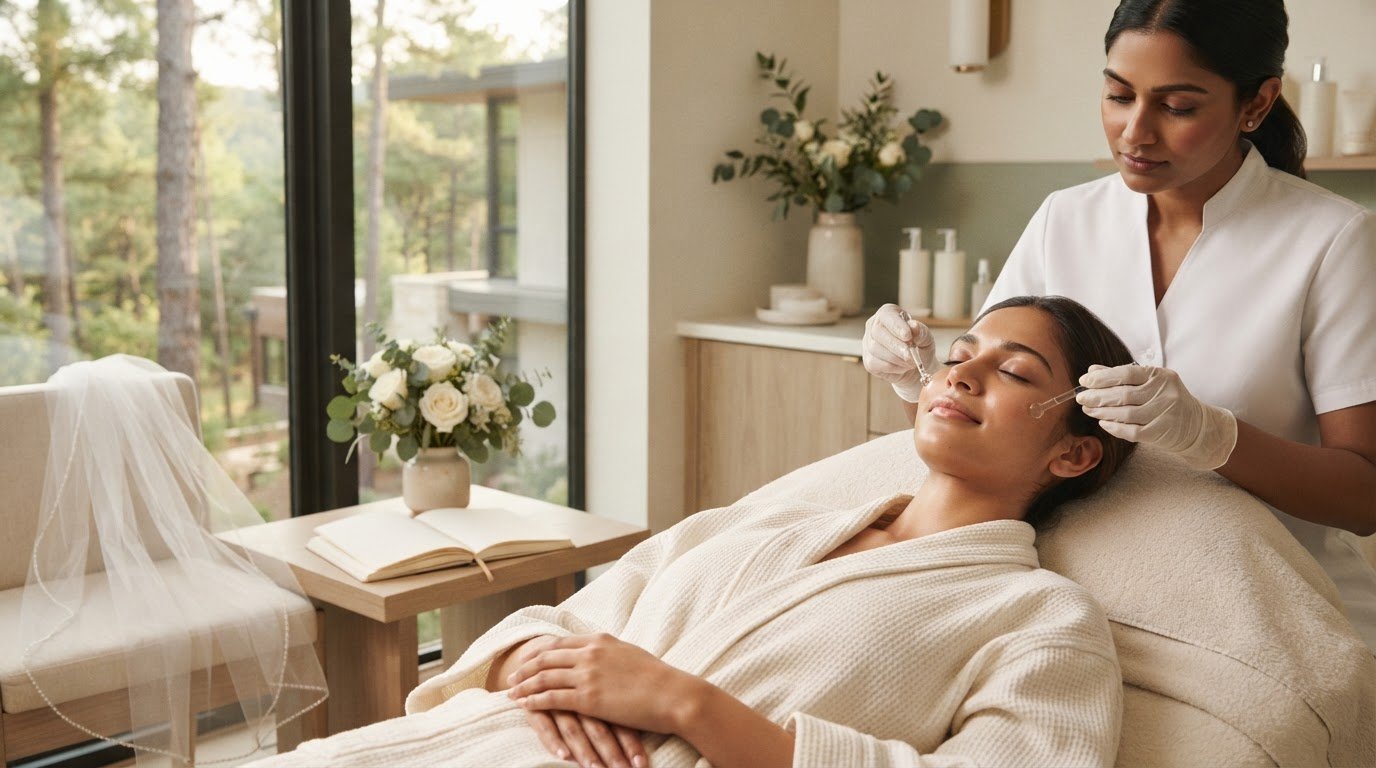
A professional cryotherapy facial session may last 10-30 minutes, depending on the area treated. Practitioners may use a Cryo Pen or facial wand on areas such as the face, neck, and décolletage. The length of the session is not the same as the length of the visible result. Makeup can typically be applied immediately afterward because the treatment has no downtime, but that convenience doesn’t mean the de-puffing effect lasts all day.
In the United States, there’s no single price for a cryo facial; the price depends on the case and is given after a quote request. Factors include the area treated, session length, and treatment approach.
What are the risks and side effects of cryotherapy around the eyes? Facial cryotherapy is generally safe for most skin types, but cold may not suit extremely sensitive skin. Pay attention to discomfort during treatment, especially near the delicate eye area, and communicate promptly if the sensation feels painful rather than cooling.
Who should avoid cryo facials or consult a doctor first? People with health concerns or questions about whether cold exposure is suitable for them should seek medical advice before considering treatment. Skin sensitivity and health history are important when deciding whether a facial is appropriate.
Can cryo facials treat puffiness caused by allergies, lack of sleep, or medical conditions? Cooling may temporarily change the appearance of puffiness, but it does not resolve its cause. If swelling keeps returning alongside allergies, sleep disruption, or a health concern, focus on that trigger rather than expecting a facial to provide lasting relief.
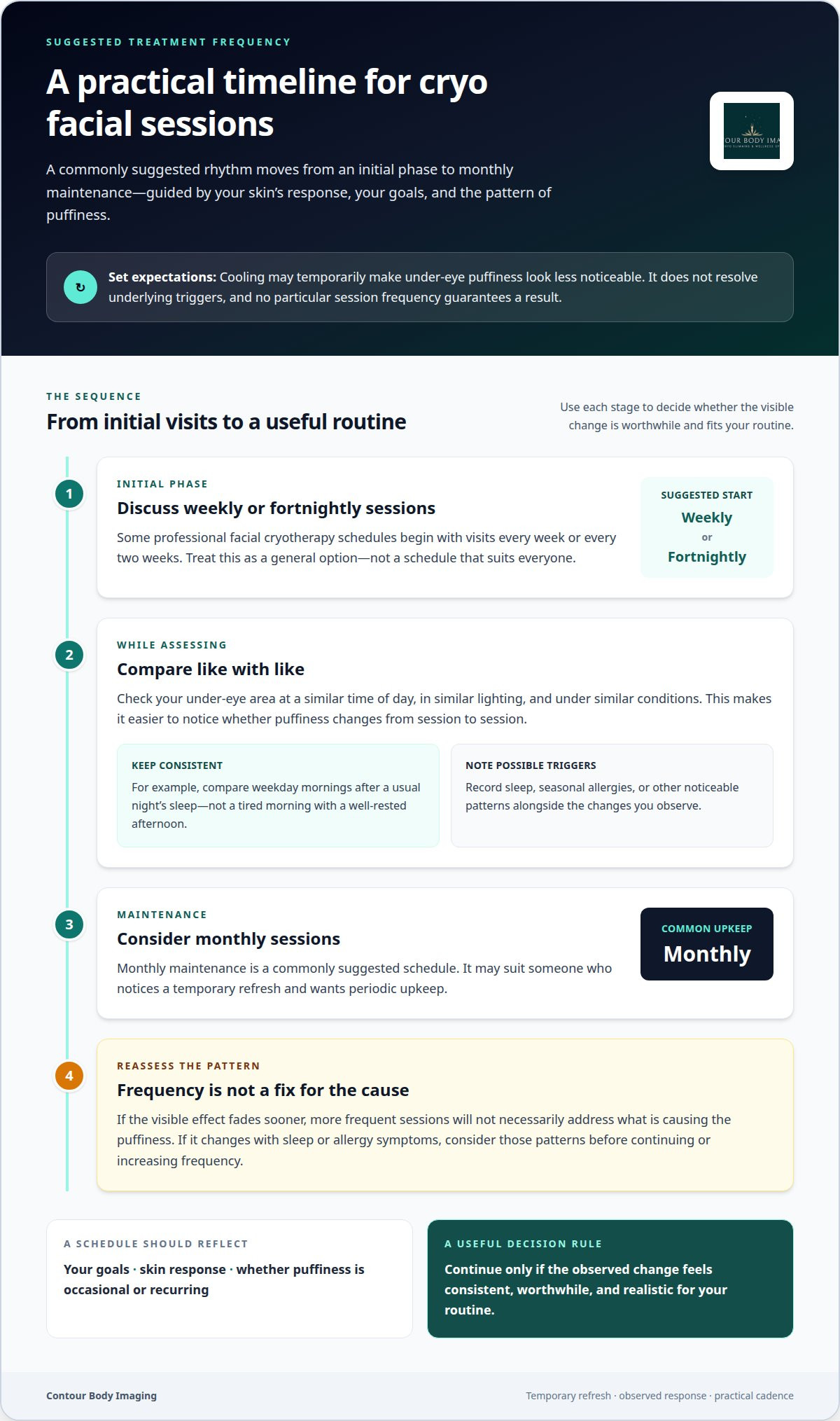
Suggested treatment frequency
Some professional facial cryotherapy schedules begin with weekly or fortnightly sessions, followed by monthly maintenance. This is a general framework, not a schedule that suits everyone. Your goals, skin response, and whether puffiness is occasional or recurring all matter.
Regular appointments during an initial phase can help you observe whether puffiness changes from session to session. Weekly visits create a shorter interval for noticing patterns, while fortnightly visits leave more time between treatments. Neither frequency guarantees a particular result. Consider whether you see a consistent, worthwhile change that fits your expectations and routine.
Make each comparison meaningful. Check your under-eye area at a similar time of day, in similar lighting, and under similar conditions. For example, compare weekday mornings after a usual night’s sleep, rather than a tired morning with a well-rested afternoon. Notes about sleep, seasonal allergies, or other noticeable triggers can help you identify a repeatable pattern.
After an initial phase, monthly maintenance is a commonly suggested schedule. It may suit someone who notices a temporary refresh and wants periodic upkeep. If the visible effect fades sooner, more frequent sessions will not necessarily address the underlying cause. If puffiness changes with sleep or allergy symptoms, consider those patterns when deciding whether continued treatments are useful.
At the start: Discuss a weekly or fortnightly schedule as an initial option.
As you assess: Compare similar mornings and record relevant changes.
For maintenance: Consider monthly sessions if they continue to support your appearance goals.
If the pattern shifts: Reassess the goal and likely triggers before increasing frequency.
A useful plan has a purpose for each visit. If your main concern is occasional morning puffiness, a frequent appointment schedule may not match the pattern. If you’re considering professional facial care, explore the available facial treatment options as you weigh what best fits your goals. Keep the focus on observed changes, comfort, and a schedule you can maintain, not on booking more often simply because an initial course is suggested.
Comparison with at-home ice rollers
An ice roller offers a simple, at-home way to cool the skin around your eyes. Like a professional facial cryotherapy treatment, it may temporarily make puffiness look less noticeable. The main difference is how cooling is applied: with an ice roller, you control the pressure, movement, and areas touched. A professional treatment uses specialized equipment and is performed by an aesthetic professional.
For a practical comparison, consider a morning when your under-eyes look puffy after a short night. An ice roller can provide a brief cooling step while you get ready. It is convenient to use, but repeating the routine does not address the cause of puffiness. A professional Cryo Facial may suit you better if you prefer a guided treatment over a home-care tool.
An ice roller also gives you control over where it moves. You can glide it over the cheekbone and pause before reaching the under-eye area. This hands-on approach lets you adjust the pressure and stop if the sensation feels uncomfortable. With an at-home roller, you are responsible for where and how you use it; a professional facial is guided during the treatment.
Keep the comparison focused on your goal. If you want a quick cooling sensation before applying makeup, a roller may suit that moment. If you prefer a professional facial experience, an appointment may be a better fit. Neither option should be treated as a fix for puffiness linked to allergies, sleep disruption, or another underlying trigger.
Choose an ice roller for convenient, self-directed cooling at home.
Consider professional treatment if you prefer a guided facial experience.
Compare results fairly by observing your under-eye appearance in similar lighting and at a similar time of day.
Notice the cause by recording patterns such as puffiness after poor sleep or during allergy season.
For a useful personal comparison, check your reflection on two mornings after similar sleep rather than comparing a roller session with a professional treatment on different days. Note whether cooling changes the appearance and how long the change seems to last. This gives you a more useful comparison than choosing based on a tool’s name or the feeling of cold alone.
An ice roller can be a convenient part of a morning routine, while a professional Cryo Facial offers a guided treatment. The better fit depends on whether you prefer at-home control or professional facial care. Keep your goal specific: a temporary refresh, a guided experience, or a better understanding of what contributes to recurring puffiness.
Cryotherapy is often applied with a Cryo Pen or facial wand to areas including the face, neck, and décolletage, extending beyond the under-eye area.
Cryo globes and facial massage
Cryo globes are handheld tools that glide cooling surfaces over the face. The globe provides the cold sensation, while your hand guides its movement and pressure. Around puffy eyes, keep those actions distinct: the tool cools the skin, and your hand controls its path. Neither changes the underlying reason puffiness appears.
What happens during a cryo facial for puffy eyes? A professional may use a Cryo Pen or facial wand to apply cold to the face, neck, or décolletage. The session may last 10-30 minutes, depending on the area treated.
At home, a globe lets you control where it moves and how much pressure you use. For example, you can glide it along the cheekbone beside the under-eye area rather than pressing directly on the eyelid. Keep the movement gentle and steady. If the cold feels painful or your skin becomes uncomfortable, stop instead of pushing through.
Massage is not the same as cryotherapy. A light rolling motion may feel soothing, but stronger pressure does not mean puffiness will reduce more effectively. The skin around the eyes is delicate, so avoid tugging or dragging it. Use a brief, comfortable pass across the cheekbone rather than forcefully rubbing the swollen area.
The temperature response helps explain why a cryo globe may create a temporary refreshed look. Cold briefly narrows blood vessels, a process called vasoconstriction. As the skin warms, vessels widen again, or vasodilation occurs. This response is temporary, so a cooler sensation or short-term visual change is not a lasting correction.
For cooling: Use a chilled globe as a surface that glides across the face.
For massage: Keep contact light, especially near the under-eye area.
For comparison: Notice whether cooling alone or gentle movement changes how your skin looks.
For comfort: Stop if cold or pressure feels painful.
A professional Cryo Facial and at-home globes also differ in how they are delivered. A professional facial is a guided treatment, while a globe depends on your technique and control. After cryotherapy, makeup can typically be applied immediately because there is no downtime. That convenience does not mean every globe routine produces the same effect or lasts equally long.
For a useful personal comparison, try the globe on a morning when puffiness is noticeable, then observe your appearance later under similar lighting. Avoid changing pressure and movement at the same time, since that makes it harder to tell what felt helpful. A comfortable cooling routine can be a simple self-care step, while persistent puffiness calls for attention to possible triggers.
Does a cryo facial reduce puffy eyes, and how does it work?
A Cryo Facial may temporarily make puffy eyes look less noticeable. It does not remove the underlying cause or create a permanent change. Cold briefly narrows blood vessels, a process called vasoconstriction. As the skin warms, vessels widen again, a response called vasodilation.
That short-term change helps explain why the under-eye area may look fresher after cooling. The appearance can shift back as the skin returns to its usual temperature. For example, cooling might offer a temporary cosmetic refresh after a late night, while rest addresses a different part of the situation.
The result also depends on what is contributing to the puffiness. A temporary change after disrupted sleep differs from recurring swelling during allergy season. Cooling may affect the skin’s appearance, but it does not treat allergies or other medical causes. If puffiness persists or comes with other concerning symptoms, seek medical advice rather than relying on a facial treatment.
Facial cryotherapy may be applied with a Cryo Pen or facial wand. The treatment can cover the face, neck, or décolletage, depending on the area selected. Around the eyes, the goal is a controlled cooling experience, not intense cold or pressure. A qualified aesthetic professional can consider skin sensitivity and individual needs before treatment.
Here is a useful way to assess the effect: compare your appearance before and after a session under similar lighting. A bathroom mirror at home and a bright outdoor reflection can make the same under-eye area look different. Keep the comparison simple and note whether the visible change feels meaningful for your goal.
What cold can do: Temporarily change the appearance of puffiness.
What it can’t do: Resolve allergies, sleep loss, or a medical cause.
What to observe: Compare the same area, lighting, and time of day.
What to prioritize: Skin comfort and the reason puffiness keeps returning.
For example, if under-eye swelling appears mainly after poor sleep, a cooling treatment may offer a brief refresh, but it will not replace rest. If puffiness repeatedly appears with seasonal allergy symptoms, addressing that pattern matters more than repeating cold exposure. Matching your approach to the trigger helps keep expectations realistic as you choose between at-home cooling and a professional facial.
The cooling response is temporary: cryotherapy causes vasoconstriction, followed by vasodilation as the skin warms. Any visible effect occurs during that changing temperature response.
Contour Body Imaging: Cryo T-Shock Body Contouring
Contour Body Imaging offers Cryo T-Shock for body contouring goals and Cryo Facials for facial skin concerns. These services address different areas, so body contouring is not a substitute for a facial treatment or a solution for puffy eyes. If you are considering professional facial care, ask whether a Cryo Facial aligns with your goal of a temporary, refreshed appearance.
A cosmetic facial does not address puffiness linked to allergies, sleep disruption, or another health concern. Keep that distinction in mind as you decide whether at-home cooling or professional facial care suits your needs. Contact Contour Body Imaging to discuss its Cryo Facial and your skincare goals.
Choose a Next Step That Fits Your Skin Goals
Choose a routine based on what you want, not pressure to pursue every new technique. A cryo facial for puffy eyes can be one part of a considered skincare plan, especially if you value a professionally guided experience. At-home tools may suit a different preference. Either option should feel comfortable and useful to you.
Before deciding, note what you would like to change and what tends to affect your under-eye appearance. That gives you a clearer starting point for a conversation about facial care. Persistent or concerning swelling deserves attention beyond cosmetic cooling, so consider the cause as well as the appearance.
If professional facial care feels like a good next step, Contour Body Imaging offers Cryo Facial treatments. Explore whether the service aligns with your goals and discuss an approach that feels right for you.
Take the next step at your own pace, with a clear goal and a routine that feels comfortable.
Frequently Asked Questions
Does at-home facial cryotherapy actually work?
At-home cooling can temporarily make under-eye puffiness look less noticeable. An ice roller or cryo globe, for example, may create a refreshed appearance during a morning routine, but it will not address why swelling appeared. Judge the effect by comparing similar mornings rather than expecting a home tool to provide lasting correction. If puffiness repeatedly returns, pay attention to its pattern and possible triggers.
How long do cryo facial results typically last?
Visible results are temporary, and no single duration applies to everyone. The change depends partly on what caused the puffiness and how your skin responds as it warms after cooling. To assess your experience, compare your under-eye appearance at a similar time and in similar lighting. A refreshed look after a session does not mean the cause of recurring puffiness has changed.
What are the other benefits?
Beyond the temporary appearance of less puffiness, a Cryo Facial is also described as stimulating collagen production and reducing fine lines. These are separate skincare goals from addressing under-eye swelling. For example, someone interested in the look of fine lines may consider facial treatment for that reason, while someone focused on puffiness should keep expectations centered on its temporary appearance.
How long do results from a cryo facial for puffy eyes last?
The under-eye effect is temporary, not permanent. If your puffiness follows a pattern, such as appearing after disrupted sleep, it may return when that trigger recurs. Note the circumstances around each session and compare similar days. This helps distinguish a short-term cosmetic refresh from a change in the pattern causing puffiness.
How does a cryo facial compare with ice packs, cold rollers, and other under-eye treatments?
Ice packs and cold rollers are at-home ways to apply cooling, while a professional Cryo Facial provides guided facial care. Home tools let you control placement yourself; a professional treatment takes place during a facial session. Neither approach treats the underlying cause of puffiness, so consider which method better fits your comfort and routine.
How many cryo facial sessions are recommended for puffy eyes?
A commonly suggested starting schedule is weekly or fortnightly sessions, followed by monthly maintenance. Treat this as a general framework, not a required number of visits. Your goal and the pattern of your puffiness can help you decide whether ongoing appointments feel worthwhile. Occasional morning puffiness, for example, may call for a different approach than a concern you notice consistently.

Comments