

Endosphere Therapy for Arms: Pain, Sessions and Suitability
A body-contouring session shouldn’t feel like a test of how much discomfort you can tolerate. Endosphere therapy for arms may feel like firm, rhythmic pressure, though the sensation varies with personal sensitivity and the area treated. If it feels uncomfortable, speak up so the practitioner can adjust the treatment.
It’s understandable to want a clear idea of what a treatment feels like before deciding whether it suits you. This article explains how Endosphere works on the arms, what sensations to expect, and how treatment plans are commonly shaped, including session frequency and suitability.
You’ll also learn what can affect comfort and treatment planning, and when a different approach may be more appropriate. The goal is to help you make an informed choice with realistic expectations, recognizing that each person’s body and experience are different.
Table of Contents
How Does Endospheres Compare to Other Treatments?
Cellulite can affect the arms as well as the thighs, hips, and buttocks. To compare treatments, first identify whether your main concern is skin texture, muscle tone, or temporary puffiness.
Cellulite Appearance and Skin Texture
Cellulite is an uneven or dimpled surface appearance in the skin and underlying tissue. It can show on the upper arms, thighs, hips, and buttocks. Cellulite affects up to 90% of women and about 10% of men. Those figures help put the concern in context, but they don’t describe how noticeable it will be for any one person.
Connective tissue bands, fat beneath the skin, and skin structure can all influence visible dimpling. Their balance varies from person to person and across body areas. An arm, for example, may look less smooth because of tissue contours, while another area may show more distinct dimples. Cellulite isn’t simply a measure of body weight.
Claims about smoother-looking skin should be considered separately from claims about reducing fat or changing body size. Research at G. D’Annunzio University’s Faculty of Physical Medicine and Rehabilitation reported a 40.14% reduction in original cellulite measurements after 12 sessions over five weeks. That finding concerns cellulite measurements, not a guaranteed arm-specific result.
Cellulite and Fluid Retention
Fluid retention means excess fluid collects in body tissue, sometimes making an area feel or look temporarily puffy. It may affect how cellulite appears, but it isn’t the only explanation for dimpling. A change in puffiness doesn’t necessarily mean the underlying tissue structure has changed.
Compare approaches by their intended focus. Skin-care products address the skin’s surface, while strength training develops muscle. Endosphere is a non-invasive option for cellulite concerns, but it isn’t interchangeable with exercise or a skin-care routine. Ask what change the treatment is intended to address, such as texture or puffiness.
For Endosphere therapy for arms, describe the area you want treated and the change you hope to see. To find a nearby provider, look for a practice offering Endosphere and ask how it assesses arm tissue, tailors treatment pressure, and plans sessions. Those answers help you understand the treatment’s focus before booking.
Compressive Microvibration technology
Compressive Microvibration combines rhythmic mechanical movement with pressure applied through a treatment handpiece. Understanding these two actions helps explain the technique’s focus and the sensations you may notice.
Compressive Microvibration and Silicone Spheres
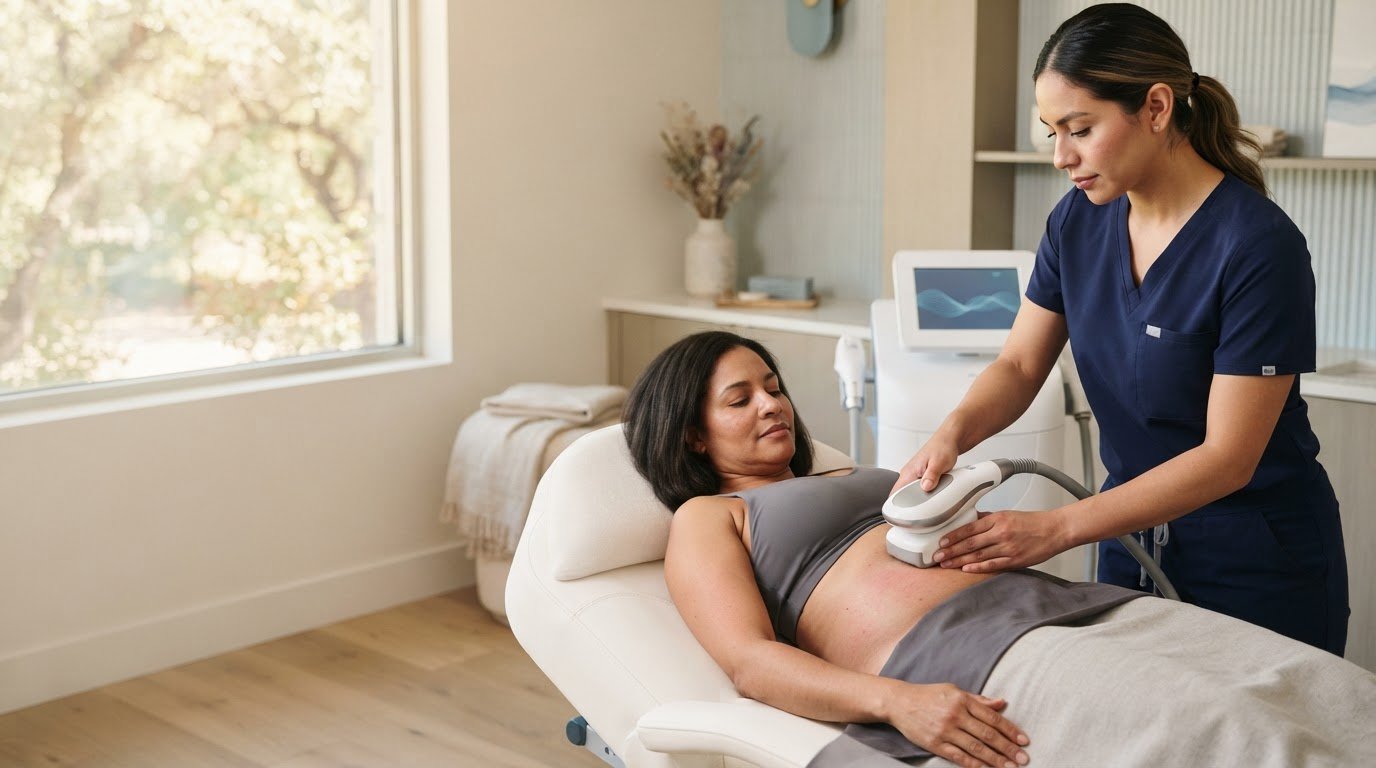
In this approach, silicone spheres on a handpiece contact the skin and move across the treatment area. Their rolling contact distinguishes the technique from a stationary massage surface. For an arm treatment, the practitioner moves the device over the selected tissue rather than treating the whole arm as one uniform zone.
The arrangement of the spheres shapes how contact is distributed across the skin. You can ask which parts of the upper arm will be treated, such as the inner arm or the area above the elbow. Understanding the planned path makes it easier to know where you may feel pressure and movement.
Microvibration and Microcompression
Microvibration refers to repeated small movements, while microcompression describes the accompanying gentle pressure on tissue. Together, these terms describe the technique’s mechanical action, not a guaranteed cosmetic result. During an arm session, the device moves while maintaining contact, creating a different sensation from a single press held in place.
Pressure and movement are distinct parts of the experience. The practitioner can adjust how the handpiece travels over an area, while you can report whether the contact feels comfortable. That feedback helps guide the session in real time. It also explains why the same treatment can feel different across the upper arm and forearm.
Potential Effects on Circulation and Muscle Tone
Compressive Microvibration is discussed in relation to microcirculation, lymphatic drainage, and muscle tone. These terms describe different things: microcirculation concerns small blood vessels, lymphatic drainage concerns fluid movement, and muscle tone relates to resting muscle tension. Keeping them distinct helps you assess claims without assuming one effect proves another.
Mechanical contact and movement are the treatment inputs; circulation, drainage, and tone are areas of interest. They aren’t interchangeable outcomes, and an appearance change doesn’t by itself demonstrate improved muscle function. If your goal is firmer-looking arms, describe it clearly and ask how the treatment relates to that goal. This sets a more useful expectation than treating “better circulation” as a visible result.
Treatment course and session frequency
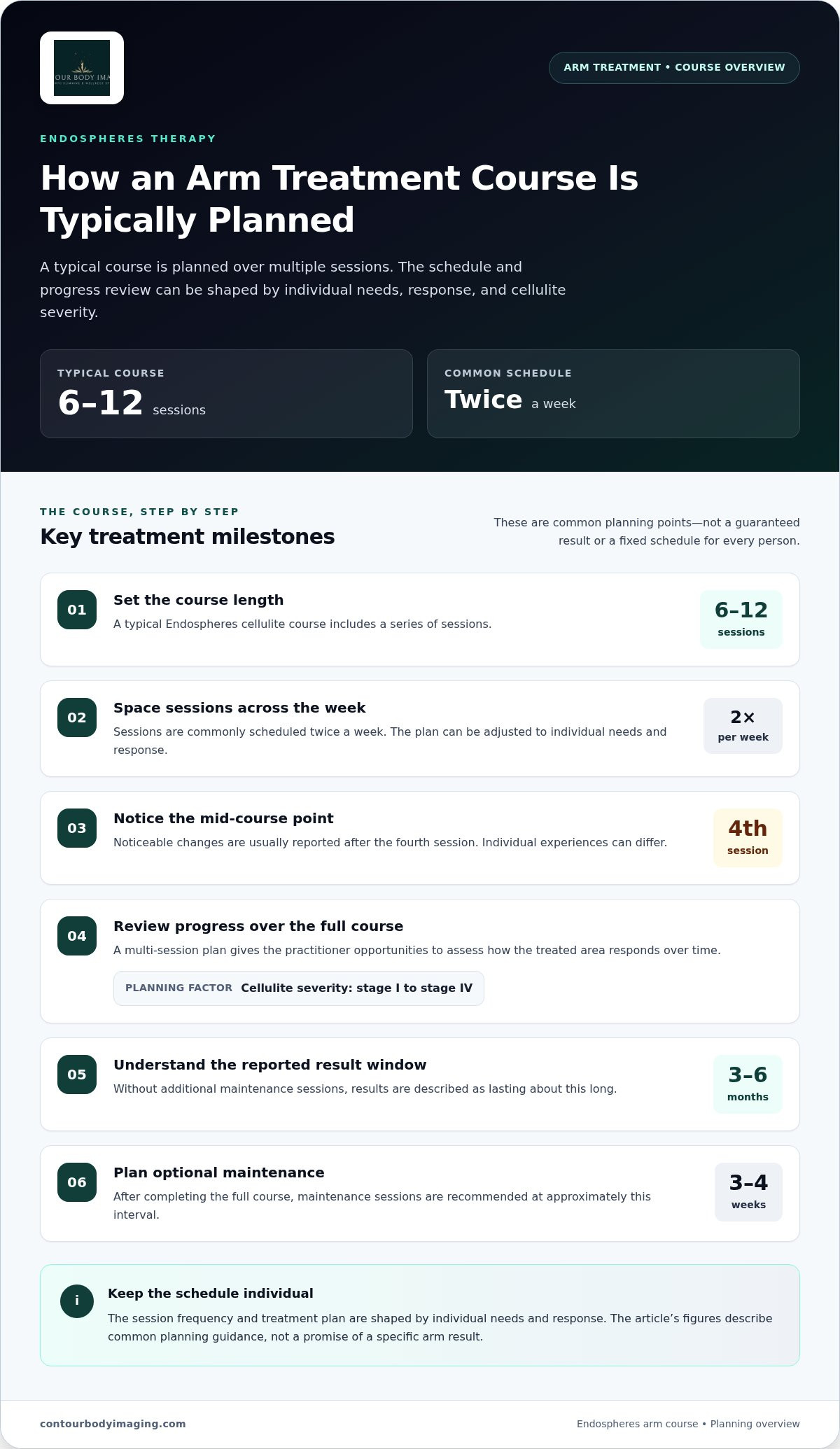
A typical Endospheres cellulite course includes 6 to 12 sessions, commonly scheduled twice a week. Arm treatment planning also considers cellulite severity, which may range from stage I to stage IV.
Noticeable changes are usually reported after the fourth session, while the full course allows progress to be assessed over time.
Treatment Course and Maintenance
A treatment course is a planned series of sessions, followed by optional maintenance appointments. A 6-to-12-session plan gives a practitioner repeated opportunities to address the chosen area and review how it responds. For arms, the plan can focus on the upper arm, while other sessions may target areas such as thighs or hips.
Results are described as lasting about 3 to 6 months without additional maintenance sessions. After completing the full course, maintenance sessions are recommended approximately every 3 to 4 weeks. These intervals help readers distinguish an initial treatment series from ongoing appointments.
Treat the fourth session as a point to discuss visible changes, not a promise that everyone will see the same result. Cellulite severity, from stage I to stage IV, is one factor used to determine the number of sessions. The treatment area and your goal also shape the course.
Recommended Session Frequency
Sessions are typically conducted twice a week during a cellulite treatment course. This schedule spreads the 6 to 12 appointments across several weeks, rather than placing them all close together. If arms and another area are both goals, clarify whether the plan treats them in the same session or across separate appointments.
Recommended frequency is a planning framework, not a reason to add sessions without purpose. A useful discussion covers the target area, cellulite stage, planned appointments, and when progress will be reviewed. This makes it easier to fit the schedule around work, exercise, and other weekly commitments.
Post-treatment guidance includes walking for 20 to 30 minutes after a session. Staying hydrated is also recommended: drink at least 2 liters of water daily while supporting treatment results. These are practical steps to incorporate into the routine, rather than substitutes for the planned course.
Body-contouring plans may address the arms alongside other areas, but the treatment area should be clear at each appointment. For example, note whether your priority is the appearance of the upper arm or a separate area, such as the thigh. Specific goals make progress easier to discuss.
Keep a simple record after each appointment: date, treated area, session number, and any change you notice. Compare observations at the fourth session and again when the 6-to-12-session course ends. A consistent record makes conversations about maintenance and the next phase more concrete.
Aesthetemed recommends an initial Endospheres protocol of 12-18 sessions, scheduled two to three times weekly, as another possible course framework.
Candidate suitability and contraindications
Endosphere may suit someone focused on the appearance of a specific area, such as upper-arm texture. Suitability also depends on reviewing your health circumstances and treatment goals before a session.
There isn’t a single appearance-based test for candidacy. A useful assessment separates what you want to change from what the treatment is intended to address. Someone concerned about arm texture, for example, may have a different goal from someone focused on thigh contours or temporary swelling.
Share relevant health information before treatment. Discuss current symptoms, medical conditions, medications, recent procedures, and any previous reaction to hands-on treatments. These details help the practitioner consider whether treatment is appropriate, whether an area needs special attention, or whether postponing makes sense. Don’t leave out a concern because it seems unrelated to your arms.
Contraindications are health circumstances that make a treatment unsuitable or require further assessment. They can’t be reliably identified by appearance alone. The practitioner should review your history and the treatment area, then explain how that information affects the plan. Don’t assume a treatment is suitable simply because it’s non-invasive or another person found it comfortable.
Be specific about swelling. Describe where it occurs, when you noticed it, and whether it is new or changing. Swelling can have different causes, so a cosmetic treatment shouldn’t be used to diagnose its source. If unexplained swelling, rather than skin appearance, is your main concern, discuss it with a qualified healthcare professional before pursuing an aesthetic session.
Set expectations around recovery and common immediate responses. Temporary redness after Endosphere Therapy usually subsides within 30 to 60 minutes. That detail can help you plan around an appointment, but it isn’t a promise that every person will have the same response. Ask what sensations may occur during treatment and what to do if you have concerns afterward.
Describe your goal, such as arm texture or thigh contours.
Share health conditions, medications, symptoms, and previous treatment reactions.
Ask what circumstances could make treatment unsuitable or require postponement.
Clarify expected immediate effects, including temporary redness.
Claims about removing “toxins” shouldn’t determine whether you’re a candidate. Instead, ask what specific appearance concern the treatment addresses and how progress will be assessed. This keeps the decision focused on your goals, relevant health information, and a clear explanation of the proposed treatment.
Is Endosphere therapy painful?
Endosphere uses rhythmic mechanical pressure, so the sensation is usually described as contact and movement rather than a sharp, fixed feeling. During an arm session, expect the handpiece to travel across the selected area; pressure may feel stronger over sensitive tissue or bony spots. Tell the practitioner if the sensation becomes painful, and ask for an adjustment or pause.
There isn’t one sensation that applies to every person or arm. The upper arm, inner arm, and area near the elbow can feel different during treatment. Your comfort, the pressure used, and the practitioner’s movements all shape the experience. Clear feedback during the session helps keep treatment responsive rather than requiring you to tolerate discomfort.
Temporary redness after Endosphere Therapy usually subsides within 30 to 60 minutes. That may help you plan an appointment before an event, although redness doesn’t indicate whether the session was effective. Notice how your skin feels afterward, and raise persistent or concerning symptoms with an appropriate healthcare professional.
What arm concerns can Endosphere Therapy address, such as cellulite, loose skin, or swelling? It is used for cellulite concerns and may support smoother-looking skin texture. Loose skin and swelling have different causes, so don’t assume the treatment will address them in the same way or resolve unexplained swelling.
Circulation and muscle tone also need to be distinguished. Microcirculation describes blood flow through small vessels, while muscle tone describes resting tension in a muscle. A massage-like treatment may be discussed in relation to circulation, but that doesn’t mean it builds muscle or replaces strengthening exercises. Resistance training, for example, directly challenges arm muscles; mechanical pressure is a different input.
For arm tone and firmness, first identify the change you want to see. If your goal is more visible muscle definition, exercise and an aesthetic treatment serve different purposes. If your concern is skin texture, discuss the specific area and the appearance change you hope for. This helps avoid treating “firmness” as if it means muscle growth, skin tightening, or reduced puffiness.
Use a simple comfort check during the session: describe the sensation, identify the exact spot, and request a pressure adjustment if needed. This is especially useful when treatment moves from the outer upper arm to more sensitive inner tissue. A manageable sensation should remain distinct from pain you feel you have to endure.
Contour Body Imaging: Cryo T-Shock Body Contouring
Contour Body Imaging offers Cryo T-Shock Body Contouring, a non-invasive option that uses thermal shock technology to target fat cells. It may be relevant if your body-contouring goal differs from the skin-texture concerns discussed here. Endosphere Therapy is another option for those focused on cellulite appearance; the right fit depends on the concern you want to address.
Considering a treatment? Contact Contour Body Imaging to discuss your goals and explore whether Cryo T-Shock Body Contouring or Endosphere Therapy is a better fit.
Choose a Next Step That Fits Your Goals
Clarify what matters most in your treatment decision: smoother-looking arm skin, a different body-contouring goal, or a plan that feels comfortable and manageable. Endosphere therapy for arms may be worth discussing when cellulite appearance is your focus. Your goals and health considerations can help determine whether it fits.
Contour Body Imaging offers Endosphere Therapy, Cryo T-Shock Body Contouring, and Cryo Facials. Each serves a different aesthetic purpose, so consider which concern you want to address rather than choosing by name alone. A consultation at the clinic, serving The Woodlands and Dallas, can help you explain your priorities and understand the options.
You deserve an approach that respects your comfort and supports an informed choice. When you’re ready, take the next step with your questions and goals in mind.
Frequently Asked Questions
How long do Endospheres results last?
Results are described as lasting about 3 to 6 months without maintenance. Maintenance appointments are recommended approximately every 3 to 4 weeks after completing a course. To assess changes in your arms, compare photos taken in similar lighting and positions. Consistent comparisons make it easier to discuss what you notice and whether continuing sessions fits your personal goals.
How Many Sessions Do You Need?
A typical course includes 6 to 12 sessions, often scheduled twice a week. The number depends partly on cellulite severity, which may range from stage I to stage IV. Before starting, clarify which arm area is being treated and when progress will be reviewed. This gives you a clearer way to understand the proposed schedule and discuss changes along the way.
Is It Safe?
Endosphere is non-invasive, but that alone doesn’t establish suitability for everyone. Before a session, share relevant medical conditions, medications, recent procedures, and current symptoms. Mention unexplained or changing swelling in particular, since a cosmetic treatment can’t identify its cause. A clear discussion of your health history and treatment area supports an informed decision about proceeding.
What Benefits Should You Expect?
Endosphere is used for cellulite concerns and is intended to support circulation and reduce fluid retention. For arms, the practical focus may be skin texture or temporary puffiness. It doesn’t replace strength training for muscle development, and different concerns call for different expectations. Describe the change you want, such as smoother-looking upper-arm skin, so the intended benefit stays clear.
What Does It Actually Feel Like?
Expect a moving, rhythmic pressure as the treatment handpiece travels over the arm. The sensation can vary between the inner upper arm and the area near the elbow, so describe any discomfort in the moment. You can ask for an adjustment or pause rather than trying to endure pain. Temporary redness may occur after treatment and usually subsides within 30 to 60 minutes.
What is Endospheres therapy for the arms and how does it work?
Endosphere therapy for arms uses a handpiece with silicone spheres that roll across the skin, combining microvibration with pressure. The practitioner moves it over the selected arm area rather than holding it in one place. This mechanical action is used for cellulite concerns. It differs from exercises that challenge arm muscles or skin-care products applied to the surface.
How effective is Endospheres therapy for arms, and what results can patients expect?
Assess effectiveness against the specific concern being treated, such as visible cellulite or skin texture, rather than a general promise of change. Don’t assume arm-specific results based on findings about other body areas. Use consistent photos or observations to track appearance throughout the course, and distinguish changes in puffiness from changes in skin texture. This makes progress easier to evaluate realistically.
What happens during an Endospheres arm treatment session?
The practitioner focuses on the agreed arm area and moves the rolling handpiece across the skin. You’ll feel rhythmic pressure as the device travels, and you can give feedback about comfort during treatment. If you’re considering care in The Woodlands or Dallas, arrive ready to describe the area and your goal, such as addressing upper-arm texture or cellulite appearance.
Comments