

Reduce Swelling with Lymphatic Drainage: Tips & Care
Could the swelling you’re trying to massage be a reason to pause first? It’s understandable to look for ways to reduce swelling with lymphatic drainage, especially when advice about massage, compression, and at-home devices seems to conflict. Drainage techniques may help with some types of swelling, but they aren’t a universal fix. The right approach depends on what’s causing the change in your body.
This guide explains what lymphatic drainage does, where its limits are, and which gentle self-care steps may be appropriate. Just as important, you’ll learn when swelling calls for medical advice rather than self-treatment. New, worsening, painful, or one-sided swelling can have causes that need prompt assessment, so don’t assume massage is the answer.
We’ll compare self-care with professional wellness options and cover questions to consider before trying a technique or device. With a clearer understanding of the possibilities and precautions, you can choose a safer next step without expecting drainage to diagnose or treat an underlying health condition.
Table of Contents
What lymphatic drainage does and what it can mean for swelling
Swelling can feel uncomfortable, and its cause isn’t always obvious. Lymphatic drainage may sound like a straightforward way to reduce swelling with lymphatic drainage, but it’s better understood as a set of techniques intended to support lymph fluid movement. Whether any technique is appropriate depends on why the swelling is happening.
In brief: Lymphatic drainage aims to encourage lymph fluid movement. It isn’t a diagnosis, a cure, or a guaranteed way to reduce swelling. This distinction matters because swelling can have causes that drainage techniques aren’t designed to address.
How the lymphatic system relates to fluid balance
Lymph is fluid collected from the spaces between the body’s tissues. A network of lymph vessels carries it through lymph nodes, which filter the fluid and support immune function, before it returns to the bloodstream. This is one part of the body’s normal fluid balance.
Manual lymphatic drainage (MLD) is a specific, gentle hands-on technique described in therapeutic settings. It’s different from using “lymphatic drainage” as a broad wellness label. Techniques, training, and purpose can vary, so ask exactly what a service involves. Neither a wellness treatment nor a drainage technique should be presented as removing toxins or treating an underlying disease.
Swelling is a symptom, not a diagnosis
Fluid retention, an injury, medication effects, and medical conditions can all contribute to swelling. Similar-looking puffiness can therefore have different explanations. For example, ankle swelling after a minor injury and swelling related to a circulation or health issue may look alike, but they may call for different care. A drainage approach that seems reasonable in one situation may be unsuitable in another.
That’s why identifying the likely cause comes before choosing a method. A clinician can assess your symptoms and help determine whether lymphatic care is appropriate. Clinician-directed care for a diagnosed condition is not the same as a wellness service or an at-home practice, and the terms shouldn’t be treated as interchangeable.
If you’re considering a wellness option, find out what it does and what it doesn’t do. The aim is informed, comfortable support, not a promise that swelling will resolve. When the cause is unclear, seek appropriate medical guidance rather than assuming lymphatic drainage is the answer.
How lymphatic drainage may support fluid movement
Lymphatic drainage techniques share a general aim: to encourage lymph fluid to move through the body’s drainage pathways. That aim doesn’t guarantee a visible or measurable change in swelling. Any effect can depend on the reason for the swelling, the approach used, and individual health factors.
In short, lymphatic drainage may support fluid movement, but it can’t establish why swelling is present or prove that an underlying condition has been treated. This distinction helps set realistic expectations and keeps wellness services separate from care prescribed for a diagnosed health problem.
Manual techniques, compression, and device-based approaches
Manual lymphatic techniques use specific hands-on movements. Compression-based approaches use external pressure, but their methods and purposes can vary. Neither should be assumed interchangeable with a clinician-directed plan. For example, lymphedema treatment may involve care guided by a healthcare professional for a diagnosed condition.
Contour Body Imaging offers LymphaPress and Endosphere as wellness services. These offerings aren’t a substitute for prescribed lymphedema care or medical treatment. Ask what each service involves, how suitability is considered, and whether you should speak with your clinician first. A consultation can explain service options, but it doesn’t diagnose swelling.
What results can and cannot be assumed
Experiences vary. Some people may feel relaxed or notice a temporary sensation of lightness after a session; others may notice little change. A sensation or short-term change doesn’t prove that fluid has moved in a clinically meaningful way, identify the cause of swelling, or show that a health condition has improved. Be cautious of promises about detoxification, fixed timelines, or guaranteed results.
Before trying to reduce swelling with lymphatic drainage, consider whether the approach fits your situation. Swelling related to a diagnosed lymphatic condition may need condition-specific guidance, while swelling from another cause may call for a different assessment or plan. Persistent swelling, or swelling that concerns you, warrants advice from a qualified clinician before you rely on a wellness service or at-home technique.
If you’re exploring wellness options, you can learn about Contour Body Imaging’s services and ask the clinic about LymphaPress or Endosphere. For medical concerns, contact a healthcare professional first. A wellness consultation isn’t a replacement for that assessment.
When swelling needs medical advice before lymphatic drainage
Swelling isn’t always a wellness concern. Sudden, severe, persistent, or unexplained swelling should be assessed by a healthcare professional before you try lymphatic drainage, compression, or a device. Appearance alone can’t determine the cause, and choosing a technique without understanding what’s behind the swelling may delay appropriate care.
Warning signs that should not wait for a wellness appointment
Seek prompt medical advice for new swelling in one limb, especially if it comes with redness, warmth, or pain. Swelling accompanied by a fever also needs medical attention. These signs don’t identify a specific cause, so don’t try to diagnose yourself or massage the area while waiting for an assessment.
Shortness of breath with swelling warrants emergency care. Contact local emergency services or go to an emergency department rather than waiting for a routine appointment or wellness session. If symptoms are sudden or severe, treat them as urgent. A wellness appointment isn’t a substitute for diagnosis or emergency care.
Health factors to discuss with a clinician first
Ask a healthcare professional whether drainage is suitable if you have a diagnosed lymphatic, vascular, heart, or kidney condition, active cancer concerns, or recent surgery. Also check before booking if you have an infection, are pregnant, or have recently started or changed medication. These are screening prompts, not a way to decide on your own whether treatment is safe.
Clinician-directed care for a diagnosed condition differs from a wellness service. For example, Cleveland Clinic’s guidance on lymphedema treatment describes care in a medical context. If swelling is persistent or you need condition-specific advice, ask your clinician what assessment or treatment is appropriate before considering a wellness option.
It’s reasonable to ask questions before any session. Tell the provider about relevant health conditions, symptoms, recent procedures, and medication changes, and ask how they determine whether a service may be suitable. If you’re unsure whether to seek routine or urgent care, contact a healthcare professional rather than trying to reduce swelling with lymphatic drainage on your own.
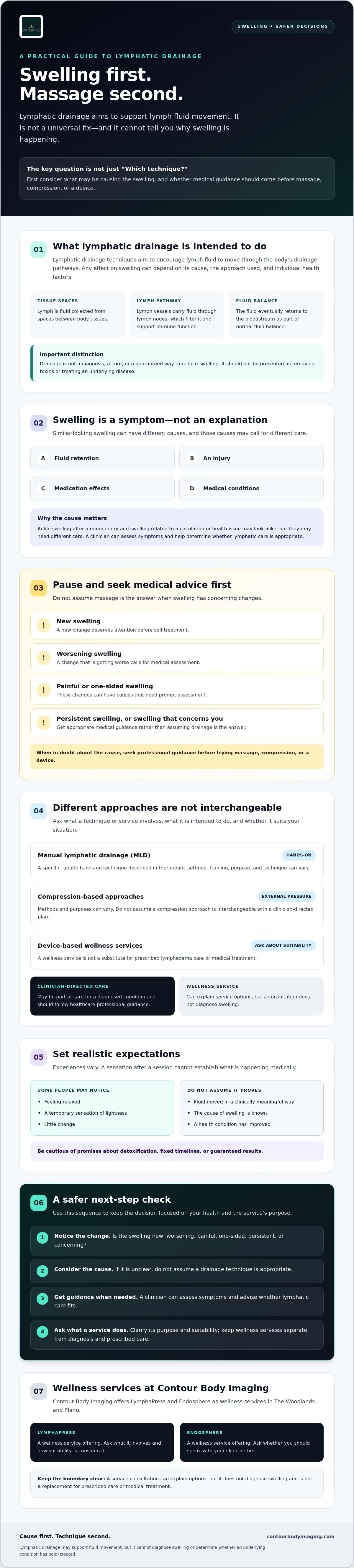
How to reduce swelling with lymphatic drainage safely
Start by recording what you notice before choosing a treatment. Note when the swelling began, where it appears, whether it’s changing, and anything that seems to trigger or ease it. If it’s sudden, severe, persistent, unexplained, or accompanied by concerning symptoms, contact a clinician instead of trying to manage it with drainage.
If symptoms are mild and you feel otherwise well, consider only general measures that are comfortable and appropriate for you, such as resting or changing position. Don’t start massage or compression without guidance if you’re unsure of the cause or whether those approaches are suitable. Stop any practice that causes pain, worsens symptoms, brings on dizziness, or feels unusual.
Questions to ask before trying drainage at home
Before attempting a technique, ask a healthcare professional what might be causing the swelling and whether lymphatic drainage is appropriate for your situation. Share relevant conditions and medications, and ask about specific risks. Avoid relying on online instructions for self-massage when the cause is unclear; a clinician can advise whether you need assessment first.
What to share during a professional consultation
For a medical appointment or optional wellness consultation, be ready to describe when symptoms started, where the swelling is, how it has changed, your health history, and current medications. If you’re discussing a wellness service, ask what it involves, how your comfort is monitored, and when to stop. A wellness consultation can explain service details, but it doesn’t diagnose swelling or replace medical care. For more background, see a lymphatic therapy overview.
Use this guide to choose the right next step, not to diagnose the cause yourself:
If you’re considering ways to reduce swelling with lymphatic drainage, let the likely cause and safety considerations guide your choice. Medical advice comes first whenever symptoms are concerning or the cause isn’t clear.
Exploring lymphatic drainage services in The Woodlands and Plano
If you’re exploring wellness options in The Woodlands or Plano, Texas, Contour Body Imaging offers LymphaPress and Endosphere among its services. These are wellness options, not medical diagnosis or treatment for an underlying condition. A clinic consultation can explain what each service involves and discuss suitability, but it can’t determine the cause of swelling or replace advice from a healthcare professional.
How to choose a service that matches your situation
Start by clarifying your goal and sharing relevant health information before considering a session. If swelling is new, persistent, unexplained, worsening, or otherwise concerning, seek medical guidance first rather than choosing a wellness service to address it. A clinician can advise whether an assessment or condition-specific care is appropriate.
For a wellness consultation, explain what you hope to learn or experience, then ask how the available options differ. You may also want to review an Endosphere and LymphaPress comparison if one is available, and use it to prepare questions rather than assume either service is right for you. No wellness option should be treated as a guaranteed way to reduce swelling with lymphatic drainage.
What to ask before booking a wellness session
Clear answers can help you make a comfortable, informed choice. Consider asking:
What does the session involve, and what sensations might I notice?
How will my comfort be monitored, and how can I ask to pause or stop?
Should I seek medical clearance based on my health history, symptoms, or medications?
What should I do if I feel discomfort or notice a change in my symptoms?
Share relevant conditions, recent procedures, and medication changes openly. If a symptom is concerning, put medical guidance ahead of a wellness appointment. If a session feels painful or causes unusual discomfort, speak up and stop rather than pushing through.
Before booking, make sure you understand the service’s purpose and limits. A consultation is a chance to ask questions and learn about options, not a medical evaluation. You can discuss whether LymphaPress or Endosphere may suit your wellness goals at Contour Body Imaging in The Woodlands and Plano.
Choose a Safe, Informed Next Step
Lymphatic drainage may support fluid movement, but it isn’t a universal solution for swelling. The cause matters, so seek medical advice for swelling that’s new, persistent, unexplained, or concerning before trying a drainage technique or wellness service. Keep any self-care gentle, and stop if it causes discomfort or worsens symptoms.
If you’re considering ways to reduce swelling with lymphatic drainage, remember that wellness services don’t diagnose or treat an underlying condition. A consultation can help you understand what a service involves and whether it may fit your wellness goals. Contour Body Imaging offers LymphaPress and Endosphere in The Woodlands and Plano, Texas.
Take your time, ask questions, and put your health needs first. With the right guidance, you can make a confident choice about what comes next.
Frequently Asked Questions
Can lymphatic drainage reduce swelling?
It may support lymph fluid movement in some situations, but it can’t be assumed to reduce swelling or address every cause. Whether it may help depends on why you’re swollen and which approach is appropriate. If you’re looking to reduce swelling with lymphatic drainage, first get medical advice for new, unexplained, persistent, or concerning symptoms. Wellness services aren’t a substitute for diagnosis or treatment of an underlying condition.
How long does it take for lymphatic drainage to reduce swelling?
There’s no reliable timeline that applies to everyone, and a change in how an area feels doesn’t prove that swelling has improved or reveal its cause. Results can vary with the reason for swelling and the type of care. Be cautious of promises about a specific number of sessions or guaranteed results. For persistent swelling or care for a diagnosed condition, ask a qualified clinician what to expect.
Is lymphatic drainage safe for everyone?
No. Suitability depends on your health, symptoms, and the technique or service being considered. Check with a clinician before trying drainage if you have a relevant medical condition, recent surgery, an infection, are pregnant, or have changed medications. Don’t use a wellness appointment to assess a health concern. Tell any provider about your health history, and seek medical guidance before proceeding if you’re uncertain.
What should I do if swelling is only in one leg?
Contact a healthcare professional promptly, especially if the swelling is new or comes with pain, redness, or warmth. Don’t massage or compress the leg while waiting for advice unless a clinician has told you to do so. Symptoms alone can’t identify the cause. If you also have shortness of breath, seek emergency care or contact local emergency services rather than booking a wellness appointment.
Can I do lymphatic drainage massage at home?
Don’t assume self-massage is appropriate just because swelling is present. First consider the cause and ask a healthcare professional whether drainage is suitable for you, especially if the swelling is new, persistent, unexplained, or concerning. Avoid following step-by-step massage instructions when you haven’t received guidance for your situation. Stop any practice that causes pain, worsens symptoms, dizziness, or unusual discomfort, and seek medical advice as needed.
What is the difference between LymphaPress and manual lymphatic drainage?
Manual lymphatic drainage is a specific hands-on technique, while LymphaPress is a service offered by Contour Body Imaging as a wellness option. They aren’t interchangeable by definition, and a wellness service shouldn’t be treated as prescribed care for lymphedema or another medical condition. Ask a clinician what care is appropriate for a diagnosed condition, and ask the clinic to explain the service, its purpose, and suitability.
Where can I ask about lymphatic drainage in The Woodlands or Plano?
Contour Body Imaging serves clients in The Woodlands and Plano, Texas, and offers LymphaPress and Endosphere among its wellness services. A clinic consultation can explain service details and discuss suitability for wellness goals, but it doesn’t diagnose swelling or replace medical advice. If swelling is new, persistent, unexplained, or concerning, speak with a healthcare professional first. Ask the clinic what each service involves before deciding whether to book.


Comments