

How to Get Rid of Cellulite on Thighs Non-Surgically: Realistic Options
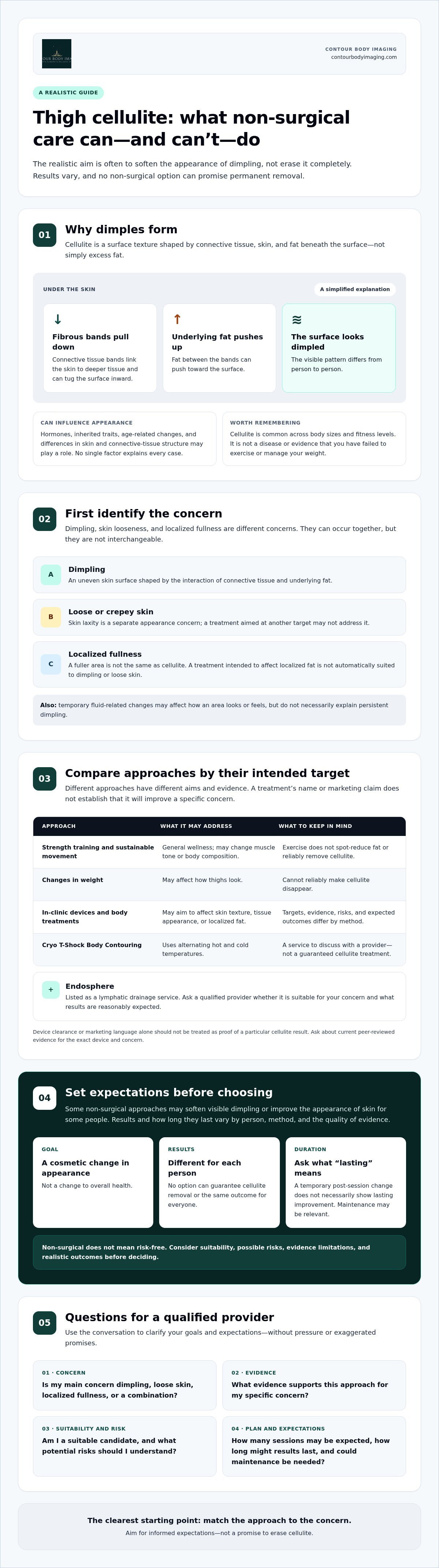
Can you meaningfully improve thigh cellulite without surgery? Often, the realistic goal is to soften its appearance, not erase it completely. If you’ve been exercising or changing your weight and still see dimples, you’re not doing anything wrong. Understanding how to get rid of cellulite on thighs non-surgically starts with knowing that cellulite isn’t simply excess fat: fibrous bands beneath the skin can pull it downward while underlying fat pushes upward, creating dimples.
That structure helps explain why cellulite is common across different body types and why changes in weight or fitness routines may not make it disappear. It also makes it worth looking carefully at treatment claims. Some non-surgical approaches may improve the appearance of dimpling or skin texture, but results vary, and no option can promise permanent removal.
This guide explains what contributes to thigh cellulite, compares non-surgical approaches and their practical limitations, and clarifies how dimpling differs from loose or crepey skin. You’ll also find questions to ask a qualified provider about suitability, potential risks, evidence, and likely results, so you can consider a next step without pressure or exaggerated promises.
Table of Contents
What causes thigh cellulite, and can it be removed without surgery?
Thigh cellulite is common at different body sizes and fitness levels. It isn’t a disease or a sign that you’ve failed to exercise or manage your weight. If you’re asking how to get rid of cellulite on thighs non-surgically, start with what causes its appearance: cellulite is a skin texture shaped by the arrangement of connective tissue, skin, and fat beneath the surface.
Cellulite is dimpling caused by the way connective tissue and underlying fat interact beneath the skin; it isn’t the same as having excess fat. For a general overview of contributing factors, see What is cellulite?
Why does cellulite appear on the thighs?
Connective tissue bands, sometimes called septae, link the skin to deeper tissue. When these bands pull downward while fat between them pushes upward, the surface can look dimpled. The pattern and visibility vary from person to person. Hormones, inherited traits, age-related changes, and differences in skin and connective-tissue structure may also influence how cellulite looks, but no single factor explains every case.
Cellulite texture differs from localized fat, which refers to a fuller area, and skin laxity, which can look loose or crepey. These concerns may occur together, but they aren’t interchangeable. Temporary fluid-related changes can also affect how an area looks or feels, but they don’t necessarily explain persistent dimpling.
Can cellulite actually be eliminated without surgery?
There’s no reliable promise of complete or permanent cellulite removal from non-surgical treatment. Some approaches may soften visible dimpling or improve the appearance of skin for some people, but results and how long they last vary by person, method, and the quality of evidence behind the treatment. Maintenance may be relevant, so ask providers to explain what they mean by “lasting results.”
The goal is usually a cosmetic change in appearance, not a change to overall health. A realistic discussion begins by identifying whether your main concern is dimpling, looseness, localized fullness, or a combination. Then consider whether an approach has evidence for that specific goal. Non-surgical doesn’t mean risk-free, and treatments aren’t equally effective. Before deciding, ask a qualified provider about potential risks, your suitability, evidence limitations, and what results you can reasonably expect.
How to get rid of cellulite on thighs non-surgically: which options may improve appearance?
Non-surgical options don’t all aim to do the same thing. Some support general fitness or change body composition; others aim to affect skin texture, tissue appearance, or localized fat. Cellulite treatments differ in target, evidence, and expected outcome. Compare those differences and ask a provider specific questions rather than assuming every approach works in the same way.
Lifestyle habits versus in-clinic treatments
Strength training and sustainable movement support general wellness and may change muscle tone or body composition. A change in weight can also affect how thighs look, but it can’t reliably remove cellulite, and exercise doesn’t spot-reduce fat from one area. These habits can be worthwhile for their broader benefits, not as guaranteed cellulite cures or requirements for feeling comfortable in your body.
In-clinic treatments have different aims and evidence. A temporary change in appearance after a session doesn’t necessarily show lasting improvement. Ask how outcomes are assessed, how long they may last, and whether maintenance is expected. The FDA overview of non-invasive body-contouring technologies can help frame what these technologies are intended to do and their limitations. Device clearance or marketing language alone shouldn’t be treated as proof of a particular cellulite result.
How do devices and body treatments differ?
Some devices use energy or temperature, while other body treatments emphasize mechanical action or circulation-related goals. Their proposed targets differ. A treatment intended to affect localized fat isn’t automatically suited to dimpling or loose skin. Ask a qualified provider for current peer-reviewed evidence related to the exact device and concern, along with information about risks, likely duration of results, and any maintenance plan.
Cryo T-Shock Body Contouring uses alternating hot and cold temperatures, and Endosphere is listed as a lymphatic drainage service. These are offerings to discuss with a provider, not proof that either is established to reduce cellulite for every client. Clarify the intended goal and what outcomes the evidence supports for your situation.
To assess how to get rid of cellulite on thighs non-surgically, match the approach to your main concern and weigh its evidence against risks and upkeep. To review available body-contouring services, explore Contour Body Imaging’s treatment options.
What results, risks, and limitations should you compare?
Non-surgical doesn’t mean risk-free, permanent, or equally effective. A treatment may offer visible improvement for some people, but outcomes depend on the method, the concern being treated, individual response, and provider skill. Before choosing a treatment, compare the evidence and likely upkeep alongside potential benefits. The American Academy of Dermatology’s guide to what really works for cellulite can help put treatment claims in context.
Consider the whole decision, not just a promised change in appearance. Your comfort with the procedure, budget, health history, and goals all matter. Ask what outcome the treatment is designed to address, how the provider measures change, and what happens if you don’t see the result you hoped for. Be cautious of guarantees or claims that don’t explain their evidence.
How long might non-surgical cellulite results last?
There isn’t one timeline that applies to every method. Durability can depend on the treatment, your individual response, and the strength of the supporting evidence. A short-lived change in skin appearance or fluid balance may not be the same as a lasting change in dimpling. Ask the provider to distinguish between an immediate effect and an outcome supported by follow-up evidence.
Before starting, ask whether maintenance is expected, what it involves, and what evidence supports the estimate. Clarify whether the proposed plan involves multiple visits, how progress will be reviewed, and what may affect results over time. If these details are unclear, pause before committing.
What safety questions should you ask?
A qualified provider should discuss whether a treatment is suitable for you, not simply describe its potential benefits. Share relevant health history and ask for guidance before proceeding if you’re pregnant, have a medical condition that could affect treatment, or have unexplained symptoms in the area. Treatment-specific safety advice should come from a qualified clinician familiar with the method.
What are the possible side effects, and what sensations might I experience during or after treatment?
Are there contraindications or reasons this approach may not suit me?
What aftercare should I follow, and whom should I contact if I have concerns?
What evidence supports the expected result, how long might it last, and could maintenance be needed?
Clear answers help you weigh possible benefits against uncertainty and practical commitments. You should feel comfortable taking time to consider your options rather than deciding under pressure.
How can you choose a realistic thigh-cellulite treatment plan?
A useful plan starts with identifying what you want to change, not choosing a device based on a dramatic promise. Dimpling, loose or crepey skin, localized fullness, or a combination can look similar at first glance, yet each concern may call for a different approach. Use these steps to guide a conversation with a qualified provider:
Define your main concern. Describe where you see dimpling, laxity, or fullness, and what improvement would feel worthwhile to you.
Check the provider’s qualifications. Ask who will perform the service, what relevant training they have, and how they assess whether it’s appropriate for you.
Compare evidence. Ask what research supports the treatment for your specific concern and what its limitations are.
Assess suitability. Share relevant health history and ask about risks, precautions, and alternatives before making a decision.
Set expectations. Clarify the proposed plan, how results will be assessed, and whether follow-up or maintenance may be involved.
If you choose to document your starting point, keep it simple: take optional photos under similar lighting and in a similar position. Review them only at agreed intervals rather than checking or comparing constantly. The purpose is to support a calm discussion about change, not to turn your body into a daily measurement project.
What should you ask during a cellulite consultation?
Ask what the proposed treatment is designed to address and what it isn’t expected to change. Request an explanation of the evidence, realistic examples of outcomes, possible risks, and any maintenance considerations. You can also ask how your individual suitability is assessed and who will provide the service. A thoughtful provider should explain uncertainties clearly and give you room to consider your options.
If Endosphere is among the approaches you’re considering, this Endosphere therapy results guide offers additional context to discuss with a provider.
How can you tell whether a treatment claim is realistic?
Be cautious of guaranteed cellulite removal, dramatic before-and-after images without context, or pressure to purchase a package before your questions are answered. Look for clear information about who may be a suitable candidate, how much results vary, and what evidence supports the specific claims. Ask whether images reflect typical outcomes and whether lighting, posture, or timing could affect what you see.
For wider context on non-surgical options, read the non-invasive body sculpting guide. A realistic choice should fit your goals, health considerations, comfort, and budget without relying on promises of perfection.
Where can you discuss non-surgical cellulite care in The Woodlands or Plano?
If you live near The Woodlands or Plano, Texas, Contour Body Imaging serves clients in both areas. Check the clinic’s current location details and confirm which services are available at the location that suits you. Service availability can change, so verify it directly rather than assuming every option is offered everywhere.
Cryo T-Shock Body Contouring and Endosphere are services you can ask about as part of a conversation about your goals. Cryo T-Shock uses alternating hot and cold temperatures; Endosphere is listed among the clinic’s lymphatic drainage services. Neither should be treated as a guaranteed cellulite solution. For an overview of Cryo T-Shock, read the Cryo T-Shock body contouring guide, then ask how the service relates to your specific concern.
What can a local consultation help you clarify?
A thoughtful consultation can help you describe what you’d like to address, such as visible dimpling, skin looseness, or a combination, and discuss whether a service may be suitable for you. Ask what the approach is intended to do, what it isn’t designed to change, what evidence supports the expected outcome, and what limitations or safety considerations apply. You can also ask whether maintenance might be relevant and how that would be determined. A discussion should inform your choice, not presume that you’re a candidate or promise a particular result.
How to take a low-pressure next step
Before deciding, contact the clinic with questions and request current details about the service you’re considering. Ask what the consultation process involves, who will discuss suitability with you, and whether you should bring information about relevant health considerations. Take time to review what you learn and compare it with your goals, comfort, and expectations. You don’t need to commit to a treatment just to ask questions.
Choosing a non-surgical approach starts with understanding your concern and weighing options without pressure. A clear conversation about suitability and realistic limitations can help you decide whether to explore a service further or consider alternatives. The next step is yours, and it’s reasonable to wait until you feel informed.
Choose a next step that feels right for you
Cellulite is shaped by the structure beneath the skin, so changes in weight or exercise habits may not remove dimpling. Non-surgical options have different aims, evidence, and limitations, and no treatment can promise complete or permanent removal. A practical approach starts with identifying whether you want to address dimpling, skin laxity, or another concern, then discussing suitability, risks, and realistic expectations with a qualified provider.
Contour Body Imaging serves clients in The Woodlands and Plano, Texas. Cryo T-Shock Body Contouring and Endosphere are among its services to ask about, not guaranteed cellulite treatments. Check current location and service details, and use a conversation with the clinic to clarify whether an option fits your goals and health considerations.
You’re in control of the decision. Take the time you need, ask clear questions, and choose only a next step that feels informed and comfortable.
Frequently Asked Questions
Can you get rid of thigh cellulite without surgery?
Some non-surgical treatments may improve the appearance of thigh cellulite, but complete or permanent removal can’t be promised. Cellulite reflects the way connective tissue and fat sit beneath the skin, so it may remain visible even if your weight or fitness changes. If you’re researching how to get rid of cellulite on thighs non-surgically, focus on the concern a treatment targets, the evidence for it, and the risks and limitations a qualified provider explains.
What is the most effective non-surgical treatment for thigh cellulite?
There isn’t one treatment that’s most effective for everyone. Options differ in what they target, such as dimpling, skin texture, or localized fullness, and their evidence and results vary. A qualified provider can help clarify which concern you want to address and whether a particular method may be suitable. Ask for evidence related to that exact treatment and concern, rather than relying on broad claims that a device works for all cellulite.
Do cellulite treatments work permanently?
No cellulite treatment should be assumed to work permanently. Some may produce visible improvement, but how long it lasts depends on the method, individual response, and quality of supporting evidence. Temporary changes in skin appearance or fluid balance may not represent lasting change in dimpling. Before choosing a treatment, ask what follow-up evidence exists, how results are assessed, and whether maintenance may be recommended. Be cautious if a provider guarantees permanent removal.
Can exercise and weight loss get rid of thigh cellulite?
Exercise and weight changes can affect muscle tone, body composition, and the overall appearance of your thighs, but they can’t reliably eliminate cellulite or target fat loss in one area. Strength training and sustainable movement can support general wellness without serving as a guaranteed cellulite treatment. Cellulite can persist across different body sizes, so its presence doesn’t mean you’ve failed to exercise or manage your weight.
How many non-surgical cellulite treatment sessions might be needed?
There’s no single session count that applies to every treatment or person. The recommended plan depends on the method, your goals, your suitability, and how the provider intends to assess progress. Ask for the proposed number and spacing of sessions, whether maintenance may be needed, and what evidence supports that schedule. Don’t assume a package or fixed treatment series is necessary without a clear explanation of its purpose and expected limitations.
Are non-surgical cellulite treatments safe for everyone?
No. Suitability and possible risks depend on the treatment and your health history, so non-surgical doesn’t mean risk-free. Ask about candidacy, contraindications, expected sensations, potential side effects, and aftercare before deciding. Share relevant medical conditions and check with a qualified clinician if you’re pregnant or have unexplained symptoms in the area. A provider should review your individual circumstances rather than assume that a treatment is appropriate for every client.
What should I ask before booking a cellulite treatment in The Woodlands or Plano?
Ask what concern the service targets, who performs it, how your suitability is assessed, and what evidence supports the expected outcome. Clarify possible risks, aftercare, session recommendations, maintenance, and current service availability at the location you plan to visit. Contour Body Imaging serves clients in The Woodlands and Plano, Texas. Confirm current location details and ask about Cryo T-Shock Body Contouring or Endosphere as services to discuss, not guaranteed cellulite treatments.


Comments