

How Often Should You Get Lymphatic Drainage? A Complete Guide Benefits & Results


Have you ever felt like your body is holding onto weight and fatigue that no amount of clean eating or hydration can shift? It's incredibly frustrating to deal with persistent bloating, visible cellulite, or a slow recovery after cosmetic surgery when you're doing everything else right. You aren't alone in feeling like your system needs a "reset" button to clear out the sluggishness and restore your natural energy. One of the most common questions we hear from clients looking for relief is: how often should you get lymphatic drainage to see real, lasting results?
We believe that your health goals are unique, and a one-size-fits-all schedule rarely provides the best outcome. This guide will help you discover the ideal frequency for your specific situation, whether you're aiming for total body detoxification or faster post-operative healing. We'll explore the difference between an intensive loading phase and long-term maintenance, ensuring you get the most out of advanced technologies like LymphaPress and Endosphere therapy for smoother skin and reduced inflammation. By the end of this article, you'll have a clear roadmap to feeling lighter, more energized, and fully in control of your wellness journey.
Table of Contents
What is Lymphatic Drainage and Why Does Frequency Matter?
The lymphatic system is the body's primary waste removal network. It's an intricate web of vessels and nodes designed to keep your internal environment clean and balanced. Unlike the circulatory system, which uses the heart to pump blood throughout the body, the lymphatic system has no central pump of its own. It relies entirely on your movement, breathing, and external pressure to transport interstitial fluid into lymph vessels. When this movement is compromised, fluid becomes stagnant, leading to the "sluggish lymph" phenomenon. This stagnation is often the root cause of persistent bloating, heavy limbs, and that "toxic" feeling that won't go away with rest alone.
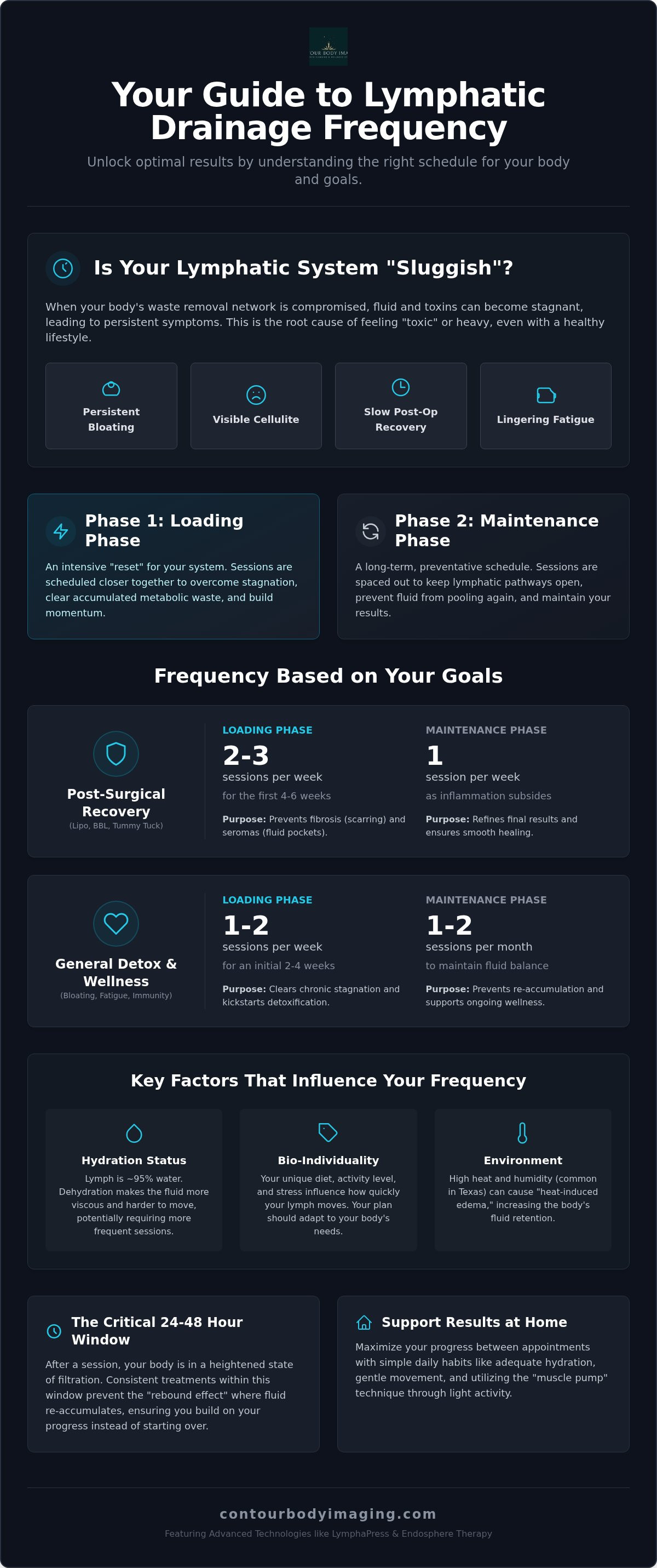
Understanding how often should you get lymphatic drainage requires a look at the metabolic window. After a professional session, your body enters a heightened state of filtration and fluid movement that typically lasts between 24 and 48 hours. This is the period when your system is working hardest to flush out metabolic waste. If treatments are spaced too far apart during your initial recovery or detox phase, the fluid begins to re-accumulate. This "rebound effect" can stall your progress, making it feel like you're starting from scratch every time you visit the clinic. Consistency ensures that you stay within this active window, building momentum toward your health goals.
The Biological Role of Lymphatic Fluid
Lymph fluid is much more than just excess water. It's a vital transport medium for white blood cells, which are essential for your immune response, and it carries away cellular debris and large protein molecules that are too big for the veins to handle. Because there's no heart to move this fluid, it can easily pool in the tissues. This is where Manual lymphatic drainage or advanced mechanical solutions like LymphaPress become necessary. These techniques provide the gentle, rhythmic stimulation required to guide stagnant fluid toward the lymph nodes, where it can be filtered and eventually eliminated from the body.
How Consistency Impacts Detoxification
A single session provides immediate relief from swelling, but it's the cumulative effect of regular treatments that addresses chronic inflammation. One-off appointments offer temporary comfort; however, long-term changes in skin texture and immune function require a more disciplined approach. When you maintain a regular schedule, you're essentially retraining your body to move lymph more efficiently. This prevents the system from becoming overwhelmed again. If you're looking for lasting results, shifting from a "rescue" mindset to a "maintenance" mindset is the key to keeping your energy levels high and your skin looking smooth.
Recommended Frequency Based on Your Specific Goals
Determining how often should you get lymphatic drainage isn't a matter of following a rigid calendar. Instead, we look at your progress through two distinct phases: the loading phase and the maintenance phase. Think of the loading phase as an intensive "reset" for your system. During this time, sessions are scheduled closer together to overcome stagnation and clear out accumulated metabolic waste. Once your body reaches a state of balance, we transition to a maintenance phase to keep the pathways open and prevent fluid from pooling again.
Bio-individuality plays a massive role in this scheduling. Your activity levels, diet, and even your hydration status dictate how quickly your lymph moves. Because lymph is approximately 95% water, being even slightly dehydrated can make the fluid more viscous and harder to move. Additionally, for our clients in The Woodlands and Plano, the Texas heat is a significant factor. High temperatures and humidity often lead to heat-induced edema, where the body retains extra fluid to stay cool. During the sweltering summer months, you might find that your body requires more frequent sessions to combat that heavy, swollen feeling.
Post-Surgical Recovery (Lipo, BBL, or Tummy Tuck)
For those recovering from cosmetic procedures like liposuction or a tummy tuck, timing is everything. We typically recommend 2-3 sessions per week during the first 4-6 weeks post-op. This high frequency is vital because it helps prevent the formation of seromas and fibrosis, which is the internal scarring that can make the skin feel hard or lumpy. As bruising and initial inflammation subside, most people transition to once-weekly sessions to refine their final results. If you're planning a procedure, you can view our recovery options to see how we support the healing process.
Chronic Bloating and Digestive Wellness
If your primary struggle is persistent bloating or a sluggish digestive system, a protocol of one session per week for six weeks is an excellent way to reset. There is a deep connection between your gut health and your lymphatic system; in fact, the majority of your lymph nodes are located in your abdomen. Regular drainage supports the microbiome and helps move waste through the digestive tract more efficiently. You'll know it's time for a maintenance session when you start to feel that familiar "puffiness" return or your energy levels begin to dip.
Cellulite Reduction and Body Contouring
When your goal is aesthetic smoothing, we often recommend twice-weekly sessions. This is especially effective when paired with Cryo T-Shock body contouring. The thermal shock treatment breaks down fat cells, and frequent lymphatic drainage is necessary to clear those "melted" cells from your system. Choosing between Endosphere vs LymphaPress allows us to target specific areas of cellulite while ensuring your whole system stays active and efficient.
Can You Get Lymphatic Drainage Too Often?
While we've established that consistency is the foundation of success, many clients wonder if it's possible to over-stimulate the system. The short answer is yes. Your lymphatic system is powerful, but it's also delicate. When deciding how often should you get lymphatic drainage, you must account for your body's ability to process the waste that's being moved. If you push too hard or schedule sessions too close together, you might experience what's known as a "healing crisis" or a detox reaction. This happens when the volume of mobilized fluid and metabolic waste temporarily overwhelms your primary organs of elimination.
Safety is our first priority, which is why we always screen for contraindications before beginning a protocol. Lymphatic drainage is generally very safe, but there are specific conditions where it's not recommended. For instance, if you have an active infection like cellulitis, the treatment could potentially spread the infection through the lymph nodes. Other contraindications include a history of blood clots or deep vein thrombosis, congestive heart failure, or active kidney disease. In these cases, moving large volumes of fluid can put undue stress on the heart or kidneys. We always encourage a conservative approach if you're managing complex health issues.
Signs Your Body Needs a Break
It's important to listen to the subtle signals your body sends after a session. If you're moving too fast, you might experience "detox flu" symptoms. This isn't a sign that the treatment is failing; it's a sign that your kidneys and liver need more time to filter the fluid we've mobilized. Watch for these signs that you should space your sessions further apart:
Persistent brain fog or a dull headache that lasts more than 24 hours.
Extreme fatigue that feels heavy rather than a "good" tired.
Mild nausea or a sudden change in digestive rhythm.
Dark or strong-smelling urine, which indicates your kidneys are working overtime.
The 24-Hour Recovery Rule
Most professionals recommend at least 24 to 48 hours between intensive sessions, even during a post-surgical loading phase. The body needs time to filter and excrete mobilized toxins through the urinary system. Stacking sessions back-to-back doesn't necessarily double your results; it often just increases the metabolic load on your system. On your "off" days, you don't need to be sedentary. Light movement like a 20-minute walk or gentle stretching is often more effective than a second session. This low-impact activity helps keep the lymph moving naturally without the intensive pressure of a professional treatment.
Maximizing Your Results Between Sessions
Professional treatments provide the necessary catalyst for change, but your daily habits are what truly sustain your progress. Think of your clinic visits as a deep clean for your system and your at-home routine as the daily maintenance that prevents waste from building up again. When you're deciding how often should you get lymphatic drainage, it's helpful to remember that a proactive lifestyle can actually extend the time between your professional appointments. By supporting your "muscle pump" through intentional movement, you keep the pathways we've opened during therapy clear and active.
Movement is medicine for the lymphatic system. Because lymph doesn't have a heart to pump it, it relies on the contraction of your muscles to push fluid through the vessels. This is why we often recommend vibration plate sessions as a convenient way to stimulate flow. Just ten minutes on a vibration plate can engage almost every muscle group, providing a high-frequency "reset" that mimics the effects of manual stimulation. It's a perfect tool for those days when you can't fit in a full workout but still want to prevent stagnation.
The Role of Compression and Movement
For our clients in Plano, wearing medical-grade compression garments after a treatment can significantly enhance the drainage process. These garments provide the gentle, consistent pressure needed to guide fluid toward the lymph nodes. If you spend your days at a desk in The Woodlands, you're likely familiar with the "heavy leg" feeling that comes from sitting too long. Stagnation is the enemy of a healthy system. You can combat this by incorporating three simple movements into your day: gentle neck tilts to open the terminus nodes, deep diaphragmatic breathing to massage the deep abdominal lymphatics, and seated leg lifts to engage the nodes in the groin.
Nutrition and Hydration for Lymphatic Flow
What you put into your body dictates how easily your lymph can move. High salt intake is the fastest way to negate the results of your session because sodium pulls water into the interstitial space, causing immediate swelling. Focus on a "lymph-friendly" diet rich in leafy greens, berries, and low-sodium proteins. These foods provide the antioxidants needed to reduce inflammation and support cellular repair. Hydration is equally vital; drinking plenty of water creates a "flush" effect that thins the lymph fluid, making it much easier for your body to filter and excrete metabolic waste. If you're ready to see how a professional protocol can transform your energy, book your introductory session today and feel the difference for yourself.
Professional Lymphatic Solutions at Contour Body Imaging
Choosing the right partner for your wellness journey is just as important as the treatment itself. At Contour Body Imaging, we've moved beyond traditional methods to offer the most advanced, non-invasive lymphatic support available today. For residents in The Woodlands and Plano, our clinics serve as a sanctuary where modern technology meets personalized care. We understand that your schedule is demanding, and your health goals are specific. That's why we utilize medical-grade solutions like LymphaPress and Endosphere therapy to provide results that are both measurable and sustainable.
Our approach isn't about guesswork. When you're determining how often should you get lymphatic drainage, we provide a data-driven assessment based on your body's unique needs. Whether you're navigating the delicate stages of post-surgical recovery or looking to eliminate persistent bloating, our team guides you through every step. By focusing on high-tech, consistent delivery, we ensure that every minute you spend in our clinic contributes directly to your detoxification and skin-smoothing goals.
LymphaPress vs. Manual Massage: Which is Better for Your Schedule?
While manual lymphatic drainage has its place, LymphaPress offers a level of precision that human touch simply can't replicate. The system uses calibrated, gradient pressure to ensure that fluid is moved efficiently and safely toward the lymph nodes without the variability of a therapist's fatigue. This consistency is a game-changer for busy professionals. A mechanical session is often more time-efficient, allowing you to achieve deeper drainage in a shorter window. Because the pressure is perfectly controlled, many clients find they can tolerate more frequent sessions during an intensive loading phase, leading to faster visible improvements in swelling and inflammation.
Your First Visit to Our Woodlands or Plano Clinic
Your journey begins with a comprehensive consultation where we listen to your concerns and map out a custom frequency plan. We don't just look at fluid retention; we look at your total body wellness. This often includes the integration of Lumaray 360, which uses advanced light therapy to support cellular repair alongside your drainage sessions. This synergy ensures that while the lymph is moving waste out, your cells are getting the support they need to regenerate and thrive. It's a holistic approach designed to help you feel lighter and more energized from the very first visit.
We're committed to helping you regain control over your confidence and comfort. If you're ready to stop guessing how often should you get lymphatic drainage and start seeing real results, we invite you to experience our introductory offer. This is the perfect opportunity to meet our expert team, tour our facilities in The Woodlands or Plano, and receive a personalized protocol tailored to your lifestyle. Don't let sluggishness hold you back any longer; your path to a refreshed, revitalized body starts with a single step toward professional care.
Take Control of Your Wellness Journey
We've explored how the lymphatic system acts as your body's vital waste removal network and how consistency is the bridge to lasting results. Whether you're recovering from surgery or simply seeking to eliminate that heavy, "sluggish" feeling, understanding how often should you get lymphatic drainage is the first step toward a lighter, more energized version of yourself. By combining specialized post-op protocols with advanced technology like LymphaPress and Endosphere, we provide a level of precision that traditional manual massage can't match.
As a top-rated aesthetic clinic serving North Dallas and The Woodlands, we're dedicated to helping you achieve visible smoothing and reduced inflammation through science-backed care. You don't have to navigate your recovery or detoxification alone. Our team is ready to partner with you to create a sustainable plan that fits your lifestyle and your specific health goals. Book Your Lymphatic Drainage Consultation in The Woodlands or Plano Today to receive a personalized assessment and start your transformation. You deserve to feel comfortable and confident in your own skin; we're here to support you every step of the way.
Frequently Asked Questions
How many sessions of lymphatic drainage do I need to see results?
Most clients notice a visible reduction in bloating and a feeling of lightness after just one session. For long-term goals like cellulite reduction or post-surgical healing, a series of 6 to 10 sessions is usually necessary to achieve cumulative results. Your specific timeline depends on your body's initial level of stagnation and how well you follow post-treatment hydration and movement guidelines.
Is it okay to get lymphatic drainage every day?
Daily sessions are generally not recommended for wellness or detoxification because your system needs time to process the mobilized waste. Professional guidelines suggest waiting at least 24 to 48 hours between treatments to avoid overwhelming your kidneys. The only common exception is the very early stage of post-op recovery, where daily sessions might be used for a short window to manage acute swelling.
How long do the effects of a single lymphatic drainage session last?
The metabolic "boost" from a single session typically lasts about 48 hours, which is the time your body takes to fully filter the moved fluid. While the immediate de-puffing effect is gratifying, it's temporary if the underlying lifestyle factors aren't addressed. This is why consistency is so important when deciding how often should you get lymphatic drainage to maintain a clear and active system.
Should I get lymphatic drainage before or after a workout?
It's best to schedule your session after a workout to help your body clear out lactic acid and other metabolic byproducts. Exercise acts as a natural primer for the lymphatic system by engaging the muscle pump, making the professional treatment even more effective. If you do go before a workout, wait at least two hours to ensure your body isn't over-taxed by the sudden shift in fluid volume.
What should I do immediately after a lymphatic drainage session?
You should drink at least 16 to 20 ounces of water immediately to help your kidneys flush out the toxins mobilized during the treatment. It's also helpful to engage in light movement, like a short walk, to keep the lymph flowing toward the nodes. Avoid heavy, high-sodium meals and alcohol for the rest of the day, as these can cause immediate water retention and reverse your progress.
Can lymphatic drainage help with weight loss frequency?
Lymphatic drainage supports weight loss by improving metabolic efficiency and reducing the inflammation that often stalls progress. While it doesn't directly break down fat, it's a critical component in determining how often should you get lymphatic drainage when paired with contouring treatments. By clearing out the cellular debris left behind after fat-reduction therapies, you'll see a smoother, more defined silhouette much faster than with diet alone.
Are there any side effects of getting drainage too often?
Overtaxing the system can lead to a "detox flu," which includes symptoms like dull headaches, extreme fatigue, or mild nausea. These side effects occur when the volume of waste being moved exceeds your body's current capacity to filter and excrete it. Pacing your sessions according to a professional plan ensures that you experience the benefits of detoxification without the discomfort of a healing crisis.
How do I know if my lymphatic system is blocked?
Common indicators of a sluggish system include persistent swelling in the ankles, morning puffiness in the face, and a general feeling of heaviness or brain fog. You might also notice that your skin has lost its glow or that cellulite has become more pronounced recently. If your jewelry feels tighter at the end of the day or you're prone to frequent colds, your lymphatic system likely needs professional stimulation.


Comments