

Body toning treatments for the stomach in The Woodlands
The stomach isn’t always the only area to consider when you’re looking for a more balanced shape. Body toning treatments for the stomach in The Woodlands are designed to target fat, improve muscle tone, or address both goals, with the right approach depending on the areas you want to focus on.
It makes sense to want clear expectations before choosing a treatment. The method, treatment area, and your starting point all shape what the experience may involve. This guide explains the body-shaping options available, who may be a suitable candidate, what results can look like, and how recovery and treated areas differ. You’ll also learn how to think about the stomach alongside nearby areas, so you can make a more informed choice based on your goals rather than assuming every treatment works the same way.
Table of Contents
WHAT BODY SCULPTING TREATMENTS ARE AVAILABLE IN THE WOODLANDS?
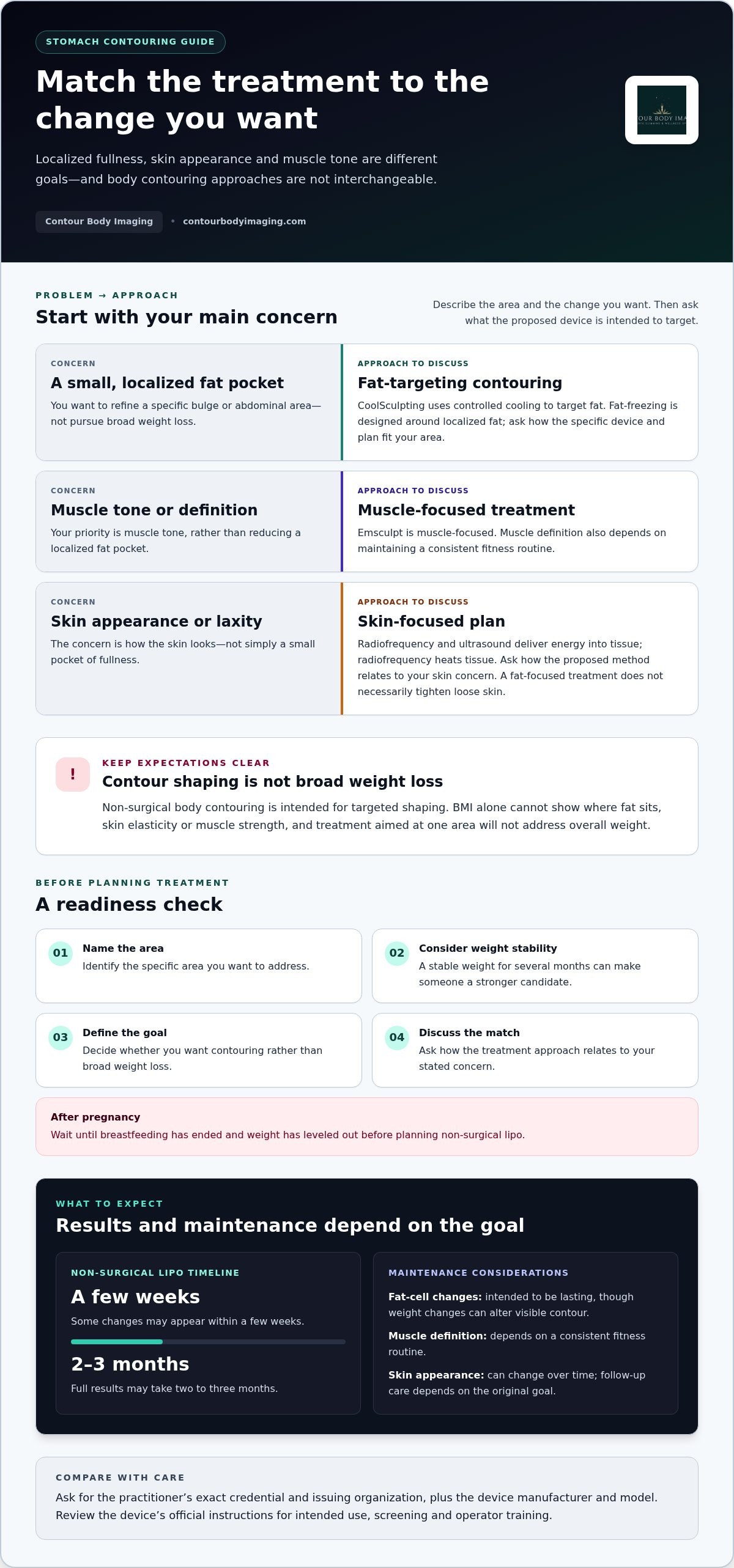
Body contouring can focus on localized fullness, skin appearance, or muscle tone. These goals are related, but they aren't interchangeable. For example, addressing a small abdominal bulge won’t necessarily tighten loose skin, and a skin-focused treatment isn’t the same as muscle toning. Start by identifying the change you want: a smoother outline, firmer-looking skin, or more visible muscle definition. That distinction helps narrow the options before a consultation.
How do Emsculpt, CoolSculpting, radiofrequency, and ultrasound compare for stomach contouring? Emsculpt is muscle-focused, while CoolSculpting uses controlled cooling to target fat; radiofrequency and ultrasound use energy delivered into tissue. The devices differ in their intended target, treatment process, and suitability, so compare the exact device and goal rather than relying on a general “body sculpting” label.
Non-surgical body contouring uses approaches such as cooling, heat-based energy, or muscle stimulation rather than surgery. Fat-freezing is designed around localized fat, while radiofrequency and ultrasound use energy for contouring. A device’s name alone doesn’t show whether it suits your abdomen. During a consultation, describe the area you want treated and whether localized fullness, skin appearance, or muscle tone is your main concern. Then discuss how the proposed method relates to that goal.
A personalized plan begins with a clear map of the treatment area. For instance, someone concerned about a lower-abdominal pocket may have a different plan from someone focused on skin laxity across the stomach. The selected approach should match that goal, the tissue being treated, and the person’s routine. Ask for a plain-language explanation of what the device targets and how the plan addresses your stated concern. This makes it easier to understand what a treatment is meant to change, and what it is not meant to change.
Skincare may be part of a plan when skin appearance is a concern. Follow product guidance suited to your treatment and existing routine rather than adding strong products independently. Ask which products to pause or continue, how to care for treated skin, and when to resume your usual routine. Skincare supports the skin-focused part of a plan; it doesn’t replace body contouring.
How long do stomach body contouring results last, and what maintenance is needed? Fat-cell changes are intended to be lasting, but weight changes can alter the visible contour; muscle definition depends on maintaining a consistent fitness routine. Skin appearance can also change over time, so choose follow-up care based on the original goal, not an assumption that every method needs the same maintenance.
How can I verify a body contouring provider's credentials and device safety in The Woodlands? Get the practitioner’s exact credential and issuing organization, then verify it in that organization’s directory. Request the device manufacturer and model, and review its official instructions for intended use, screening, and operator training before treatment. These steps help you compare the proposed procedure with your goals and understand how the device is meant to be used.
Candidate suitability and weight-loss expectations
Non-surgical body contouring is designed for targeted shaping, not broad weight loss. It may suit someone who wants to address a localized area, such as a small abdominal pocket, while maintaining a stable weight. Strong candidates are usually at a stable weight for several months and have a specific goal. For example, refining a waistline differs from changing overall body size. Defining that goal helps clarify whether body toning treatments for the stomach in The Woodlands align with what you want to achieve.
Weight stability can make it easier to assess a contour concern. Ongoing weight changes may affect the appearance of the area, making the intended treatment goal harder to evaluate. Non-surgical lipo changes may appear in a few weeks, with full results taking two to three months. These changes relate to contour, not a promised amount of weight loss. If you’re actively losing weight, continuing your current routine first can help you reassess the area later.
After pregnancy, wait until breastfeeding has ended and weight has leveled out before planning non-surgical lipo. This allows time for pregnancy-related changes to settle. The goal should be a defined area of contour, not a rapid return to a previous shape. Loose skin and a localized fat pocket are different concerns, even if both affect the lower abdomen. Keep that distinction in mind when considering body toning treatments for the stomach in The Woodlands.
BMI is one measure of body size, but it doesn’t show where fat sits, skin elasticity, or muscle strength. A BMI figure alone can’t determine whether a specific abdominal treatment fits your goal. Consider weight stability and the change you want, such as addressing localized fullness or supporting muscle definition. Body contouring isn’t a substitute for weight-loss care, and a treatment aimed at one area won’t address overall weight.
Different goals call for different methods. Radiofrequency uses energy to heat tissue, while fat-targeting approaches focus on localized bulges. Muscle-focused goals require a different discussion from reducing a small fat pocket. Before deciding, describe the change you want in everyday terms, such as a more defined outline beneath clothing. Ask how the proposed method relates to that goal and what its expected timeline means.
Use this readiness check before exploring body toning treatments for the stomach in The Woodlands:
Identify the area you want to address.
Consider whether your weight has been stable for several months.
Decide whether your goal is contouring rather than broad weight loss.
Discuss how your goal relates to the treatment approach.
If those points match your priorities, an introductory body-contouring offer can help you explore options. Keep your focus on a defined area and realistic expectations, rather than treating contouring as a substitute for weight-management support.
Recovery and downtime
Risks and recovery for stomach toning treatments depend on the method, device, and treatment plan. Cooling, heat-based contouring, and muscle stimulation each have different safety considerations, so discuss the device-specific risks and expected recovery before starting. Non-surgical doesn’t mean risk-free, and invasive procedures involve different recovery considerations.
Preparation starts with a clear account of your health history, skin concerns, and daily routine. Before treatment, confirm which stomach area will be addressed, how the device works, and what sensations may occur during the session. Follow the treatment instructions for clothing, skin preparation, and activity. If you use skincare products on your abdomen, ask whether your routine needs to change around the procedure.
CoolTone is a muscle-stimulation treatment, and a treatment series may be planned around the device protocol and the goal being addressed. The number and spacing of sessions depend on that plan, so don’t assume every series follows the same calendar. Ask how recovery fits between appointments and whether your usual exercise routine should change. This helps you plan work, workouts, and other commitments without guessing at a recovery schedule.
Different body contouring methods involve different steps, so their aftercare isn’t interchangeable. The experience can vary with the technology and treatment area. Get clear instructions covering what to do afterward, which activities to pause, and whom to contact if you have a concern. If a response feels severe or unexpected, seek medical advice rather than trying to manage it with an unapproved product or home remedy.
Downtime also depends on the treated area and how your body responds. Plan a flexible day around your first appointment instead of scheduling strenuous exercise or an important event immediately afterward. Once you receive method-specific guidance, follow it closely and note any reactions. That record can help inform later appointments in a treatment series.
Use this practical checklist before confirming a sculpting session:
Ask for the device name, intended treatment area, and its specific safety information.
Clarify expected sensations, possible side effects, and the recovery instructions.
Discuss how the treatment plan fits your work, exercise, and skincare routine.
Keep the aftercare guidance available so you can follow each step consistently.
These steps make it easier to compare a non-invasive approach with your schedule and comfort level. Choose a plan with clear preparation and aftercare guidance, not just a promised contouring outcome.
Stubborn abdominal fat and other treatment areas
A focused abdominal contouring goal differs from broad weight loss. For example, someone may exercise regularly and maintain a steady weight yet still notice localized fullness around the waist. Body contouring focuses on selected areas, while exercise and nutrition support overall health and weight management. Before choosing a treatment, identify whether the concern is localized fullness, skin appearance, or muscle tone. Those concerns call for different discussions, even when they appear in the same part of the stomach.
CoolSculpting and TruSculpt iD are named body-contouring systems, but their labels alone don’t establish which suits a particular abdomen. Compare the device’s intended use, the area it treats, and the goal described in its treatment plan. Ask whether the proposed approach focuses on localized fullness or another concern. A useful consultation starts with a clear example, such as the lower abdomen or the flanks, rather than a general request to “lose belly fat.”
Stubborn fat and postpartum abdominal changes deserve separate consideration. After pregnancy, wait until breastfeeding has ended and weight has leveled out before planning non-surgical lipo. Strong candidates are usually at a stable weight for several months. This timing helps distinguish a persistent contour concern from changes that are still evolving. For example, a lower-abdominal bulge and loose skin may look similar under clothing, but they are not the same treatment target.
Stress can influence everyday habits, including sleep, meal routines, and exercise consistency. Those patterns affect weight-management efforts, but a contouring treatment isn’t a stress-management solution or a substitute for healthy routines. If stress disrupts your exercise schedule, address that pattern alongside any focused body-shaping goal. This keeps expectations practical and avoids treating one abdominal area as a measure of overall health.
A personalized plan should name the area, the intended change, and the method’s purpose. Use these steps to make the discussion specific:
Point to the exact area, such as the central abdomen, lower stomach, or flank.
Describe whether your goal is fat reduction, skin appearance, or muscle definition.
Ask how the named device relates to that goal and what outcome it is designed to address.
Discuss weight stability, postpartum timing, and your current exercise routine.
These distinctions help you decide whether body contouring aligns with your goal or whether broader weight-loss support is more appropriate. A treatment plan should focus on a defined area and a realistic outcome, not promise that one session will change your overall body weight. If your main concern is general weight loss, abdominal contouring isn’t a substitute for a weight-management plan.
Areas of the body treated
Body contouring discussions can focus on areas such as the abdomen, waist, thighs, upper arms, back, or buttocks. The area to discuss depends on your goal and the treatment’s intended focus. For example, someone concerned about lower-abdominal fullness may want a different plan from someone focused on the sides of the waist. Naming the exact area helps keep the discussion practical.
Think in zones, not just body parts. The central abdomen, lower stomach, and flanks are distinct areas, even when they affect the same clothing fit concern. Point to the specific spot that bothers you, then describe whether you want to address localized fullness, skin appearance, or muscle tone. Those details help determine whether the proposed approach matches your goal.
Nearby areas may also affect the overall outline. For example, someone focused on the abdomen might also notice the waist or back when wearing fitted clothing. That doesn’t mean every neighboring area needs attention. A focused plan should distinguish the primary concern from optional areas, then explain how each proposed session relates to your goal.
Use a simple area map during a consultation to organize your priorities:
Abdomen: Identify whether the concern is central, upper, or lower stomach.
Waist and flanks: Point out the sides where the outline changes.
Thighs and buttocks: Describe whether your goal concerns one area or their transition.
Arms and back: Mark the specific region rather than requesting broad body sculpting.
These examples are discussion points, not a promise that every treatment addresses every listed area. The treatment’s design influences which zones it can address. Ask how the approach relates to the area you’ve identified and whether the plan treats adjoining zones separately. Clear answers can help you compare options without assuming one session covers an entire body region.
Keep the goal healthy and specific. Body contouring focuses on selected areas, while regular exercise and balanced habits support broader wellness. If your goal is general weight loss, targeting one area won’t replace a whole-body approach. If you’re considering treatment for the abdomen and another zone, ask how the plan and aftercare differ for each area. That makes it easier to plan around work, movement, and your regular routine.
The clearest takeaway: select the area first, define the change you want, then match the treatment plan to that zone. A personalized discussion can help determine whether an abdominal session or another focused area better fits your priorities.
Contour Body Imaging: Cryo T-Shock Body Contouring
Contour Body Imaging offers Cryo T-Shock Body Contouring for people exploring non-invasive options for a focused body-shaping goal. The treatment uses thermal shock technology to target fat cells, making it relevant to readers considering contouring for a specific area rather than broad weight loss. Discuss your goals and the area you want to address to understand how the treatment may fit your priorities.
If your priority is the stomach, bring that concern into the discussion along with any questions about treatment areas, expectations, and recovery. A clear understanding of your goal is a useful starting point for deciding whether this option fits.
Contact Contour Body Imaging to discuss Cryo T-Shock Body Contouring and your body-contouring goals.
Choose a Next Step That Fits Your Goals
Let your personal goal guide the next decision. Before exploring body toning treatments for the stomach in The Woodlands, consider what you want to feel or see change, and what would make a treatment plan comfortable for your routine. A focused conversation can help you explain your priorities, raise questions about the approach, and decide what feels aligned with your needs. You don’t have to settle every detail before reaching out; start with the area you’d like to address and the outcome you have in mind.
Contour Body Imaging can help you discuss your body-contouring goals and explore whether its approach fits what you’re looking for. Take the next step at your own pace, with your questions and comfort in mind.
Your goals are personal, and a thoughtful next step can help you move forward with greater clarity.
Frequently Asked Questions
What is Body Contouring?
Body contouring refers to treatments intended to change the shape or appearance of targeted areas. Non-surgical methods use different technologies and are distinct from surgical procedures. For example, one person may focus on the abdomen, while another may prioritize the waist or thighs. The treatment goal matters: addressing localized fullness, improving skin appearance, and developing muscle tone are different aims, so describe the change you want in specific terms.
What is recovery like?
The treatment experience depends on the method and area addressed. Before a session, ask what to expect, what aftercare guidance applies, and how the treatment could fit around your normal activities. For example, if you exercise regularly, ask how to plan your workout schedule around the guidance you receive. Keep the instructions handy and follow the directions for your treatment rather than applying advice meant for another method.
What non-surgical stomach body contouring and toning treatments are offered in The Woodlands, Texas?
Contour Body Imaging offers Cryo T-Shock Body Contouring in The Woodlands, using thermal shock technology to target fat cells. Its other wellness services include Endosphere and Lumaray 360. These options have different purposes, so describe whether your priority is a specific abdominal area, skin appearance, or another concern. That gives you a clearer starting point for discussing which service aligns with your goals and the treatment area you have in mind.
How many sessions are typically needed for abdominal fat reduction or muscle toning treatments?
There isn’t one session count that applies to every abdominal treatment. The plan depends on the technology, the area being addressed, and whether your goal is localized fat reduction or muscle toning. Ask for the recommended session sequence and spacing for the specific approach under consideration. A written plan makes it easier to track appointments, understand the purpose of each session, and judge progress against your original goal instead of the scale alone.
Who is a good candidate for non-surgical abdominal body contouring, and what results can they expect?
Someone with a stable weight and a clearly defined area of concern may be suited to a targeted approach. For instance, a person seeking a change in one abdominal area has a different goal from someone seeking broad weight loss. Expect the treatment to relate to its intended purpose, not to change the whole body. Discuss the specific outcome you hope to notice, such as a different contour beneath clothing.
What should I do before and after a non-surgical stomach contouring treatment?

Comments